

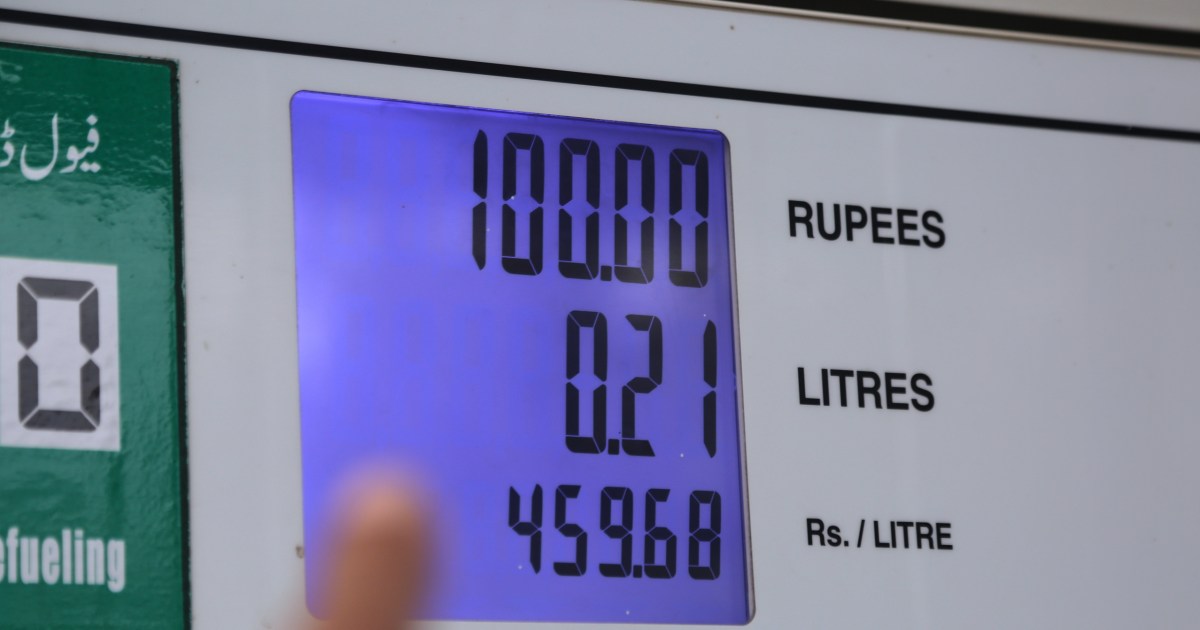
Oil prices have dominated headlines and policy discussions since the start of the US-Israel war on Iran.
In the six weeks since the United States and Israel launched strikes on Iran, crude prices have risen sharply, driving up fuel costs and placing strain on households across the globe.
Recommended Stories
list of 4 itemsend of list
On Sunday, the main international benchmark for prices surged more than 8 percent to top $103 a barrel after US President Donald Trump announced plans to impose a naval blockade on Iran.
In fact, the price of oil is more complicated than any one figure and depends on where you look.
The oil trade can be broadly divided into two distinct markets: physical sales and contracts for future oil deliveries, known as futures.
Since the start of the war and Iran’s effective blockade of the Strait of Hormuz, prices in these markets have diverged substantially – reflecting what analysts say is a growing mismatch between perceptions of supply and the reality on the ground.
Here is all you need to know about the growing split in the physical and on-paper oil markets:
What is the difference between physical and futures oil prices?
Oil is priced differently depending on whether it is bought on the spot for prompt delivery or months in advance via a futures contract.
The principal benchmark for spot prices is Dated Brent, a basket of four grades of oil produced in the North Sea and one produced in the US.
It reflects the per-barrel price of oil scheduled for shipment in the next 10 to 30 days.
“If someone wants oil for immediate delivery – rather than in the future – what matters is the spot price,” Pavel Molchanov, an investment strategist at Raymond James & Associates, a financial services firm, told Al Jazeera.
Brent futures are financial derivatives that reflect the price of oil due to be loaded months or even years from now.
The primary benchmark is the front-month Brent Crude Oil Continuous Contract, which currently refers to deliveries due in May.
In simple terms, Dated Brent reflects short-term demand, whereas Brent futures are a barometer of future price expectations.
The futures price is the price most commonly found in news reports and search engine results.
What has been happening to prices?
Iran’s effective shutdown of the Strait of Hormuz, which normally carries about one-fifth of global oil supplies, has caused one of the biggest energy disruptions in history.
Despite the existence of a fragile ceasefire between Washington and Tehran since early last week, only 17 vessels transited the strait on Saturday, according to maritime intelligence firm Windward, down from roughly 130 daily transits before the war.
While countries such as Saudi Arabia have boosted alternative supply routes, the global economy is still facing a daily shortfall of about 8 million barrels of oil, according to a recent estimate by market intelligence provider Kpler.
Depending on whether your reference point has been real-world transactions or electronic trades, the surge in prices prompted by the supply crunch has looked markedly different.
While it is not unusual for spot and futures prices to differ, the gap between the two has widened well beyond what is typical since the conflict began.
Dated Brent last week hit an all-time high of more than $144 a barrel – about $35 above the price of Brent futures.
While the gap is continuously fluctuating, the spot price has remained considerably higher than the futures equivalent since then.
The spread indicates that oil supplies are becoming increasingly scarce on the ground, to an extent greater than suggested by the relatively modest price increases captured in headlines.
“Under ordinary circumstances, the spot price and front-month futures price are roughly equal, because oil today carries little to no extra value as compared to oil one month from now,” said Molchanov.
“But the fact that the Strait of Hormuz remains at a near-standstill means that the oil market is facing a physical supply deficit right now – so buyers are currently willing to pay a hefty premium for oil that is available right away.”
Adi Imsirovic, a veteran oil trader who lectures at the University of Oxford, said the extent of the energy shock has not been fully appreciated by policymakers.
“I think most governments are complacent regarding this energy shock,” Imsirovic told Al Jazeera.
“They should be giving advice to citizens [on] how to ration energy, thus reducing unnecessary waste. Eventually, prices will have to do the work.”
Why are the two prices diverging so much?
While it is notoriously difficult to pin down the workings of the market, analysts say traders have been betting on a resolution to the crisis down the track.
“Futures markets have not always followed spot prices due to the uncertainty of [the] Trump administration. TACO has always been lurking in the minds of traders, making it risky to hedge with long oil positions at high prices,” Imsirovic said, referring to the acronym for “Trump Always Chickens Out”, a description of the US president’s perceived tendency to backtrack on threats and controversial policies.
Molchanov, the strategist at Raymond James & Associates, said the return of price stability will depend on Iran easing its control over the strait and shipping companies gaining confidence that it is safe to transit.
“Putting both of those dynamics together, we envision a two to three month period of recovery in traffic, with improvement starting off slowly and then accelerating,” he said.
“As more tankers enter the Gulf, there should be a commensurate recovery in oil exports.”