

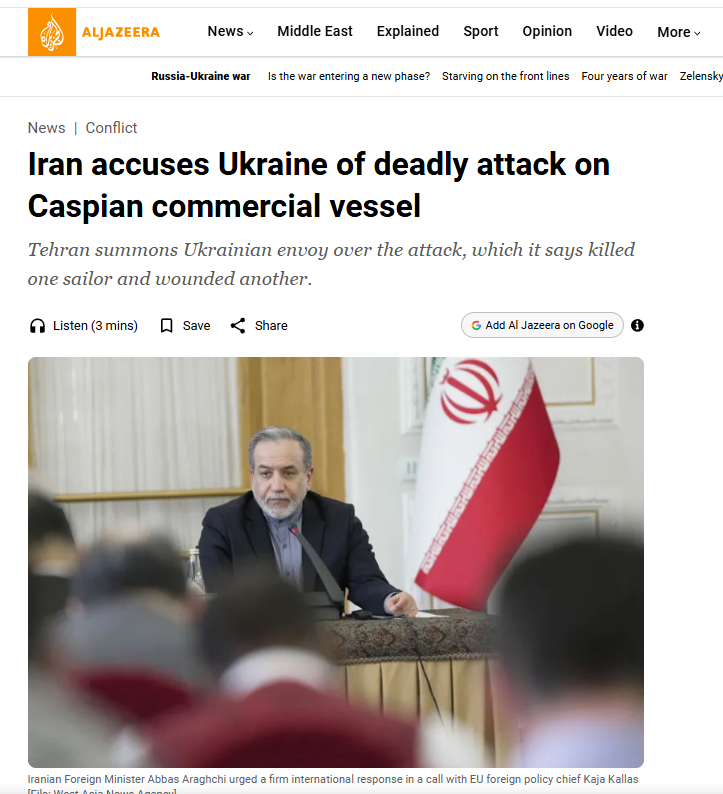

COMMENT: Zelensky is obviously trying to get the world into a major war all for Ukraine. His attack on the ships from Russia to Iran, claiming they had military cargo, was the wrong direction that did not involve Ukraine. This is getting seriously out of control.
Craig
 REPLY: This attack on a cargo ship in the Caspian Sea from Russia to Iran has the green light from the US. This is dangerously blurring the line between these two conflicts and is bringing us closer to World War III. The next misstep will be to involve China. Neither the Iran-US war nor the Ukraine-Russian War are endless wars.
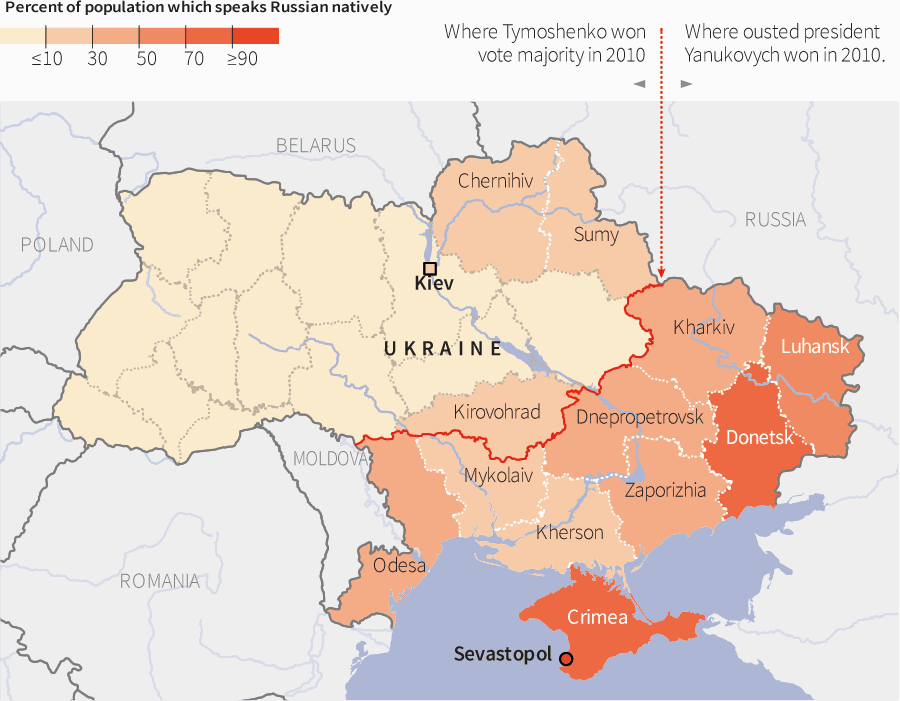
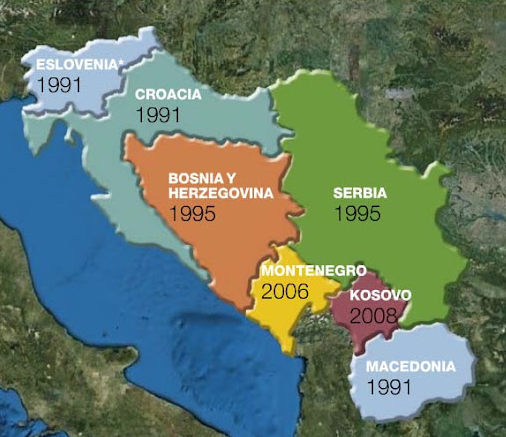
The solution to the Ukraine War was no different than that of Yugoslavia. It should have been divided according to the ethnicity of each region. The people in the Donbas who have lived there for hundreds of years are ethnically Russian. The EU and Zelensky are violating international human rights trying to conquer that region which outlawed speaking Russian and their religion. What if Ilhan Abdullahi Omar became governor of Minnesota and outlawed Christianity? Would that be a violation of human rights?
Ukrainians are filled with such hatred of Russians all over their false understanding of history, and their own agenda of ethnic genocide instituted by Bandera all to create a country they never had, all based on the promises of Adolf Hitler. Because of this inherent hatred of Russians, there is no long-term solution. Both Russia and Ukraine understand that this war will ONLY end with the complete destruction of their opponent.
As I warned when Zelensky assumed the presidency of Ukraine, he was hand-picked to start World War III. He was a Neo-Nazis before becoming president pretending to be Christian marrying a Christian girl and his children were baptized. Only after becoming president did he claim to be Jewish to hide the fact that he was indeed a Neo-Nazis. My sources in Kiev maintained that the election was rigged and he was never elected president. They also insist this is why he has suspended all elections as long as Ukraine is at war securing a Neo-Nazi dictatorship preventing peace.
Ukraine wants to enter NATO to draw in all of Europe and the United States to utterly conclude their goal of ethnic cleansing of the Russian people. That became obvious when in 2014, the first act of the Ukrainians was to kill anyone who spoke Russian on the streets of Odessa, which led to the entire separation movement of the Donbas.
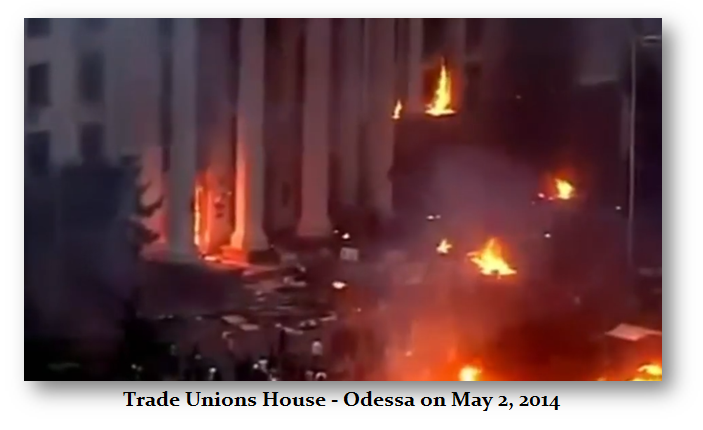
Catherine II, the Great of Russia, ordered the founding and construction of the city of Odessa, where in 2014, the Neo-Nazi Ukrainians were openly killing Russians on the streets, chased them into the Trade Unions House, and burned them alive. That began this separatist movement, and it was the interim government installed by Victoria Nuland et al, who attacked the Donbas and started the civil war on the instructions of the Neocons. I have heard that I am on Zelensky’s death list. I believe he killed one of my sources in Ukraine, Gonzalo Lira, who was the first to expose that Zelensky was a coke-head.
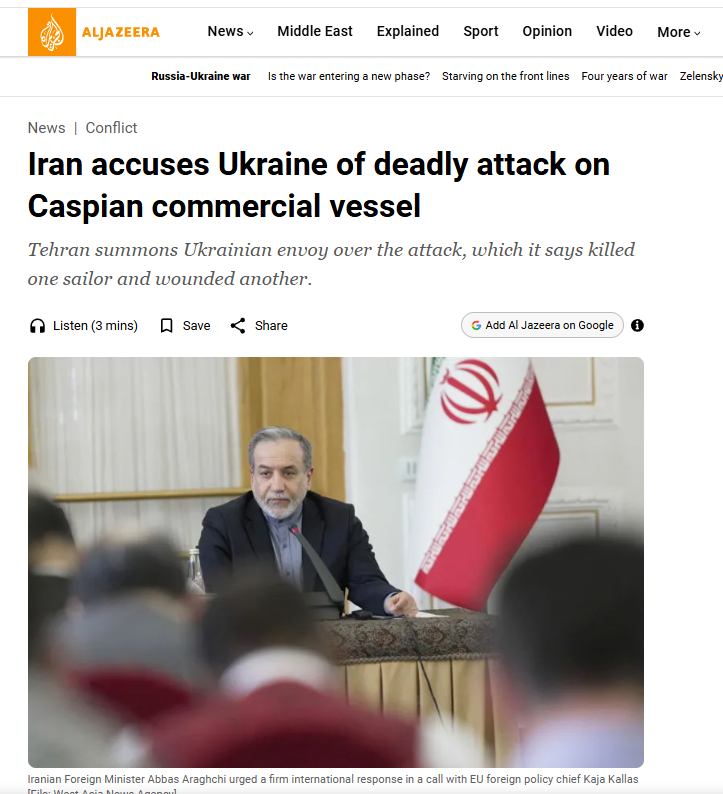
On July 25, 2026, Ukraine conducted a strike on ships in the Caspian Sea, and both Ukrainian and Iranian officials have confirmed the attack. However, the two countries give starkly different accounts of the target and the nature of the vessels involved. Zelensky claimed that the strike successfully targeted a Russian warship and vessels used to transport military cargo between Iran and Russia. Ukrainian officials identified the ships as legitimate military targets, as they were allegedly being used to supply weapons to Russian forces, violating international sanctions.
Iran’s officials strongly condemned the attack, describing it as an act of aggression on an “Iranian commercial vessel.” They stated the ship was carrying steel and was sailing from Russia to Iran, with the attack reportedly killing one sailor and injuring several others . Iran has denied Ukraine’s claims that the vessel was carrying military equipment. More importantly, Iranian officials claimed the strike was on a commercial ship carrying steel that was sailing FROM Russia’s Astrakhan Port TO Iran’s Anzali Port. They stated that the attack “killed one sailor and injured another” (later reports from Iran updated the injury count to three). Iran condemned the attack as a violation of the UN Charter and an act of aggression, reserving the right to defend its national interests.
The Caspian Sea has become a significant logistics route for Russia and Iran as they deepen their military cooperation, particularly for transporting weapons and military supplies. Russia has also been accused by Ukraine of providing satellite imagery to Iran for use in attacks in the Gulf region. What does that have to do with Ukrainian defense? This event highlights the expanding scope of the conflict and the growing overlap between regional confrontations. Zelensky appears to be carrying out war now against Iran as well.
Ukraine’s strike has prompted speculation since the Caspian Sea is more than 600 miles from the front line in Russia’s war, Ukraine has developed its long-range drones with targeting info most likely from the United States, which is highly unlikely to have taken place without the green light from Washington.
This move is highly dangerous for the US to have Ukraine enter the war with Iran all to pressure Iran seriously introducing the risk of merging these two wars. Neither the US-Iran War nor the Ukraine-Russian War are winnable. Iran has threatened retaliation expanding the war. The Neocons advising Trump are dead wrong. There is even talk of sending boots on the ground to attack Iran’s nuclear facility.
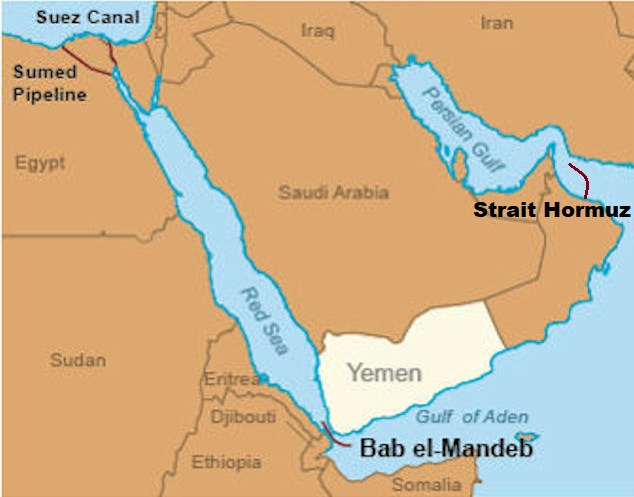
The Bab el-Mandeb Strait is another vital shipping chokepoint, connecting the Red Sea to the Gulf of Aden. The Iran-backed Houthis hit two Saudi oil tankers in the Red Sea this past week, causing Saudi Arabia to strike the Yemeni port city of Hodeida. With the both the Bab el-Mandeb Strait and the Strait or Hormuz blocked, in addition to expanding the war bringing in Ukraine. The Trump Administration may assume it is now intended to complete a ring of economic and military pressure around the Iran. However, we may see Ukraine get involved even further supporting ethnic insurgent groups against Tehran, similar to Kyiv’s approach in Syria against the Assad regime. This only incentivizes Iran to launch its own direct attacks against Ukraine-linked vessels in other sea lanes or against Ukrainian infrastructure directly. Tehran could also recognize Crimea and the Donbas as parts of Russian territory.
Iran’s war is becoming increasingly intertwined with both the Saudi-Houthi confrontation as well as now the Russia-Ukraine war. This is developing into World War III that our computer has been warning becomes possible in 2027. With each passing week, we are witnessing the unfolding of a global war that is becoming increasingly complex with a multidimensional risk profile. Those who think these wars are winnable are delusional. Ukraine has already become a real player in the Middle East, signing a security agreement with Saudi Arabia to develop defense against Iranian-designed drones they have supplied to Russia. Zelensky also made visits to the United Arab Emirates and Qatar to reach similar agreements
The situation in the West is part of a broader global trend of dwindling oil supplies. The near-closure of the Strait of Hormuz has significantly disrupted global oil flows, leading to large draws on inventories worldwide. The U.S. Energy Information Administration (EIA) projects that global oil inventories in the Organization for Economic Cooperation and Development (OECD) will fall to their lowest levels since 2003.
U.S. Strategic Petroleum Reserve: At a 43-year low.
U.S. Commercial Crude: Rose slightly in the latest week but is 6% below the five-year average.
U.S. Gasoline Stocks: 7% below the five-year average.
U.S. Distillate Stocks: 10% below the five-year average.
The overall picture shows that oil inventories in the West are under significant stress, with the crucial emergency reserve at a historic low and other commercial stocks sitting well below typical levels.
The simultaneous closure of the Strait of Hormuz and the Bab el-Mandeb Strait has created a severe and unprecedented crisis for global oil supplies. There is no exact timeline for how long this can hold, as it depends on several critical factors, but current estimates and data paint a concerning picture. As they say, the clock is ticking on emergency reserves.
The primary buffer against this crisis has been the release of strategic petroleum reserves (SPR), but these are being depleted rapidly. US Strategic Petroleum Reserve is at absolute critical lows. The US SPR has fallen to 319 million barrels as of mid-July, the lowest level in over 40 years . It is approaching a minimum operational threshold of 250 million barrels needed to maintain the physical integrity of its storage caverns. Withdrawals are averaging 6.4 million barrels per week. At this pace, the US SPR would hit that critical minimum in approximately 11 weeks (around early October 2026) .
Global refining margins have hit record highs, and the International Energy Agency (IEA) has stated there is “no room for complacency” on oil security as commercial inventories continue to be drawn down. Before the current conflict, it was already projected that OECD inventory days would fall to their lowest level since 2003. The demand on these reserves is immense because two of the world’s most critical oil chokepoints are blocked simultaneously for the first time in modern history.
Together, the two straits normally carry around a quarter of the world’s seaborne oil and gas. Current estimates suggest that the closures are blocking 15-17% of the world’s oil supply. Due to the war, Ukraine’s energy supply situation has transformed dramatically. It has effectively pivoted away from Russian energy and now relies on a combination of domestic nuclear power, massive electricity imports from European neighbors, and new supply routes for natural gas and oil from Western and other partners. Iran can bring the world to its knees forcing the depletion of the SPR.
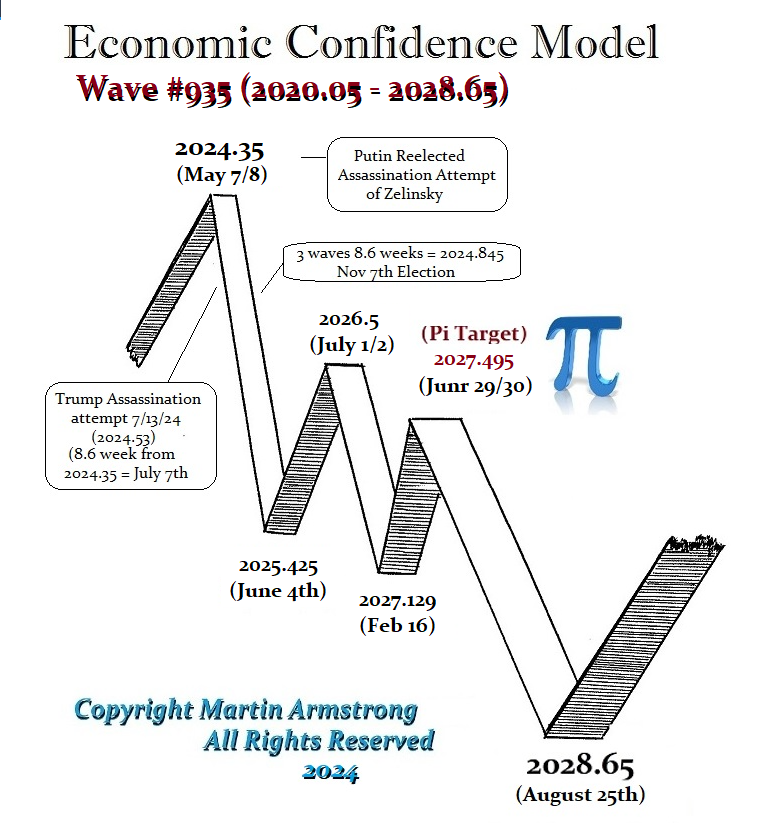
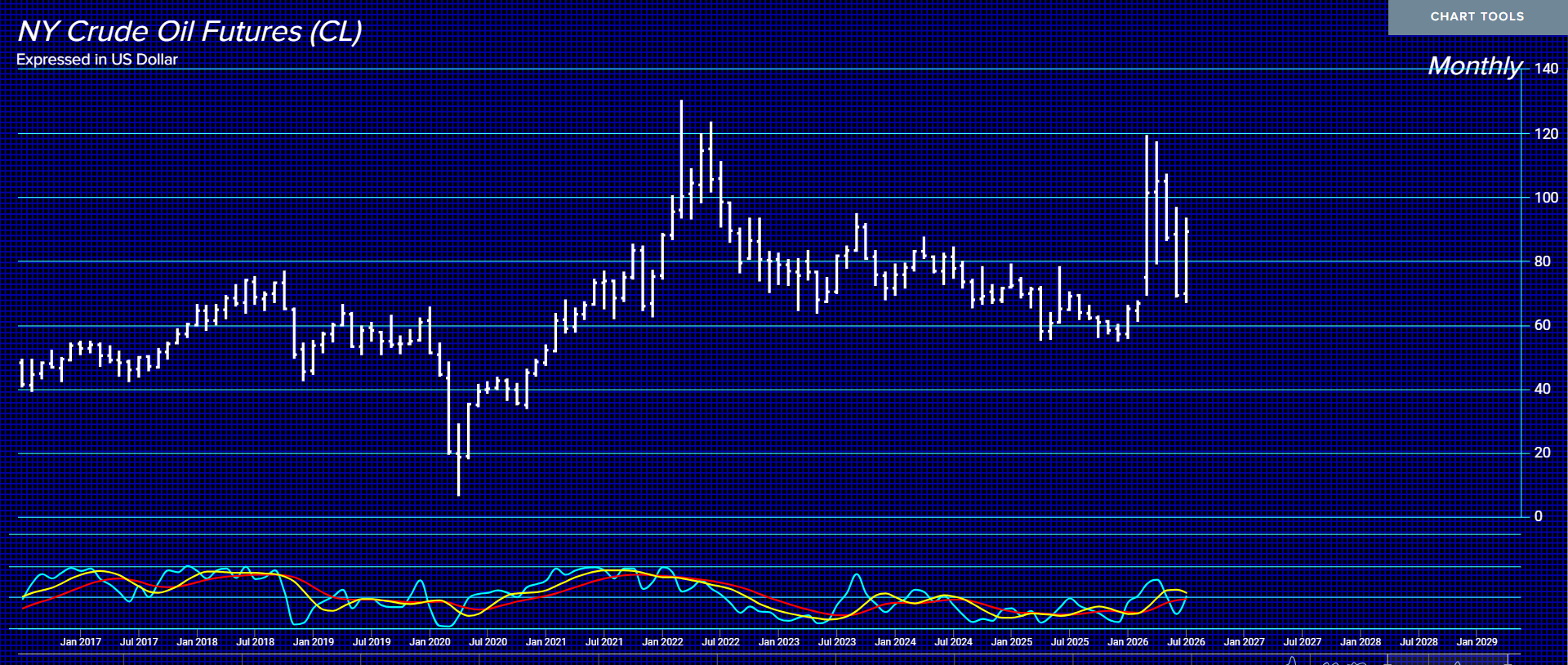
Soaring oil prices (NY and Brent crude recently topped $100 per barrel) are already starting to reduce demand. This is a natural market mechanism to balance supply and demand, but it comes at the cost of significant economic pain and the risk of a global recession, which our computer is projecting into 2028. Ultimately, the world is navigating uncharted territory. While the SPR has provided a crucial bridge, it cannot replace the millions of barrels of daily supply lost to the blockades. The timeline for resolution hinges on geopolitics, and time is rapidly running out on the current emergency buffers.