
Close Menu
    Trending
    • Cepeda, de la Espriella advance in Colombia’s presidential election | Elections News
    • The top 10 players in 2026 Stanley Cup Final
    • This 3D model captures a rare tropical glacier before it’s gone
    • Back-to-back chemical accidents raise alarm over EPA push to reduce oversight
    • Map: 6.0-Magnitude Earthquake Strikes off the Coast of Chile
    • Prince William’s Secret ‘Life With The Lads’ Beyond Royal Duties
    • Netanyahu orders deeper Israeli incursion into Lebanon to hit Hezbollah
    • Kohli powers Bengaluru to ‘stuff of dreams’ back-to-back IPL titles | Cricket News
    Benjamin Franklin Institute
    Monday, June 1
    • Home
    • Politics
    • Business
    • Science
    • Technology
    • Arts & Entertainment
    • International
    Benjamin Franklin Institute
    Home»Business»This 3D model captures a rare tropical glacier before it’s gone
    Business

    This 3D model captures a rare tropical glacier before it’s gone

    Team_Benjamin Franklin InstituteBy Team_Benjamin Franklin InstituteMay 31, 2026No Comments3 Mins Read
    Share Facebook Twitter Pinterest Copy Link LinkedIn Tumblr Email VKontakte Telegram
    Share
    Facebook Twitter Pinterest Email Copy Link


    When Klaus Thymann flew nearly 15,000 feet up into Indonesia’s remote highlands last November, he was racing to document ice that few people realize exists. Near the summit of Puncak Jaya, the country’s highest mountain, some of the world’s last tropical glaciers are rapidly disappearing.

    [Photo: Klaus Thymann]

    “We stand now to lose these glaciers within a decade,” says Thymann, an explorer, photographer, and scientist who spent days creating a detailed 3D model of the remaining ice.
    [Image: Project Pressure]

    Few outsiders ever see the glaciers. The mountains sit in a rebel-held area in Central Papua Province, on the island of New Guinea, Indonesia’s easternmost territory. It’s so dangerous there that Indonesia has banned hiking to the peaks. The U.S. State Department warns Americans against travel to the region because of civil unrest (one of the suggestions, if someone takes the risk: Appoint a family member as a point of contact in case you’re taken hostage).

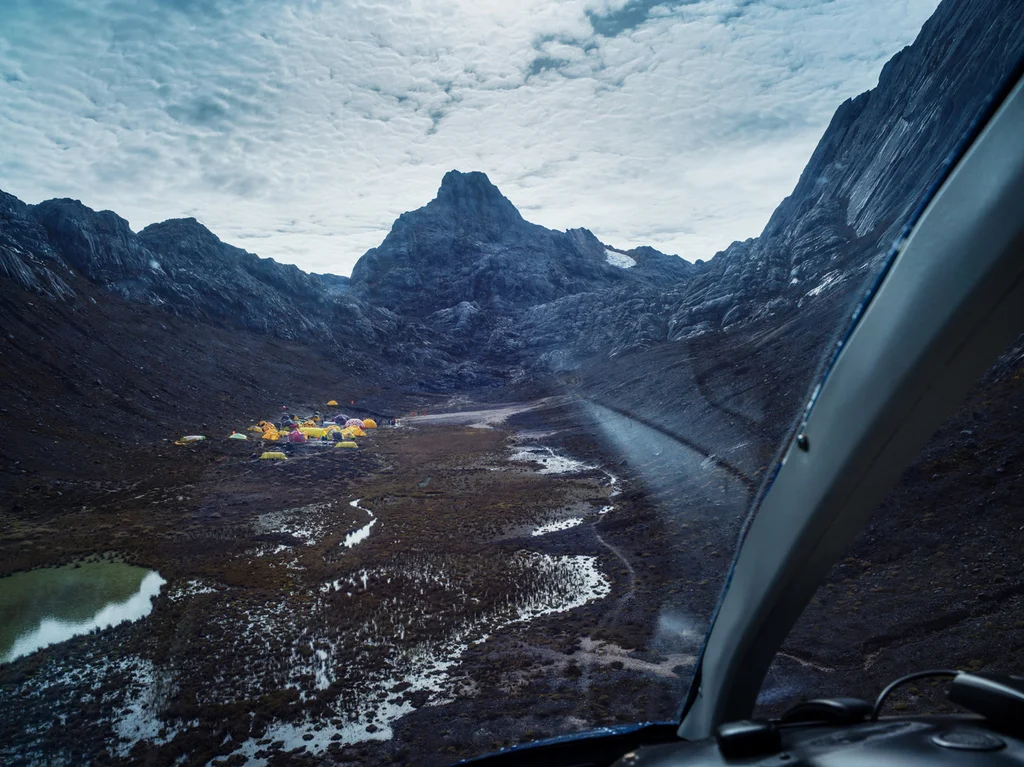
    To reach the glaciers, Thymann had to wait for days for the conditions to be right for a helicopter to fly up the mountain. When he arrived, along with guides and armed guards, he saw one of the rare glaciers—not far from humid rainforests and beaches, but at an altitude so high that the area has historically stayed below freezing. Now, the ice is melting quickly because of climate change, an accelerated version of the process that’s happening to glaciers around the world.
    [Photo: Klaus Thymann]

    Between 1980 and 2024, as the planet heated up, the glaciers in the area lost 97% of their ice cover. They once sprawled over an area about twice the size of Central Park. By 2024, the total area was smaller than Grand Central Station. Four out of the original six glaciers have disappeared. The last two are expected to disappear by 2030.
    [Photo: Klaus Thymann]

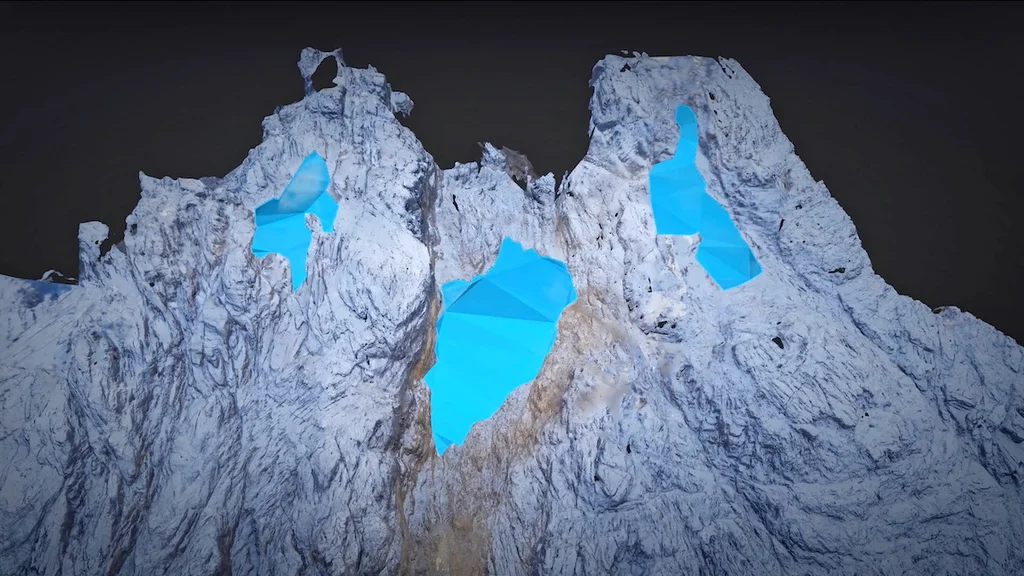
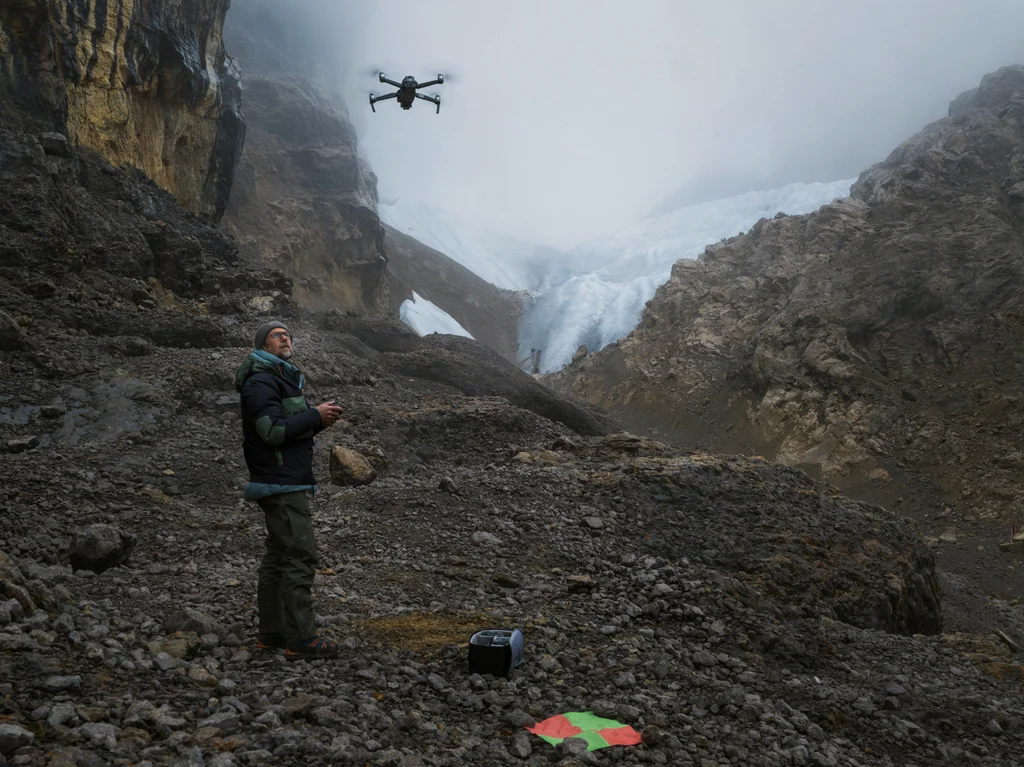
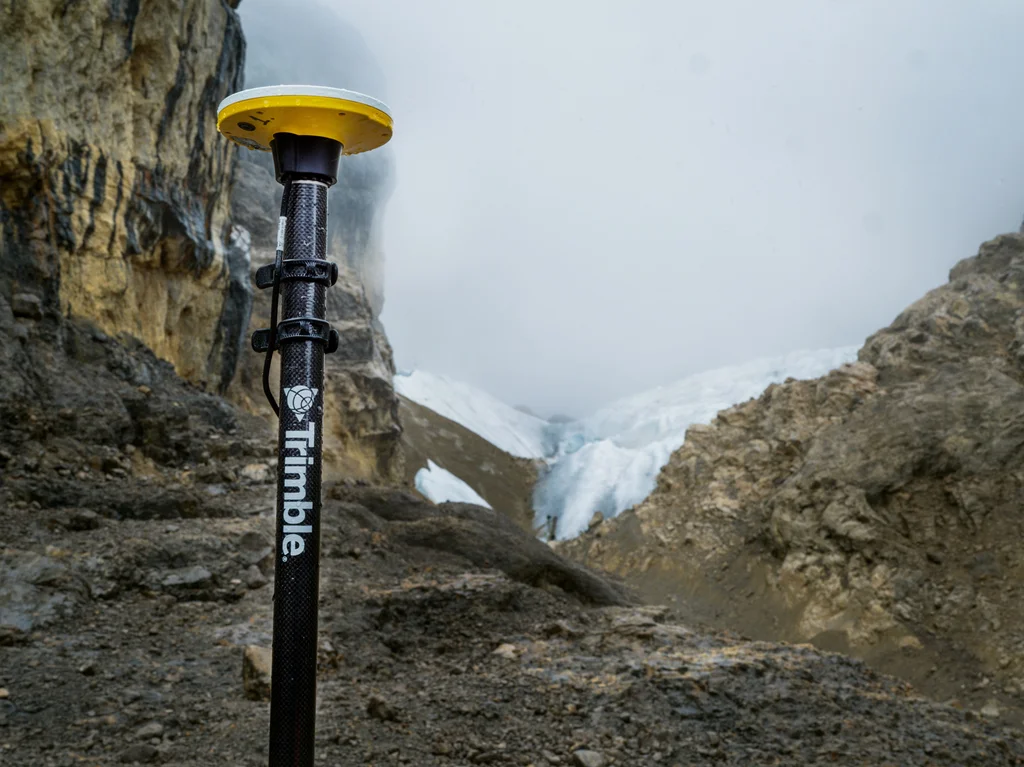
    Thymann used drones to photograph the mountain “from every conceivable angle,” he says, later using software to stitch together overlapping images to create a 3D model of the site and one of the glaciers, called the East Northwall Firn, which has split into three parts as it melts. Because of heavy cloud cover in the area—it rains 300 days a year—it’s difficult to accurately map the glacier using satellite images. Geolocation technology from a company called Trimble helped map the site in centimeter-level detail. Thymann, who has a nonprofit called Project Pressure that uses art, science, and activism to track environmental change, previously used a similar process to document other tropical ice in South America and East Africa.
    [Photo: Klaus Thymann]

    The data from the Indonesian mountain is open source so scientists can use it to track the ecosystem as it changes. But it’s also a record of an important cultural site. “For locals, they’re called the ‘eternity’ glaciers,” says Thymann. “Now they’re becoming extinct. Maybe it’s a good thing for future generations to have a visual reference of what they look like.”


    Source link

    Share. Facebook Twitter Pinterest LinkedIn Tumblr Email Telegram Copy Link

    Related Posts

    Business

    How to stop procrastinating with just one word

    May 31, 2026
    Business

    The case for saying no to new gadgets

    May 31, 2026
    Business

    Kevin O’Leary believes his 10,000-acre data center can be ‘beautiful’

    May 31, 2026
    Business

    America’s HOAs are broken. This startup is trying to fix them

    May 31, 2026
    Business

    Your workforce doesn’t need more AI. It needs play

    May 31, 2026
    Business

    Science says you can indeed buy happiness—for as little as $30

    May 31, 2026
    Editors Picks

    1.2 Million Dead Russians | Armstrong Economics

    December 23, 2025

    Measles 2026 update: These states are seeing new outbreaks as infections hit all-time highs

    February 13, 2026

    US media trapped between oligarchy and presidency | TV Shows

    April 12, 2026

    Future is bright for Sharks after selecting star prospect

    June 28, 2025

    Britney Spears Spends Time On A Yacht With Sons Weeks After DUI Arrest

    March 30, 2026
    About Us
    About Us

    Welcome to Benjamin Franklin Institute, your premier destination for insightful, engaging, and diverse Political News and Opinions.

    The Benjamin Franklin Institute supports free speech, the U.S. Constitution and political candidates and organizations that promote and protect both of these important features of the American Experiment.

    We are passionate about delivering high-quality, accurate, and engaging content that resonates with our readers. Sign up for our text alerts and email newsletter to stay informed.

    Latest Posts

    Cepeda, de la Espriella advance in Colombia’s presidential election | Elections News

    June 1, 2026

    The top 10 players in 2026 Stanley Cup Final

    June 1, 2026

    This 3D model captures a rare tropical glacier before it’s gone

    May 31, 2026

    Subscribe for Updates

    Stay informed by signing up for our free news alerts.

    Paid for by the Benjamin Franklin Institute. Not authorized by any candidate or candidate’s committee.
    • Privacy Policy
    • About us
    • Contact us

    Type above and press Enter to search. Press Esc to cancel.