

Key Takeaways
- Weed Man is a lawn care franchise that generates around $450 million in total annual revenue.
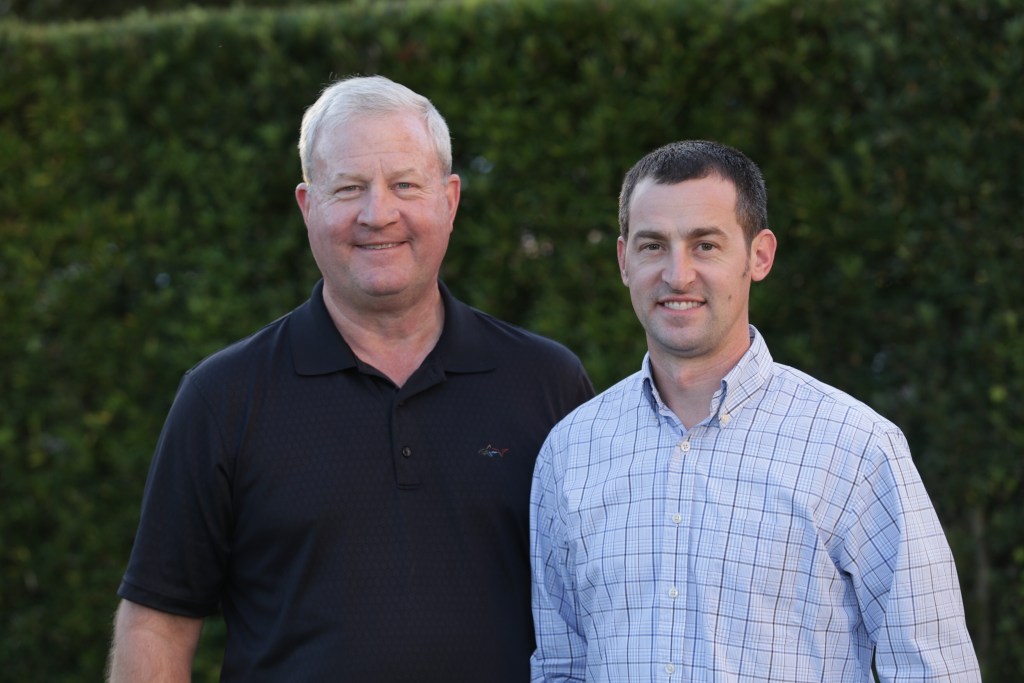
- Terry and Andy Kurth, a father-son team, play a significant role in generating revenue for the franchise.
- Terry is the founder of Epic3, Weed Man’s largest multi-unit ownership group, which generated $103 million in sales last year.
Terry Kurth, 77, says that choosing the right life partner is the most important decision an individual can make — and he knows the truth of this statement firsthand. Nearly 50 years ago, his wife was in labor. She was in the hospital lying on her side with severe back pain because their daughter, Amanda, was turned 180 degrees in the womb.
Terry was there for his wife — but he also didn’t stop working.
“I had one hand on the small of her back to relieve pain and the other on the phone calling prospects to sell lawn care,” Terry tells Entrepreneur in a new interview. “She didn’t complain because she knew we were about to have another mouth to feed, and failure wasn’t an option.”
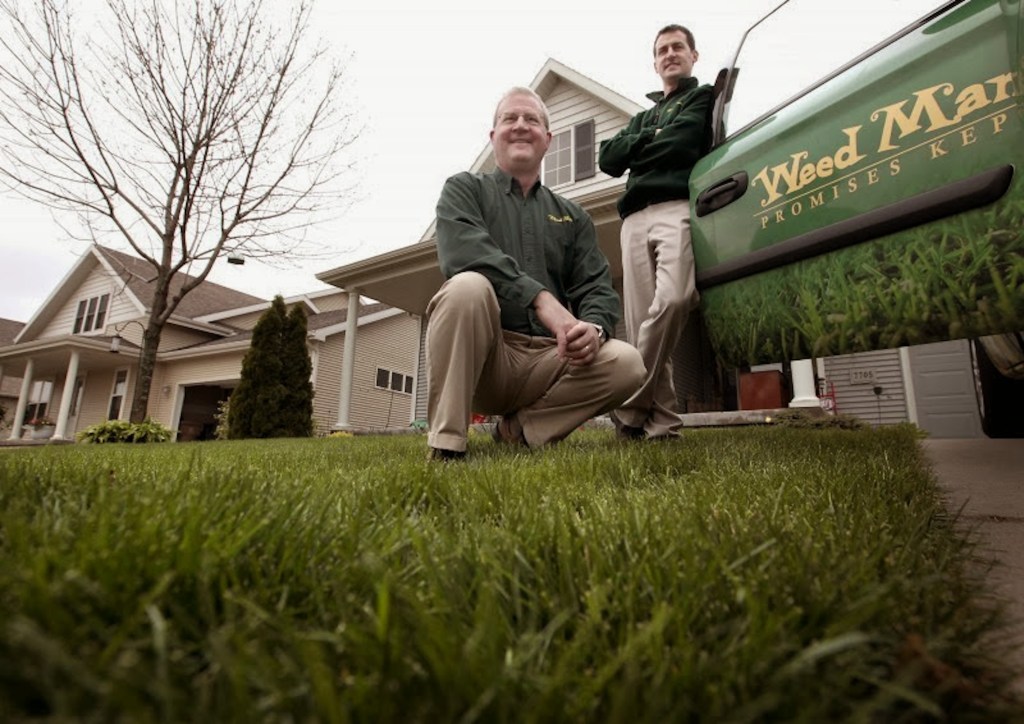
Terry entered the Weed Man system in 2000 after exiting his own lawn care ventures and searching for his next chapter. He quickly saw an opportunity to expand the Canadian brand in the U.S. and founded Epic3, which would become Weed Man’s largest multi-unit ownership group. Starting with a single territory in Madison, Wisconsin, Terry steadily scaled the operation into a nationwide footprint.
Andy Kurth’s entry into the business was far less strategic. As Terry’s son, he joined while in college simply to earn extra cash, working in sales and as a lawn care technician. But what began as a temporary gig evolved into a long-term career. Over time, Andy took on increasing responsibility, eventually rising to become president and CEO of Epic3 and leading the continued expansion of the business his father helped build.
The following interview with Terry and Andy has been lightly edited for clarity and concision.
Early days
How did you end up in lawn care and franchising?
Terry: I was going to be an engineer and went to the University of Wisconsin, graduating in 1975. While I was there, I started working at a golf course and fell in love with being outside and working with turf.
I ended up getting a degree in agronomy, which is essentially plant science, and became a golf course superintendent right out of college. Later, I went to work for the Scotts Company in its professional turf division and traveled around the country giving educational seminars to golf course superintendents, landscape contractors and early lawn care operators.
Eventually, I came into contact with a company called Barefoot Grass, became one of its first franchisees in 1978, built that up and ultimately sold when Barefoot Grass was acquired by TruGreen. It ended well, and I found myself gainfully unemployed in my mid‑40s with the proceeds from that sale.
What did you do after exiting Barefoot Grass?
Terry: After Barefoot Grass was sold and I completed that chapter, I became past president of what was then the Professional Lawn Care Association of America (PLCAA), which gave me a strong network of operators across the country. Weed Man is headquartered in Toronto, and through that network, I got to know their leadership. They flew me up; I met the franchisor and a Canadian franchisee who had acquired the master rights to the United States, and together we came up with the idea of creating regional sub‑franchisors. My region included Minnesota, Wisconsin, Illinois, North Dakota and South Dakota. I sold franchises there, kept the largest share of the royalties, and passed the remainder up to the master group in Toronto.
How did you transition back into operating a lawn care franchise yourself?
Terry: When I sold to TruGreen, I had a three‑year non‑compete that restricted me from operating in the cities where I had locations — places like Madison, Appleton, Green Bay, Lexington and Peoria. Once that non‑compete expired in January 2001, I re‑entered the business as a Weed Man franchisee. I started the Madison operation with one of my wife’s nephews, and when he chose to pursue something else, we hired a manager.
That’s around the time Andy, who had been helping me sell during college, stepped in and ultimately became the manager in Madison. From there, Andy and I began working closely together, growing the business organically into new markets and then merging additional markets into our holding company over time. Our first billing year in Madison in 2001 was about $110,000 in revenue; today, we’re around $103 million, so it’s been quite a run over roughly twenty‑five years.
Secrets to scaling Weed Man
What are your secrets to growth? How do you scale from $110,000 to $103 million?
Terry: A big inflection point was when I met Roger Mongeon, who held the U.S. rights to Weed Man and is one of the smartest people I’ve ever met, both in business and in general. He’s a former chemical engineer, and we developed a deep mutual trust and respect. He showed me the systems Weed Man had built, and I quickly realized that to handle significant growth, you must have robust systems. People talk about breaking through glass ceilings in their careers; growth in a business is similar — you can’t get to the next level without systems that ensure nothing falls through the cracks as you add people and locations. You also need a relentless attitude — failure can’t be an option.
Take me back 26 years. What did that very first Weed Man location look like day to day, and what convinced you both that it was worth betting your careers on?
Andy: From my perspective as a college kid at the time, I wasn’t initially thinking of a long‑term career. I’d show up on Saturdays to an almost vacant shell of an office and be the only person there selling lawn care. We used old‑school telemarketing to generate leads, and my cousin, who had started the business with my dad, was out treating lawns nearly by himself.
That first year, revenue was around $100,000, so there simply weren’t many people involved. Each year, as we added revenue, we’d bring in another technician, then another and eventually a senior technician, gradually building out the team.
Solving mistakes
Andy, can you share an instance when you made a mistake running the company and how you fixed it?
Andy: Early in my leadership career, I was wearing 10 hats and constantly chasing people around. When we first introduced door‑knocking for lead generation, I found myself running after supervisors every morning because they kept forgetting door hangers. One day, I realized how unsustainable that was. Instead of continuing to chase people, I focused on developing better systems — start‑of‑day procedures, checklists and clearer role ownership — so that team members owned their responsibilities. That experience was a catalyst for me to shift from being a task‑oriented manager to a leader focused on developing other leaders.
Hand-raising culture
Andy, you have described the organization as having a hand-raising culture. What does that mean?
Andy: Hand‑raising culture describes leaders inside our organization who literally raise their hands to take on new challenges and uproot their lives. For example, a gentleman from Green Bay volunteered to move to Austin to start that branch, and another teammate from Madison, who had also worked in Milwaukee, raised his hand to move to Denver.
Those markets are now among our top performers — Denver, for example, grew from around $250,000 in first‑year revenue to over $8 million. We keep building stables of leaders who breathe our mission — people, opportunity, community — in that order. They buy into that mission and carry it into their branches and departments, which creates new opportunities in new areas and truly changes lives. Many people in our company have careers they never imagined, and they, in turn, pass that mindset to the people they lead.
Long-term vision
What are your plans for growth and succession?
Andy: We plan to keep doing what we do best: changing people’s lives for the better and building a culture where people want to advance that mission of people, opportunity, community. If our people are taking care of each other and building something they can call their own, we’ll be fine.
Terry: At the system level, Weed Man as a whole generates around $435 million to $450 million in annual revenue, and with Epic3 at around $103 million, we’re a significant contributor. The broader goal is to become a billion‑dollar company, and we want to help drive that by innovating and supporting other franchisees within the Weed Man family. Together, we intend to reach that billion‑dollar milestone while maintaining the culture and systems that got us here.
Key Takeaways
- Weed Man is a lawn care franchise that generates around $450 million in total annual revenue.
- Terry and Andy Kurth, a father-son team, play a significant role in generating revenue for the franchise.
- Terry is the founder of Epic3, Weed Man’s largest multi-unit ownership group, which generated $103 million in sales last year.
Terry Kurth, 77, says that choosing the right life partner is the most important decision an individual can make — and he knows the truth of this statement firsthand. Nearly 50 years ago, his wife was in labor. She was in the hospital lying on her side with severe back pain because their daughter, Amanda, was turned 180 degrees in the womb.
Terry was there for his wife — but he also didn’t stop working.
“I had one hand on the small of her back to relieve pain and the other on the phone calling prospects to sell lawn care,” Terry tells Entrepreneur in a new interview. “She didn’t complain because she knew we were about to have another mouth to feed, and failure wasn’t an option.”