

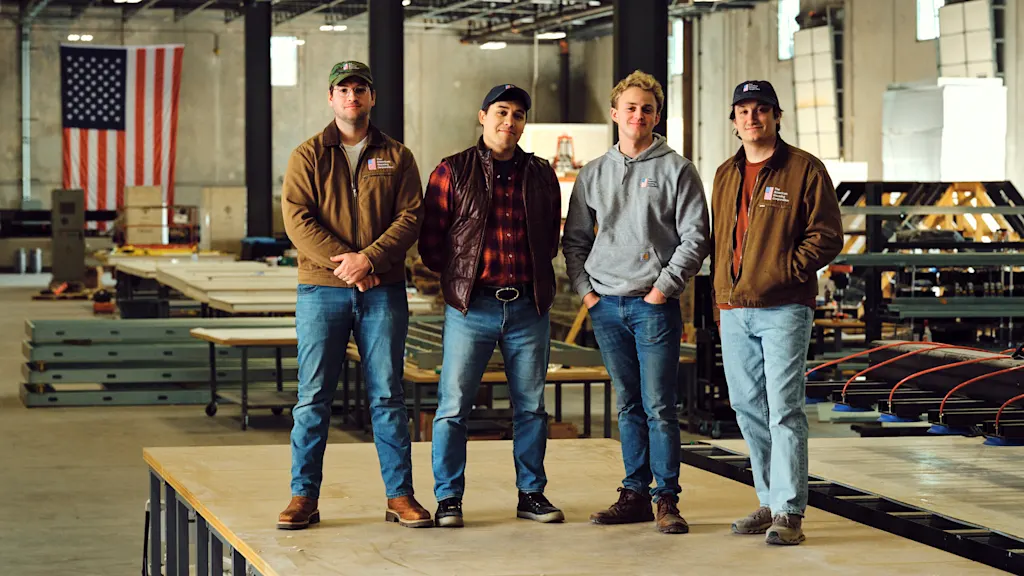
At a factory in Austin, a startup recently finished its first prototype: a row house it plans to replicate in cities nationwide to help with the housing shortage.
Row houses—narrow, multistory homes that share walls with neighbors on each side—are ubiquitous in older neighborhoods from Brooklyn to San Francisco, but aren’t commonly built now. The American Housing Corp., wants to bring them back.
“Row homes are an underbuilt category in the United States,” says Riley Meik, cofounder and CEO of the American Housing Corp. The company has developed a kit of parts that can be quickly manufactured, shipped to building sites in dense urban neighborhoods, and assembled, helping shrink construction costs. While the price of an American Housing Corp. row house will vary, some of the first row houses in Austin will sell for around $750,000.
“The U.S. is actually good at building single family homes on the outskirts of town—you look at the numbers that Lennar or D.R. Horton does, they are building over 150,000 homes a year,” Meik says. “But they are never going to build in the cities where people already live and want to live.”
The challenge of the missing middle
Meik, an engineer who previously cofounded a rocket company, started thinking about housing during a stint at SpaceX’s former headquarters near Los Angeles. On his way to work, passing through single-family neighborhoods, he looked at the houses and wondered why more of them weren’t starting to be replaced with duplexes or fourplexes. Like many cities, large swaths of the greater Los Angeles area had zoning laws for years that restricted construction to single-family homes. Then a 2021 state law that changed that, allowing lots to be split for duplexes. Still, few developers were building the projects.
Meik knew that building more “missing middle” housing—buildings like row houses that are bigger than apartments but smaller than single-family houses—could help begin to fill the enormous housing shortage in cities like L.A. “I started tweeting about it, and saying, ‘It’s legal. Why aren’t we doing it?’” he says.
He connected with his eventual cofounders online. “We met just kind of screaming into the void—this is a problem that needs to get solved in this country, and we want to work on it,” he says. “That brought us all together. It’s something we’ve all been obsessed with for a very long time. So it wasn’t hard to convince each other that we should jump off into the deep end together and build this thing.”
They saw that a challenge for missing middle housing was the cost of construction. “There were probably hundreds of projects that I was seeing where someone had the approvals in hand, they were fully cleared, but the construction costs were too high and they couldn’t start the project,” Meik says.
Shrinking construction costs
To help reduce costs, the startup turned to prefab construction. The concept isn’t new—builders have been making housing parts in factories since Sears houses were shipped on trains in the early 20th century. Basic manufactured homes, formerly known as mobile homes, now often look more like conventional houses but cost significantly less. Other startups have tried to scale up prefab construction for apartment buildings, backyard guest houses, or higher-end homes. Some have failed spectacularly, like Katerra, which raised more than $2 billion before going out of business.
To avoid one of the pitfalls that some other builders have faced, the American Housing Corp. designed all of its components to fit inside standard shipping containers so that they can be moved cost-effectively. The shipping containers can travel affordably by rail, rather than on a truck, from the factory to a city. “I think one of the things that has held back prefab to date, specifically volumetric modular, is it is incredibly expensive to ship those modules,” Meik says. “They’re oversized loads, and you get into the tens of thousands of dollars per module to ship them. We can be at less than $5,000, all-in, to ship a unit from Texas to California.”
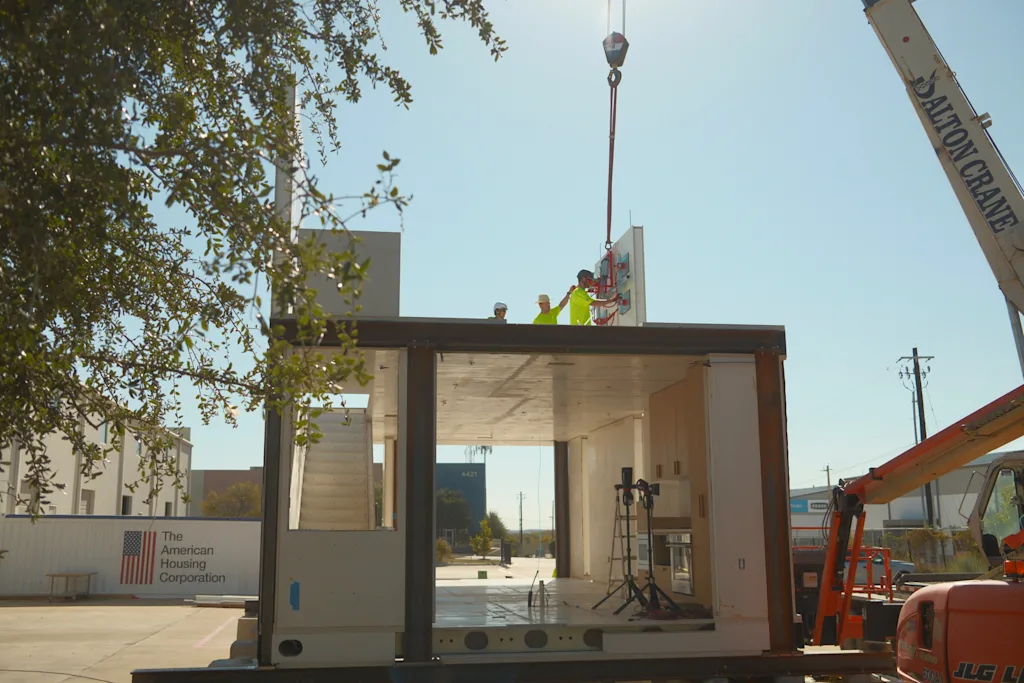
Factories can be expensive—Katerra spent $150 million on one before it closed—and if they need to be built near each market, it makes the product uneconomical. (Cosmic, another startup that has been rebuilding homes in the L.A. area after the 2025 wildfires, takes a different approach to this problem, building low-cost microfactories at each site.)
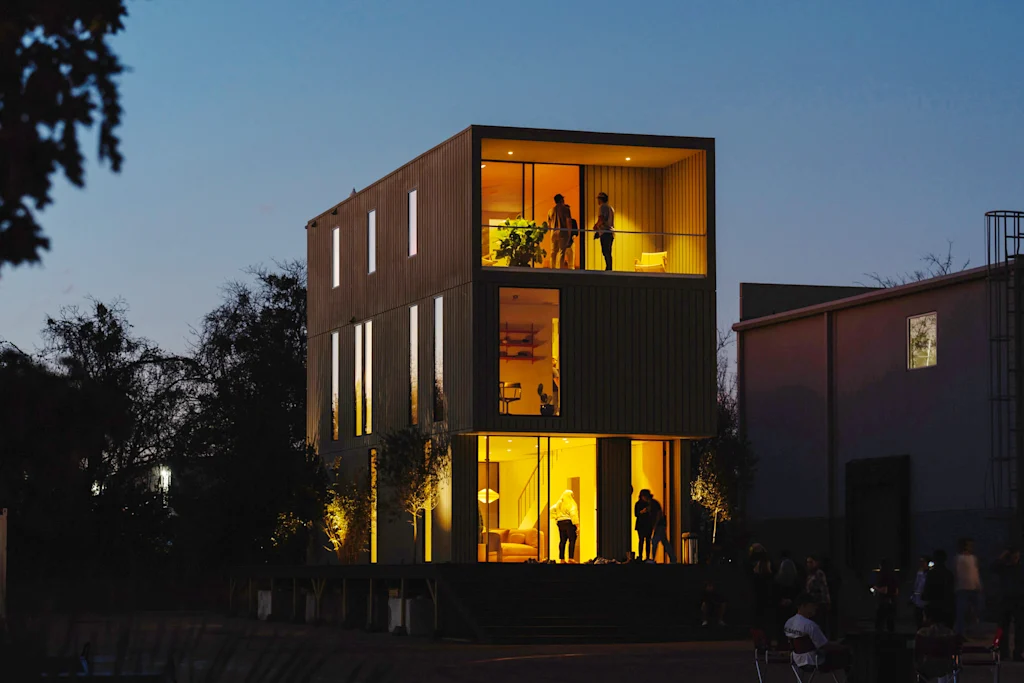
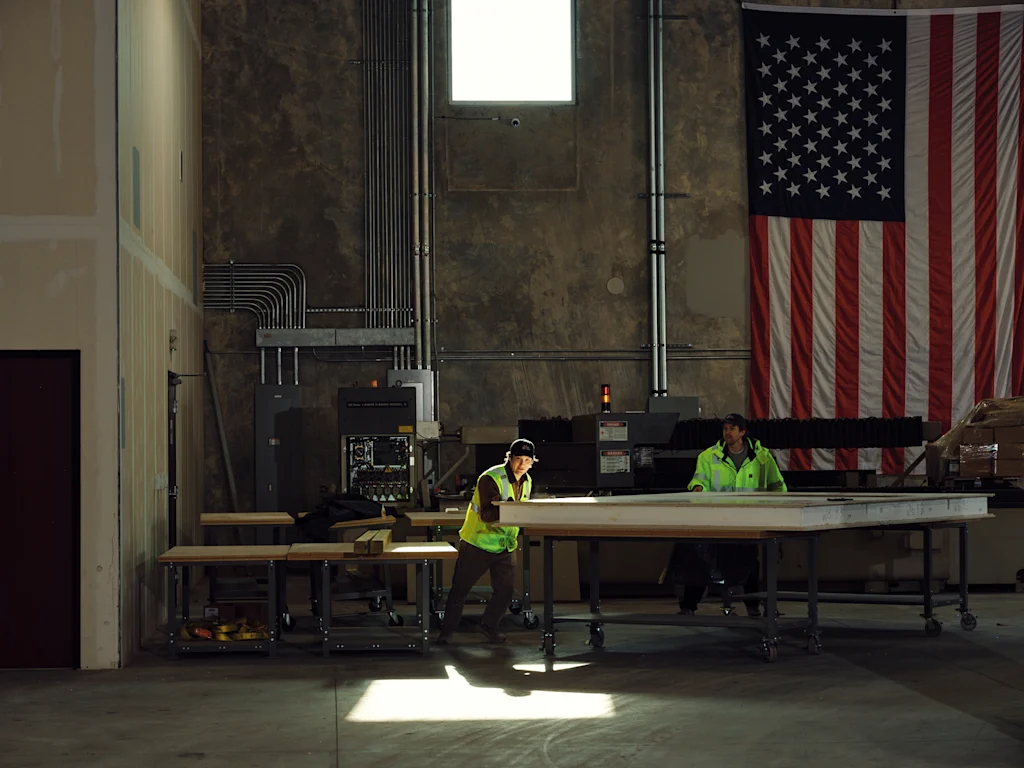
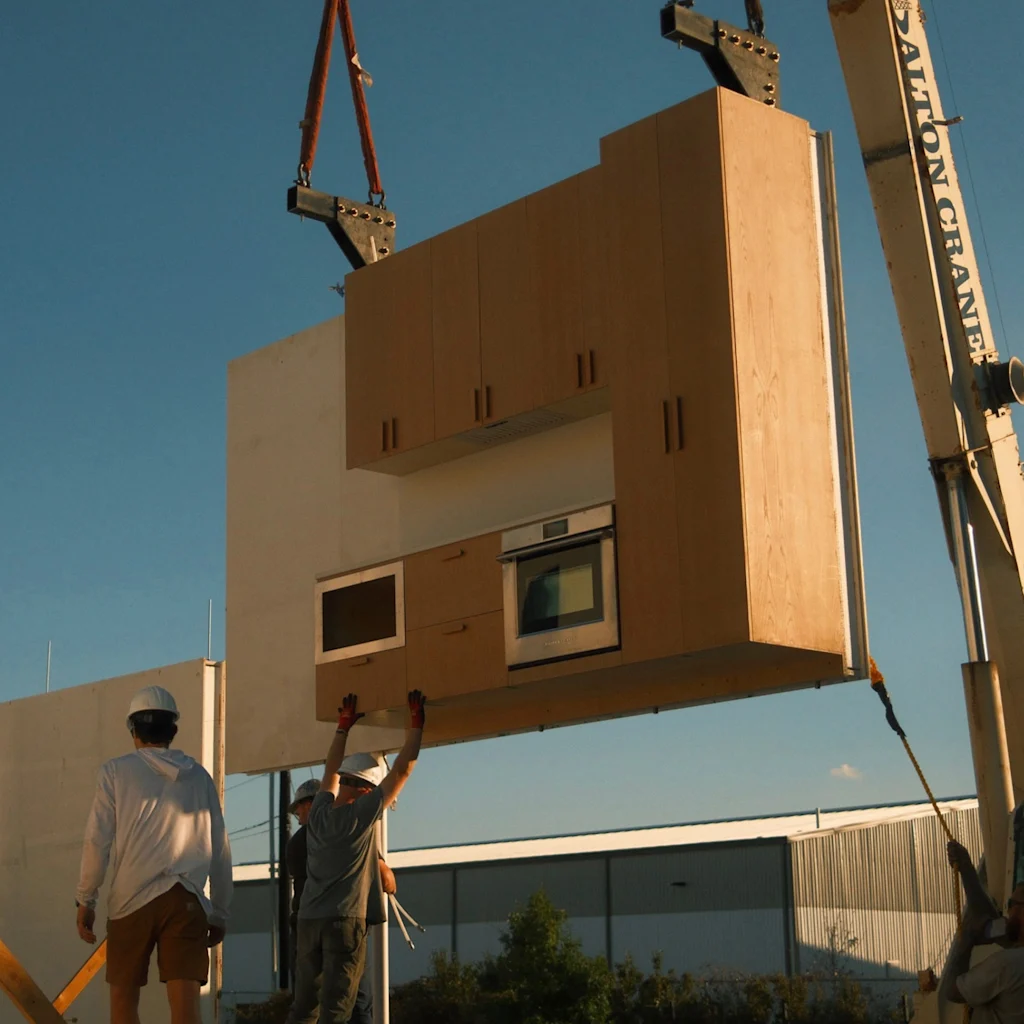
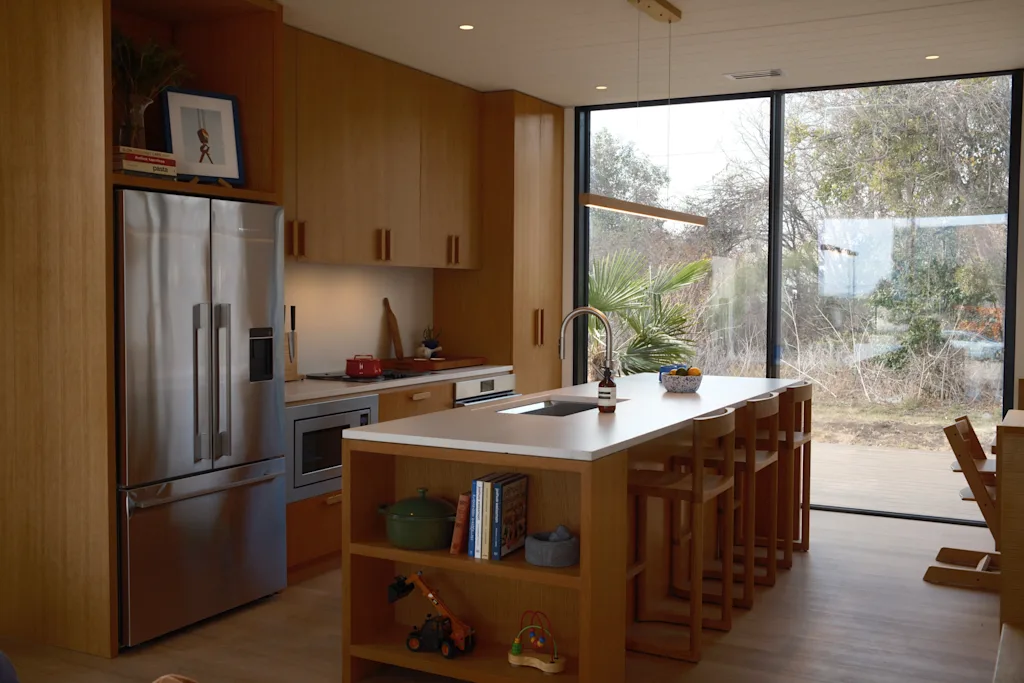
The American Housing Corp. designed a new kit of parts—from floor and wall panels to fully assembled kitchens and bathrooms—that can be built in an automated factory and then shipped to a site for quick assembly. The core materials, like steel and fiberglass reinforced cement panels, “are more common in automotive or aerospace than housing,” he says.
Designing a system for multistory homes was a challenge. “I think most people thought we were crazy for choosing to build a three-story home as our first,” says Meik. “The structural engineering, assembly process, and equipment required are completely different than building something as simple as a backyard home. But we believe that the only way to solve the housing crisis is by building missing-middle housing at scale. And we felt that row homes were the obvious choice.”
A new manufacturing model
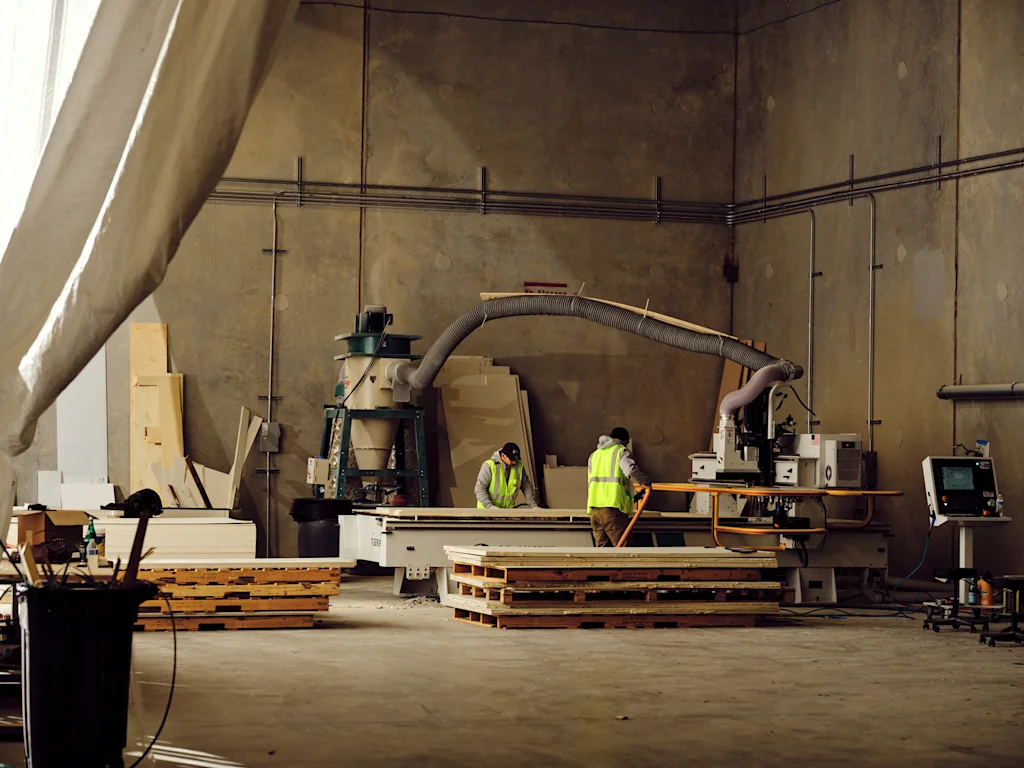
The company started building a “minimum viable” factory last summer to begin testing its manufacturing process, and then started building a prototype house. They deliberately took it slowly—designing and building one floor, learning from it before building the second floor, and then refining the process again before building the third floor.
As the team experimented with the first house, the total manufacturing time took weeks, but as it begins operations, it will move much more quickly. The company is now planning a new factory that aims to build one home per day. Right now, the early factory is churning out building parts that are being sent to Intertek, a certification company, for testing. After certification, the company plans to begin building homes in its first factory this year, while the new, larger factory is under construction.
When the parts are delivered to a building site, they’re designed to be assembled with a crane in days. All of this shrinks costs enough that projects can pencil out, Meik says.
The company also plans to act as a developer, working with partners to buy land on empty lots in dense neighborhoods, so that it can handle the entire process. “Our biggest learning from other [prefab] companies is that in order to have full control of what you build and how you build it (and truly be able to innovate in the way homes are built), you need to be both the prefab company and the real estate development firm,” Meik says. “Vertical integration has given us the freedom on the engineering side to redesign the home from the ground up in order to make it mass-producible in a factory setting. We don’t use two-by-fours, drywall, or hammers and nails. Our homes are designed to be built with machines.”
Using density to lower housing costs
For consumers, the biggest reason that the homes can be more affordable is density. “Land is the most expensive thing in the areas that we want to build in,” Meik says. “So the only way that we can really decrease cost for the end customer is by fitting as many homes on a certain piece of land as we can.”
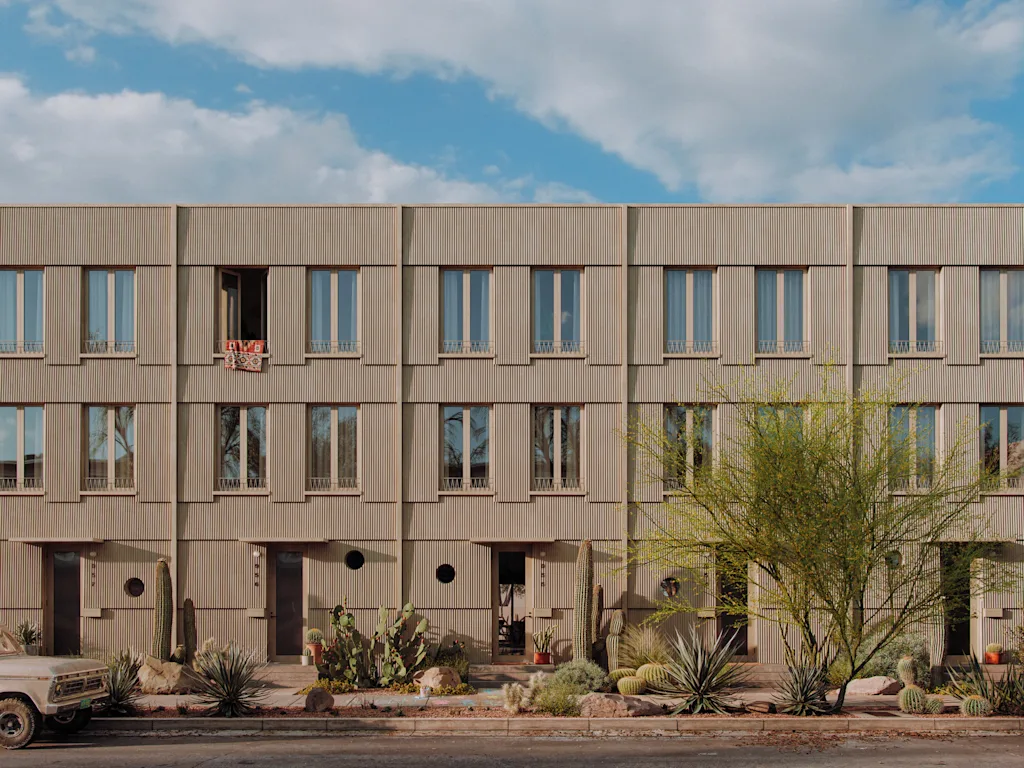
In Austin, one of the cities where they’re building first, they plan to sell row houses for less than $750,000 in neighborhoods where single-family homes sell for $1 million to $2 million, offering an option for buyers who otherwise might not be able to stay in a compact, walkable neighborhood. The first house is three stories tall, with four bedrooms and two and a half bathrooms. The company will sell houses directly to consumers; later, it may also rent them out in some cases.
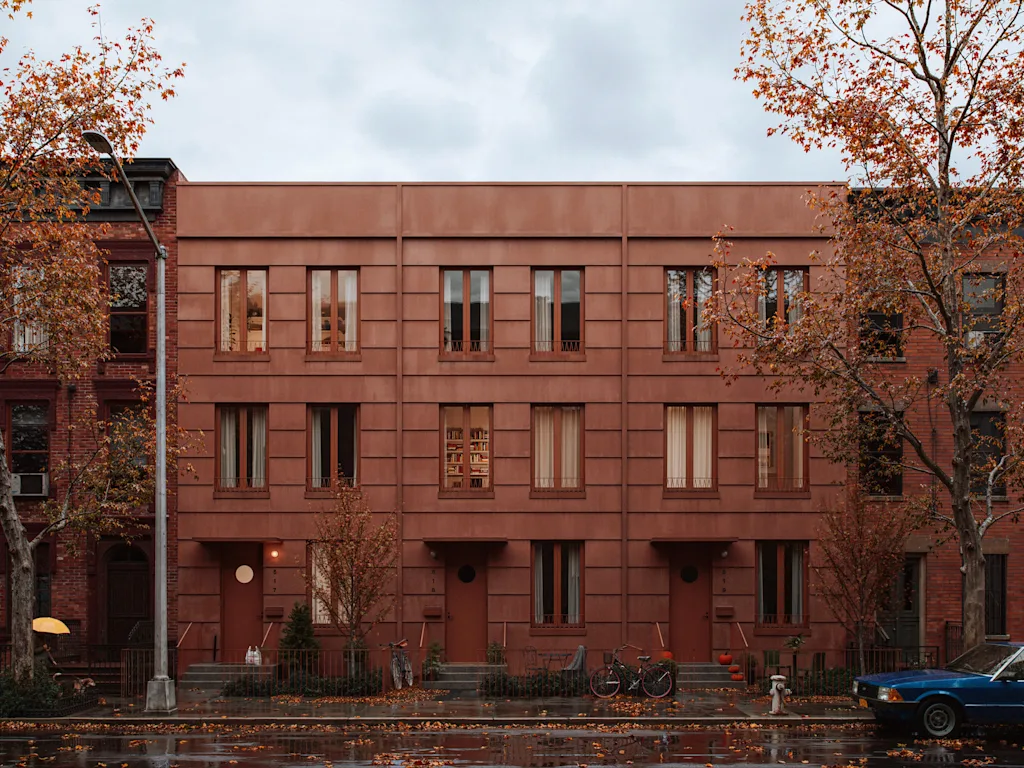
It plans to work nationally. While the floor plans and interior finishes will be similar from city to city, the homes are designed to use different facades that are designed to fit the local context. Historically, row houses have come in many forms: In a city like Philadelphia or New York, they range from simple working-class homes to taller, more ornate buildings for wealthy families.
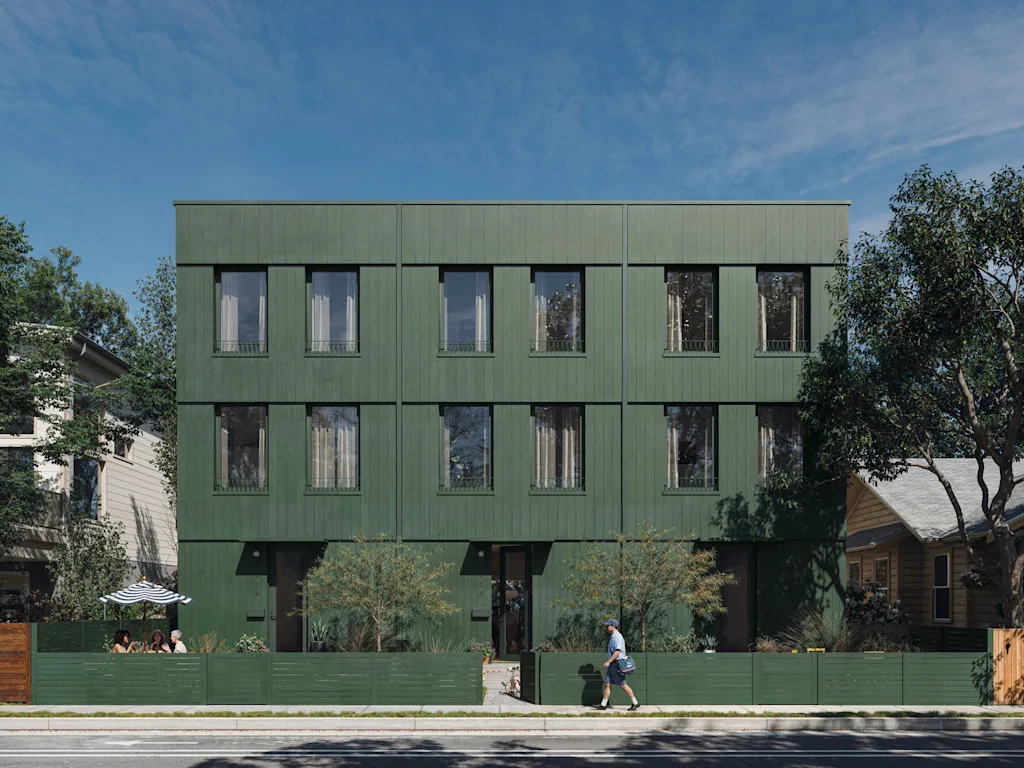
The design is meant to fit into existing urban neighborhoods. “We wanted to find a way to build something that would fit in between two New York City brownstones,” Meik says “We want to build in Brooklyn Heights and someone to walk by and say, ‘That’s nice.’ I think prefab historically has either leaned very ugly or hyper-modern, and unfortunately, neither of those really fit in in the neighborhoods that we want to build in.”
As they scale up, they want to recruit more engineers to work on the housing crisis. “Housing has often been thought of not as an engineering discipline, but something that’s left to the trades,” he says. “I think that’s completely wrong. One of our primary goals at the American Housing Corporation is to show great engineers that hey, you can bring those phenomenal skills that you developed building cars or rockets or iPhones and apply those skills to solving the most important problem of our generation—figuring out how to build more homes in this country.”