

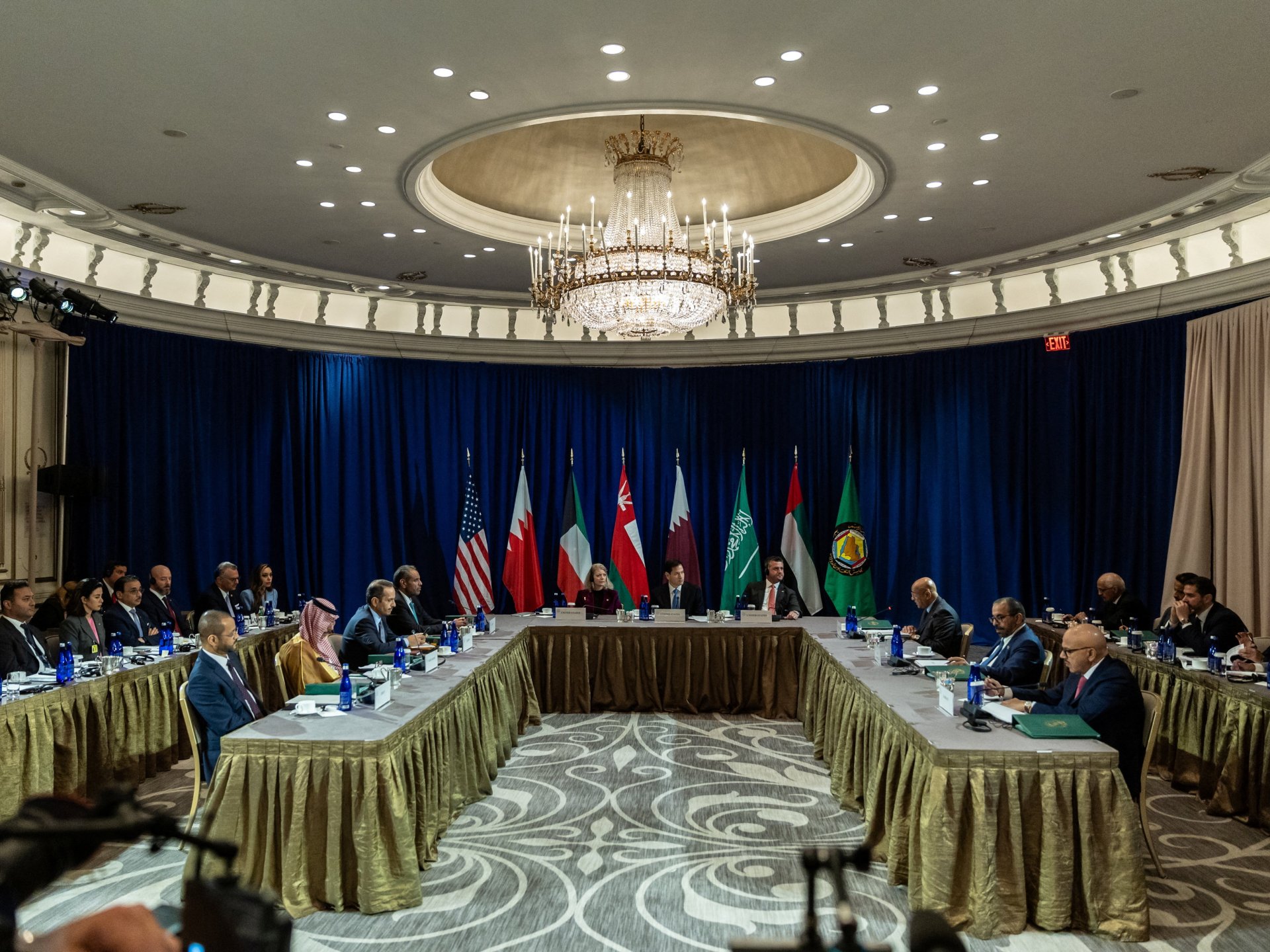
Amid the continuing escalation in the region, the Gulf Cooperation Council (GCC) pursues a balanced diplomatic policy grounded in calls for negotiation and support for political processes aimed at ending the conflict between the United States, Israel and Iran. GCC members stand by the principles of good neighbourliness and enhancing regional stability and are unified in their opposition to aggression and destabilisation.
In the coming months and years, Gulf unity can be taken even further by pursuing regional security arrangements, establishing new energy routes and expanding important economic integration projects that would guarantee development and stability.
In the present moment, the GCC must continue to make clear its categorical rejection of any attempt to seize control of the Strait of Hormuz or use it as a pressure card. The Gulf states cannot and will not be held hostage under any circumstances.
Imposing restrictions or levies on freedom of navigation through the strait constitutes a flagrant violation of international law: the Strait of Hormuz is a natural waterway governed by the law of the sea, which guarantees freedom of passage, and it cannot be treated as a channel subject to sovereign control or political extortion. Any attempt to impose a new reality or alter its legal status will be met with firm action from the GCC states.
It bears recalling that the strait is not the preserve of a single party. Its western shore falls within the territories of GCC member states: the Sultanate of Oman and the United Arab Emirates. This is a reality that reflects the complex geographical and legal character of the strait, and confirms the impossibility of monopolising or controlling this critical waterway.
The GCC states must continue to stand unified in the rejection of Iranian aggression. No attack can be legally justified under the pretext of “self-defence”. Going down the path of aggression has only further isolated Iran from the region and the rest of the world; this has cost it much of the regional sympathy it once enjoyed.
In this context, it is worth noting that the continuation of tension serves multiple parties, whether directly or indirectly, at the expense of regional stability. Iran’s policies in the region, including support for armed groups, the undermining of the principle of good-neighbourliness, and the stoking of conflicts, run counter to the principle of collective security in the region.
The Gulf states are not a party to the American-Israeli-Iranian war, and they will not fall into the trap of being dragged into it. At the same time, it is essential to establish strong safeguards for regional security.
That can be achieved foremost through the establishment of a joint defence architecture along the lines of a “Gulf NATO”, with the possibility of regional powers such as Turkiye or Pakistan joining to strengthen collective deterrence.
Equally urgent is the acceleration of a regional network for the transmission of gas, oil, electricity and water, linking the Gulf states and extending through Saudi Arabia to the Red Sea, through Oman to the Arabian Sea, and potentially through Syria to the Mediterranean Sea – diversifying energy routes and strengthening energy security.
In the same vein, there is a pressing need to develop a transcontinental rail network connecting East Asia, including China, to Europe via the Arab region, facilitating trade flows, deepening economic integration, and reviving the region’s historic role as a global trade hub along the lines of the ancient Silk Road. Such projects would reinforce stability and development and shut the door to expansionist agendas or unilateral visions.
At the same time, it is important to note that regional stability is bound to the Palestinian question. Therefore, pursuing a just and comprehensive resolution on the basis of a two-state solution and relevant United Nations resolutions is of utmost importance. The Arab Peace Initiative must be upheld as a comprehensive framework for a full and just settlement.
In this framework, it is important to adopt a unified Gulf foreign policy on regional and international issues, and to accelerate the implementation of regional transport projects such as the Gulf Railway and the Asia–Europe economic corridors. This would deepen economic integration among the Gulf states and strengthen their international standing. Genuine integration cannot be built without a unified policy, a shared defence architecture, and a clear collective deterrent.
In closing, the message the GCC should maintain is clear: Gulf security is a red line, and its stability is a collective responsibility that admits no compromise. The Gulf states will remain steadfast in their right to protect their sovereignty and safeguard their interests by every legitimate means available.
The views expressed in this article are the author’s own and do not necessarily reflect Al Jazeera’s editorial stance.