

Major League Soccer has always traded on star power. Its winningest team is literally called the Galaxy; its been shaped over the years by players like David Beckham, Thierry Henry and Lionel Messi.
Those are three players of thousands, though, and while MLS may be defined by its superstars, it’s long been filled out by its core of homegrown American players. The great joy of watching MLS is getting to see someone as heart-stoppingly famous as Messi get slide tackled by, say, 22-year-old Mississippi native Jackson Travis, a player so under-the-radar he doesn’t even have his own Wikipedia page.
That’s the league in a nutshell for you: global superstars lining up against just some guys. It’s fascinating. It’s hysterical. And sometimes, when everything works out just right, it throws up results that truly make you think.
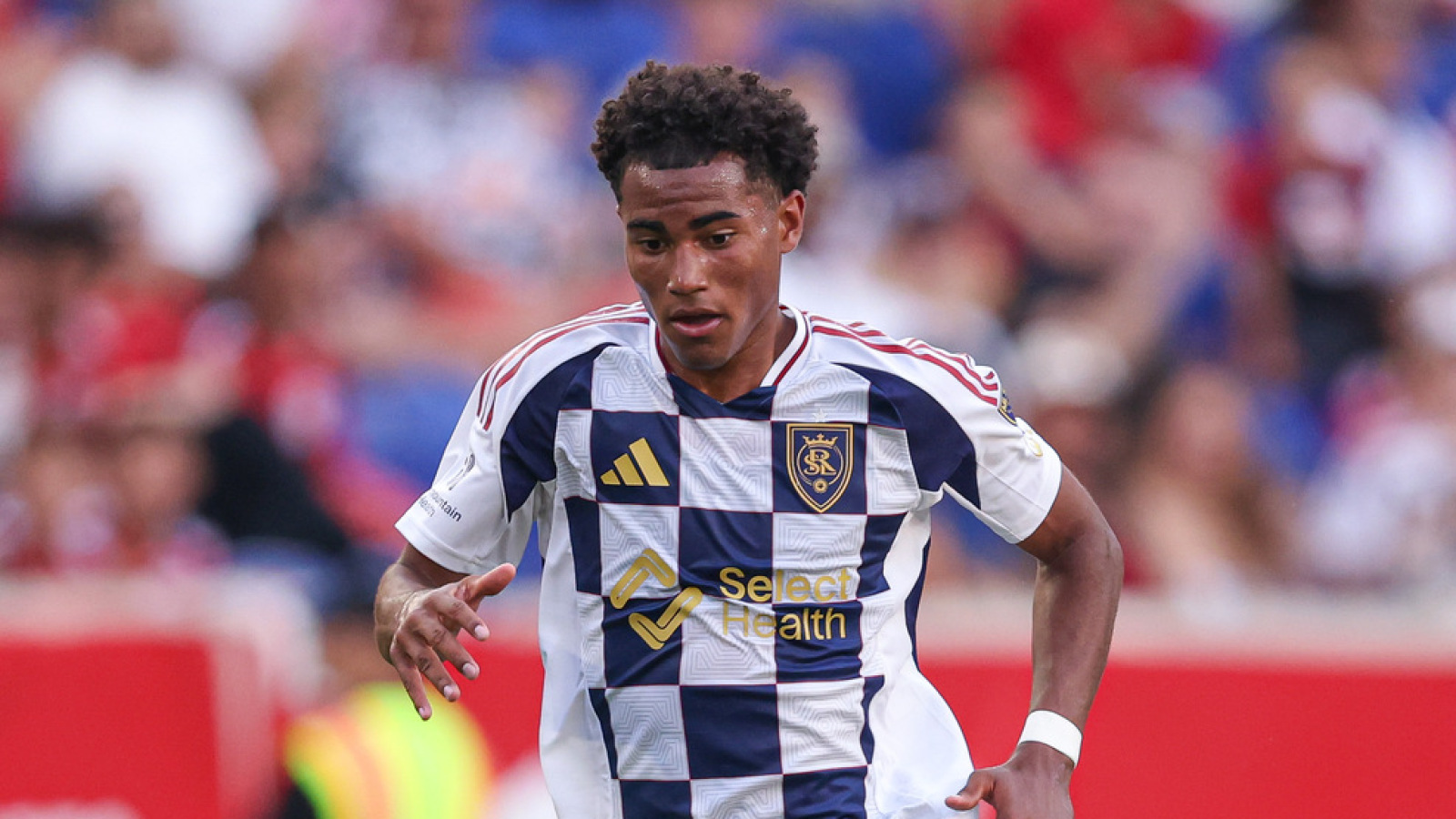
The teams lighting up MLS in 2026 are not driven by superstars. They’re not sexy urban franchises that excel at attracting foreign players. They’re the San Jose Earthquakes and Real Salt Lake, two of the league’s least-celebrated franchises, and they’re playing some of the most attractive, exciting soccer in North America on the back of just some guys. They’ve taken different pathways to get there—San Jose leveraged the NCAA college draft while Salt Lake developed its own players internally—but both prove that American developmental pathways are just as valuable to the nation’s soccer ecosystem.
San Jose’s SuperDraft stars
The San Jose Earthquakes suffered their worst-ever season in 2024, finishing last in the league with just 21 points. They conceded a whopping 78 goals—more than any other team in MLS history—and looked utterly adrift.
Nobody resets a course quite like four-time MLS Coach of the Year Bruce Arena, though, and his arrival before the 2025 season heralded big changes for the lowly Quakes. Arena brought in star MLS attackers Chicho Arango and Josef Martinez to bolster team legend Cristian Espinoza, and together the trio nearly doubled the Quakes’s 2024 points total. The team still missed out on the playoffs, but its progress was clear.
In a shocking move that left fans reeling, Arena followed up 2025 by releasing Arango, Martinez and Espinoza in quick succession. It looked like a capitulation, but it wound up being the start of something brilliant: the Quakes of 2026, stacked with unknown domestic talent instead of their superstars, have won seven of their opening eight games and are tied at the top of the league.
How did Arena’s Quakes lose their three best players and improve? By building their in-game strategy around a core of NCAA SuperDraft players: attacker Ousseni Bouda (first round, 2022), defender Daniel Munie (first round, 2023), winger Jamar Ricketts (first round, 2024) and defender Reid Roberts (first round, 2025.) This core of college players brought physicality and structure to San Jose and fundamentally changed its MLS trajectory. No team in the league has leveraged the college draft better in recent series.