

Make Denmark angry. Make Norway angry. Make NATO’s leaders angry.
President Donald Trump’s relentless and escalating drive to acquire Greenland from Denmark, whose government—along with that of Greenland—emphatically rejects the idea, has unnerved, offended, and outraged leaders of countries considered allies for decades.
It’s the latest, and perhaps most significant, eruption of an attitude of disdain towards allies that has become a hallmark of the second Trump administration, which has espoused an America First approach to the world.
Trump, Vice President JD Vance, and Defense Secretary Pete Hegseth have all said a lot of things about longtime allies that have caused frustration and outright friction among the leaders of those countries. The latest discord over Greenland could affect the functioning and even existence of NATO, the post-World War II alliance of Western nations that “won the Cold War and led the globe,” as a recent Wall Street Journal story put it.
As a former diplomat, I’m aware that how the U.S. treats its allies has been a crucial question in every presidency, since George Washington became the country’s first chief executive. On his way out of that job, Washington said something that Trump, Vance, and their fellow America First advocates would probably embrace.
Above: Ambassador Don Heflin recaps 250 years of American alliances, with their benefits and challenges.
In what’s known as his “Farewell Address,” Washington warned Americans against “entangling alliances.” Washington wanted America to treat all nations fairly, and warned against both permanent friendships and permanent enemies.
The irony is that Washington would never have become president without the assistance of the not-yet-United-States’ first ally, France.
In 1778, after two years of brilliant diplomacy by Benjamin Franklin, the not-yet-United States and the Kingdom of France signed a treaty of alliance as the American Colonies struggled to win their war for independence from Britain.
France sent soldiers, money, and ships to the American revolutionaries. Within three years, after a major intervention by the French fleet, the Battle of Yorktown in 1781 effectively ended the war, and America was independent.
Isolationism, then war
American political leaders largely heeded Washington’s warning against alliances throughout the 1800s. The Atlantic Ocean shielded the young nation from Europe’s problems and many conflicts; America’s closest neighbors had smaller populations and less military might.
Aside from the War of 1812, in which the U.S. fought the British, America largely found itself protected from the outside world’s problems.
That began to change when Europe descended into the brutality of World War I.
Initially, American politicians avoided involvement. What would today be called an isolationist movement was strong; its supporters felt that the European war was being waged for the benefit of big business.
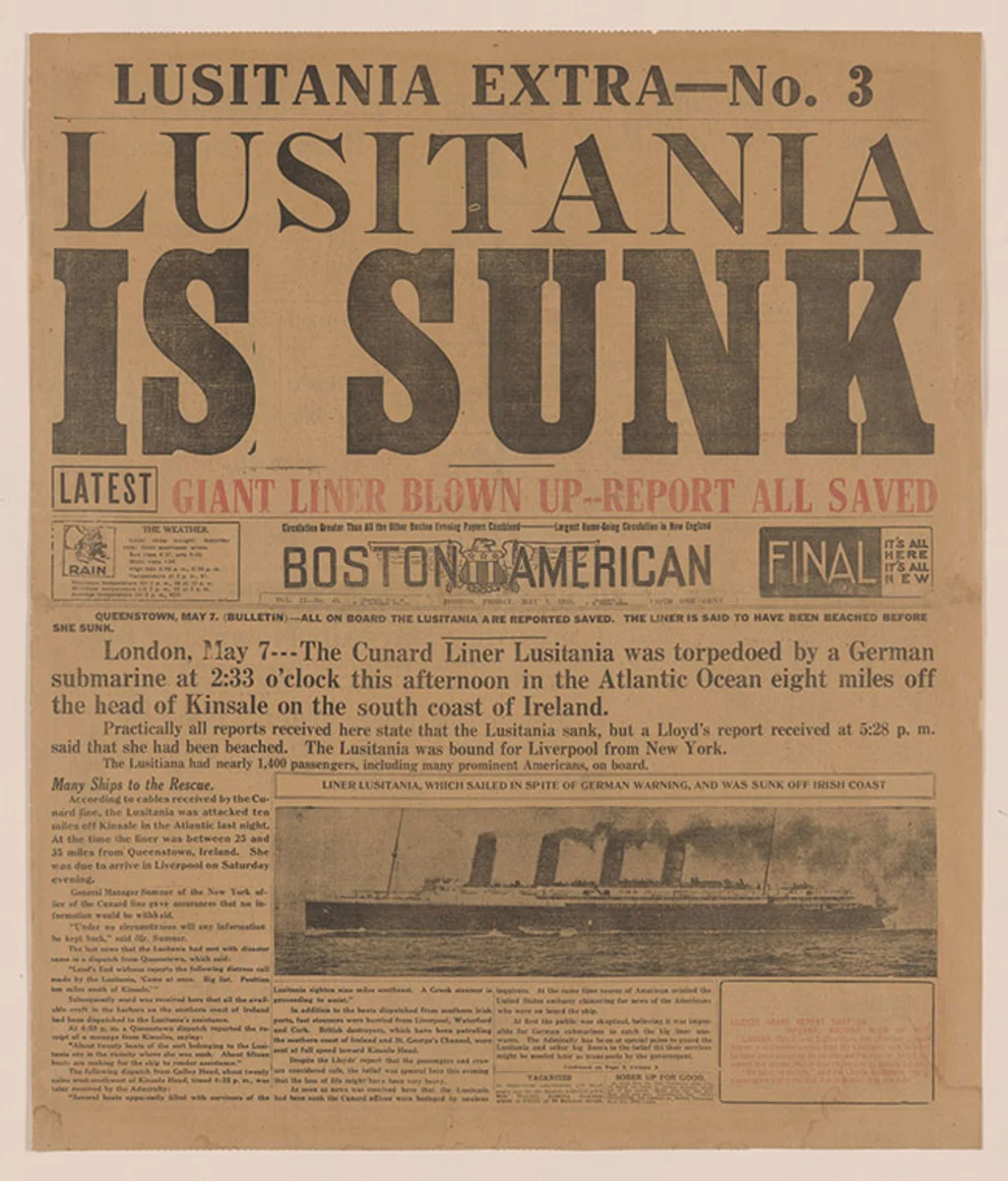
But it was hard for the U.S. to maintain neutrality. German submarines sank ships crossing the Atlantic carrying American passengers. The economies of some of America’s biggest trading partners were in shreds; the democracies of Britain, France, and other European countries were at risk.
President Woodrow Wilson led the U.S. into the war in 1917 as an ally of the Western European nations. When he asked Congress for a declaration of war, Wilson asserted the value of like-minded allies: “A steadfast concert for peace can never be maintained except by a partnership of democratic nations.”
Immediately after the war, the Allies—led by the U.S., France, and Britain—stayed together to craft the peace agreements, feed the war-ravaged parts of Europe and intervene in Russia after the Communist Revolution there.
Prosperity came along with the peace, helping the U.S. quickly develop into a global economic power.
However, within a few years, American politicians returned to traditional isolationism in political and military matters and continued this attitude well into the 1930s. The worldwide Great Depression that began in 1929 was blamed on vulnerabilities in the global economy, and there was a strong sentiment among Americans that the U.S. should fix its internal problems rather than assist Europe with its problems.
Alliance counters fascism
As both Hitler and Japan began to attack their neighbors in the late 1930s, it became clear to President Franklin Roosevelt and other American military and political leaders that the U.S. would get caught up in World War II. If nothing else, airplanes had erased America’s ability to hide behind the Atlantic Ocean.
Though public opinion was divided, the U.S. began sending arms and other assistance to Britain and quietly began military planning with London. This was despite the fact that the U.S. was formally neutral, as the Roosevelt administration was pushing the limits of what a neutral nation can do for friendly nations without becoming a warring party.
In January of 1941, Roosevelt gave his annual State of the Union speech to Congress. He appeared to prepare the country for possible—both on behalf of allies abroad and for the preservation of American democracy:
“The future and the safety of our country and of our democracy are overwhelmingly involved in events far beyond our borders. Armed defense of democratic existence is now being gallantly waged in four continents. If that defense fails, all the population and all the resources of Europe, and Asia, and Africa and Australasia will be dominated by conquerors. In times like these it is immature—and incidentally, untrue—for anybody to brag that an unprepared America, single-handed, and with one hand tied behind its back, can hold off the whole world.”
When the Japanese attacked Hawaii in 1941 and Hitler declared war on the U.S., America quickly entered World War II in an alliance with Britain, the Free French and others.
Throughout the war, the Allies worked together on matters large and small. They defeated Germany in three and half years and Japan in less than four.
As World War II ended, the wartime alliance produced two longer-term partnerships built on the understanding that working together had produced a powerful and effective counter to fascism.
Postwar alliances
The first of these alliances is the North Atlantic Treaty Organization, or NATO. The original members were the U.S., Canada, Britain, France, and others of the wartime Allies. There are now 32 members, including Poland, Hungary, and Turkey.
The aims of NATO were to keep peace in Europe and contain the growing Communist threat from the Soviet Union. NATO’s supporters feel that, given that wars in the former Yugoslavia in the 1990s and in the Ukraine today are the only major conflicts in Europe in 80 years, the alliance has met its goals well. And NATO troops went to Afghanistan along with the U.S. military after 9/11.
The other institution created by the wartime Allies is the United Nations.
The U.N. is many things—a humanitarian aid organization, a forum for countries to raise their issues and a source of international law.
However, it is also an alliance. The U.N. Security Council on several occasions authorized the use of force by members, such as in the first Gulf War against Iraq. And it has the power to send peacekeeping troops to conflict areas under the U.N. flag.
Other U.S. allies with treaties or designations by Congress include Australia, New Zealand, Japan, Israel, three South American countries, and six in the Middle East.
Many of the same countries also created institutions such as the World Bank, the International Monetary Fund, the Organization of American States, and the European Union. The U.S. belongs to all of these except the European Union. During my 35-year diplomatic career, I worked with all of these institutions, particularly in efforts to stabilize Africa. They keep the peace and support development efforts with loans and grants.
Admirers of this postwar liberal international order point to the limited number of major armed conflicts during the past 80 years, the globalized economy and international cooperation on important matters such as disease control and fighting terrorism.
Detractors point to this system’s inability to stop some very deadly conflicts, such as Vietnam or Ukraine, and the large populations that haven’t done well under globalization as evidence of its flaws.
The world would look dramatically different without the Allies’ victories in the two World Wars, the stable worldwide economic system, and NATO and the U.N. keeping the world relatively peaceful.
But the value of allies to Americans, even when they benefit from alliances, appears to have shifted between George Washington’s attitude—avoid them—and that of Franklin D. Roosevelt—go all in . . . eventually.
This is an updated version of an article originally published on February 20, 2025.
Donald Heflin is an executive director of the Edward R. Murrow Center and Senior Fellow of Diplomatic Practice at the Fletcher School at Tufts University.
This article is republished from The Conversation under a Creative Commons license. Read the original article.