
Close Menu
    Trending
    • Katie Holmes And Joshua Jackson Spark ‘Soul-Level’ Love Chatter
    • Singapore Airlines, Southwest Airlines partner to expand access to nearly 120 US destinations
    • Trump warns Netanyahu: ‘You’ll be on your own’ if attacks on Iran continue | US-Israel war on Iran News
    • Cristiano Ronaldo, ‘The Bosnian Diamond’ headline the World Cup 40-and-over club
    • How housing market inventory is shifting across every state
    • What is a ‘normal’ memory slowdown, and when should I worry?
    • Ariana Grande And Ethan Slater Are ‘Still Friends’ Following Split
    • US says BYD, Baidu, Alibaba and other tech giants are aiding China’s military
    Benjamin Franklin Institute
    Tuesday, June 9
    • Home
    • Politics
    • Business
    • Science
    • Technology
    • Arts & Entertainment
    • International
    Benjamin Franklin Institute
    Home»Science»How to spot the Lyrid meteor shower tonight
    Science

    How to spot the Lyrid meteor shower tonight

    Team_Benjamin Franklin InstituteBy Team_Benjamin Franklin InstituteApril 16, 2026No Comments3 Mins Read
    Share Facebook Twitter Pinterest Copy Link LinkedIn Tumblr Email VKontakte Telegram
    Share
    Facebook Twitter Pinterest Email Copy Link


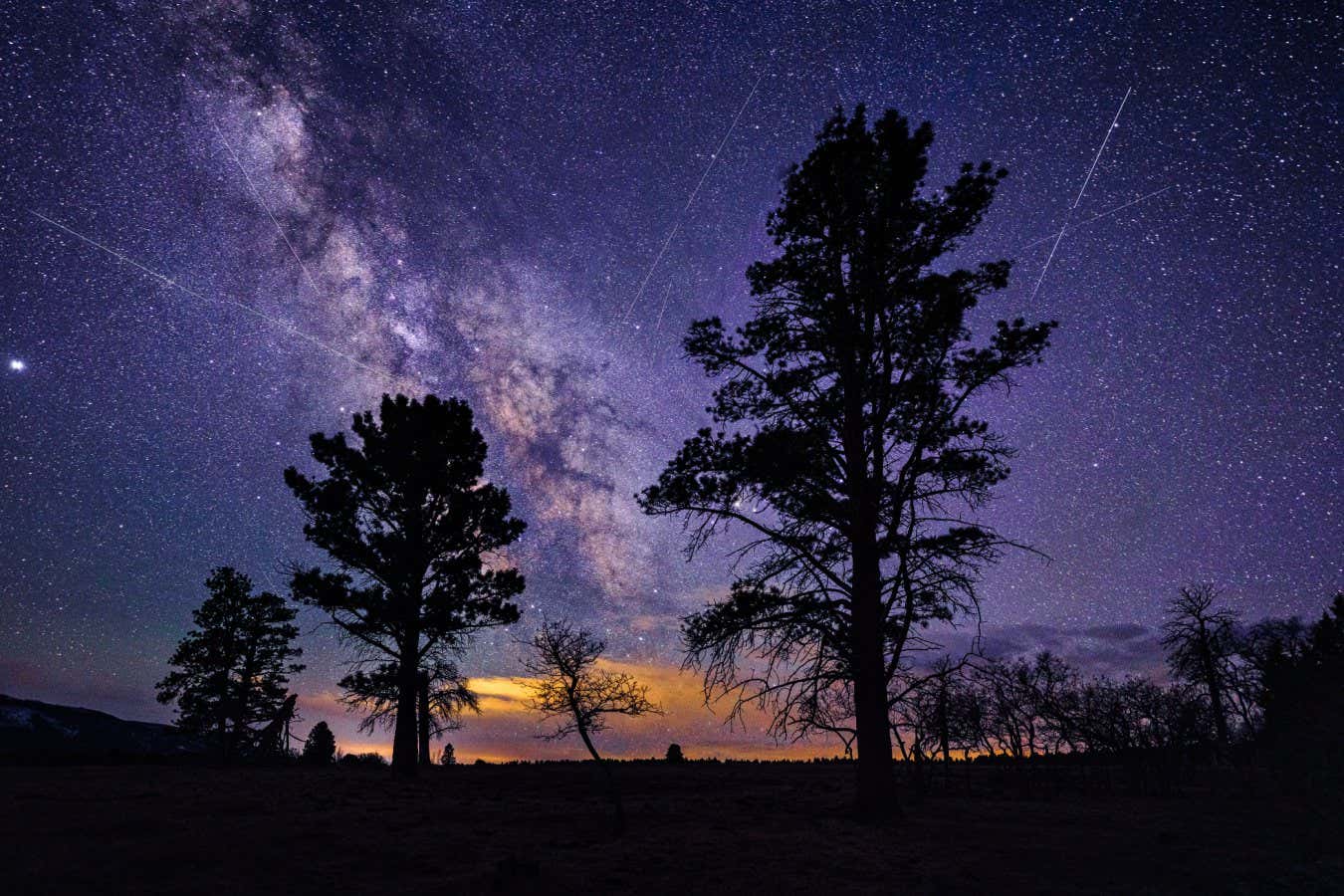
    The Lyrid meteor shower streaks through the sky

    Adventure_Photo/Getty Images

    The Lyrid meteor shower hits its peak on the evening of 22 April, or early hours of the 23rd, but you can look for them any time between the 16th and 25th. New Scientist‘s stargazing companion will talk you through what to look for. You can find the audio below or in the podcast episode feed for The world, the universe and us.

    Meteors are caused by high-speed debris from space hitting Earth’s atmosphere. These tiny grains of dust or rock enter the atmosphere at such speeds that the friction between them and the air makes them burn up, producing a flash that moves across the sky.

    As Earth makes its yearly journey around the sun, it passes through a series of clouds of dust and debris, left behind by comets or asteroids, causing an increase in the number of meteors we see. This is why the same meteor showers happen at similar times each year.

    The Lyrids meteor shower is caused by the long-period comet C/1861 G1, also known as Thatcher. Discovered in 1861, Thatcher takes 415 years to orbit the sun. It is expected to return to our part of the solar system around the year 2278.

    You don’t need to look in one part of the sky to see a meteor shower. But each one is named after the bit of the sky where the meteors seem to start, or radiate from. In this case, it is the northern hemisphere constellation Lyra, which contains the bright star Vega.

    If you are in the northern hemisphere, you can look for the constellation Lyra. The constellation won’t be visible from the southern hemisphere, but meteors can travel in all directions, so some shooting stars might be visible if you look east.

    From the northern hemisphere, Lyra will be in the east just after sunset. If you’re looking a little later, it will be higher up in the sky, making it a better time to look for meteors – although the closer you get to sunrise, the brighter the sky will be.

    The easiest way to find Lyra is to look for a pattern of stars known as the Summer Triangle, so named because it is made up of three bright stars in a triangle shape and, in summer in the northern hemisphere, around midnight, it appears directly overhead. At midnight in late April, the three bright stars will appear near the eastern horizon. The highest of these is Vega, and this is in Lyra.

    If you’re looking at the peak, and you have clear and dark skies, you could see between 10 and 18 meteors in an hour.

    Topics:


    Source link

    Share. Facebook Twitter Pinterest LinkedIn Tumblr Email Telegram Copy Link

    Related Posts

    Science

    What is a ‘normal’ memory slowdown, and when should I worry?

    June 9, 2026
    Science

    Wildlife thrives in solar farm built on restored peatland

    June 8, 2026
    Science

    You don’t need to worry about recursive-self-improving AI – yet

    June 8, 2026
    Science

    Understanding anorexia’s grip on the brain could unlock new therapies

    June 8, 2026
    Science

    Why GLP-1 drugs might reduce cancer risk

    June 8, 2026
    Science

    Landmark pancreatic cancer treatment paves way for targeting other tricky tumors

    June 8, 2026
    Editors Picks

    Cost Of Living Rising Faster In Blue Cities

    January 30, 2026

    Accelerating Chipmaking Innovation for the Energy-Efficient AI Era

    May 14, 2026

    EPA To Repeal Greenhouse Gas Regulations

    February 12, 2026

    Britney Spears’ Christmas Post Sparks Family Heartbreak

    January 1, 2026

    Flotation tanks deployed to combat PTSD after devastating wildfires

    May 23, 2026
    About Us
    About Us

    Welcome to Benjamin Franklin Institute, your premier destination for insightful, engaging, and diverse Political News and Opinions.

    The Benjamin Franklin Institute supports free speech, the U.S. Constitution and political candidates and organizations that promote and protect both of these important features of the American Experiment.

    We are passionate about delivering high-quality, accurate, and engaging content that resonates with our readers. Sign up for our text alerts and email newsletter to stay informed.

    Latest Posts

    Katie Holmes And Joshua Jackson Spark ‘Soul-Level’ Love Chatter

    June 9, 2026

    Singapore Airlines, Southwest Airlines partner to expand access to nearly 120 US destinations

    June 9, 2026

    Trump warns Netanyahu: ‘You’ll be on your own’ if attacks on Iran continue | US-Israel war on Iran News

    June 9, 2026

    Subscribe for Updates

    Stay informed by signing up for our free news alerts.

    Paid for by the Benjamin Franklin Institute. Not authorized by any candidate or candidate’s committee.
    • Privacy Policy
    • About us
    • Contact us

    Type above and press Enter to search. Press Esc to cancel.