Close Menu
    Trending
    • Katie Holmes And Joshua Jackson Spark ‘Soul-Level’ Love Chatter
    • Singapore Airlines, Southwest Airlines partner to expand access to nearly 120 US destinations
    • Trump warns Netanyahu: ‘You’ll be on your own’ if attacks on Iran continue | US-Israel war on Iran News
    • Cristiano Ronaldo, ‘The Bosnian Diamond’ headline the World Cup 40-and-over club
    • How housing market inventory is shifting across every state
    • What is a ‘normal’ memory slowdown, and when should I worry?
    • Ariana Grande And Ethan Slater Are ‘Still Friends’ Following Split
    • US says BYD, Baidu, Alibaba and other tech giants are aiding China’s military
    Benjamin Franklin Institute
    Tuesday, June 9
    • Home
    • Politics
    • Business
    • Science
    • Technology
    • Arts & Entertainment
    • International
    Benjamin Franklin Institute
    Home»Technology»Google unveils plans to try again with smart glasses in 2026
    Technology

    Google unveils plans to try again with smart glasses in 2026

    Team_Benjamin Franklin InstituteBy Team_Benjamin Franklin InstituteDecember 9, 2025No Comments3 Mins Read
    Share Facebook Twitter Pinterest Copy Link LinkedIn Tumblr Email VKontakte Telegram
    Share
    Facebook Twitter Pinterest Email Copy Link


    Liv McMahonTechnology reporter
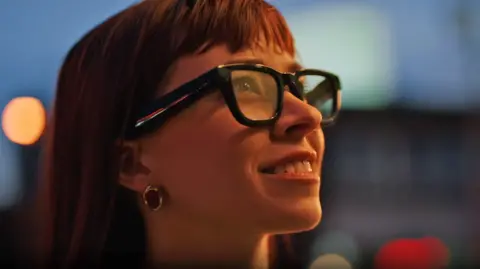
    Google A close-up of a woman wearing the glasses. She is smiling and has long red hair. The glasses are black with thick rims, and the lenses seem slightly translucent.Google

    Google plans to launch smart glasses powered by artificial intelligence (AI) in 2026, after its previous high-profile attempt to enter the market ended in failure.

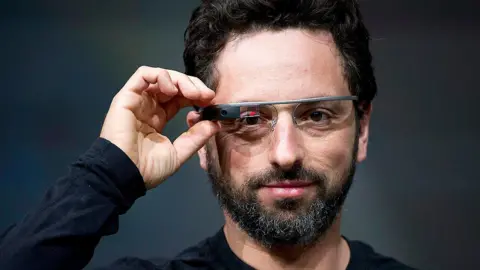
    The tech giant set expectations high in 2013 when it unveiled Google Glass, billed by some as the future of technology despite its odd appearance with a bulky screen positioned above the right eye.

    Google pulled the product in 2015 less than seven months after its UK release, but is now planning on re-entering the market with smart glasses with a cleaner look.

    But it comes after Meta has already made waves with its smart specs, which have sold two million pairs as of February.

    Google’s new tech will let users interact with its own AI products, such as its chatbot Gemini.

    It plans to launch two different varieties – one designed to be provide assistance without any kind of screen, and another which has a display on the glasses themselves.

    While saying the first of the two types of AI glasses it is working on would come in 2026, Google has not given more information on what form it will take.

    Technology analyst Paolo Pescatore told the BBC the tech firm “must avoid the pitfalls of its previous failed attempt”.

    “Arguably, the move was ahead of its time, poorly conceived and executed,” he said.

    “Now represents an opportune moment, thanks to the success of Gemini.”

    Bloomberg via Getty Images Sergey Brin wears a black long-sleeved top and Google Glass. He is looking directly into the lens of the camera capturing him, with one hand hovering over the right side of Google's digital glasses. On the right lens of the glasses, beside a black box containing the glasses camera, is a small red and black digital display.Bloomberg via Getty Images

    Google co-founder Sergey Brin demonstrated Google Glass on-stage at an event in 2012.

    Google will also have to contend with Meta, which unveiled its own AI-powered glasses earlier this year, having built on its existing collaborations with luxury eyewear brands Ray-Ban and Oakley.

    According to market research firm Counterpoint Research, the sector saw a surge in the first half of 2025, driven by demand for Meta’s devices and the launch of similar products by smaller brands.

    It said sales of AI glasses had grown by more than 250% compared to the previous year.

    What went wrong with Google Glass?

    Google Glass was launched in 2013 as a pair of thin, wireframe glasses with a chunky right arm to accommodate a camera built into the corner of the right lens.

    Wearers could use the camera to take images and record their surroundings, while simultaneously interact with a digital display

    The device created a lot of excitement when it first appeared at a Google event in June 2012.

    But after its launch the following year, concerns about its impact on privacy, potential for abuse and questions about its style and usefulness arose – and grew until Google Google said it would stop making them in that form in 2015.

    A revamped version, Google Glass Enterprise, appeared two years later but was retired in 2023.

    Former BBC Technology Correspondent Rory Cellan-Jones was among those who had deemed Google’s device in its initial form to be “a failure”.

    The success of so-called wearable computers, he wrote, would likely depend on having the tech to bring their potential to life and them being “both attractive to wear and so easy to use that you forget that you have them on”.

    Today, tech giants have tried to make AI and smart glasses more wearable by partnering with designer eyewear brands – and can pack more power and features into smaller, sleeker frames.

    But there remain concerns about privacy and usability.

    A green promotional banner with black squares and rectangles forming pixels, moving in from the right. The text says: “Tech Decoded: The world’s biggest tech news in your inbox every Monday.”


    Source link

    Share. Facebook Twitter Pinterest LinkedIn Tumblr Email Telegram Copy Link

    Related Posts

    Technology

    IEEE Celebrates Technology’s Brightest at Annual Event

    June 8, 2026
    Technology

    50 Years of The Institute

    June 5, 2026
    Technology

    What It Takes for Future-Ready Power Distribution

    June 4, 2026
    Technology

    7 Ways New Engineers Can Flourish in the Age of AI

    June 3, 2026
    Technology

    Tech Life – Microsoft’s big quantum bet

    June 2, 2026
    Technology

    Direct-to-Cell Technology: Enabling Satellite Connectivity for Legacy Devices

    June 2, 2026
    Editors Picks

    Chris Rea, singer of Driving Home For Christmas, dies at 74

    December 23, 2025

    The man who crawls into the perilous heart of the Chernobyl reactor

    April 17, 2026

    Rethinking our approach to BMI highlights the need for speed

    February 17, 2026

    Harry Styles Talks ‘Positive Things’ In Comment About Zoë Kravitz

    January 23, 2026

    Prolonged grief disorder: Why some people cannot move on from the death of a loved one

    February 18, 2026
    About Us
    About Us

    Welcome to Benjamin Franklin Institute, your premier destination for insightful, engaging, and diverse Political News and Opinions.

    The Benjamin Franklin Institute supports free speech, the U.S. Constitution and political candidates and organizations that promote and protect both of these important features of the American Experiment.

    We are passionate about delivering high-quality, accurate, and engaging content that resonates with our readers. Sign up for our text alerts and email newsletter to stay informed.

    Latest Posts

    Katie Holmes And Joshua Jackson Spark ‘Soul-Level’ Love Chatter

    June 9, 2026

    Singapore Airlines, Southwest Airlines partner to expand access to nearly 120 US destinations

    June 9, 2026

    Trump warns Netanyahu: ‘You’ll be on your own’ if attacks on Iran continue | US-Israel war on Iran News

    June 9, 2026

    Subscribe for Updates

    Stay informed by signing up for our free news alerts.

    Paid for by the Benjamin Franklin Institute. Not authorized by any candidate or candidate’s committee.
    • Privacy Policy
    • About us
    • Contact us

    Type above and press Enter to search. Press Esc to cancel.