

There’s a moment in John Williams’s Star Wars overture when the brass surges upward. You don’t just hear it; you feel propulsion turning into pure possibility.
On 16 March 1926, in a snow-dusted field in Auburn, Mass., Robert Goddard created an earlier version of that same feeling. His first liquid-fueled rocket—a spindly, three meter tangle of pipes and tanks—lifted off, climbed about 12.5 meters, traveled roughly 56 meters downrange, and crashed into the frozen ground after 2.5 seconds. A few witnesses, Goddard’s helpers, shivered in the cold. The little machine defied common sense. It rose through the air with nothing to push against. Anyone who still insisted spaceflight was impossible now faced a question: Why had this contraption risen at all?
Six years earlier, The New York Times had ridiculed Goddard, declaring that rockets could never work in a vacuum and implying that he had somehow forgotten high-school physics. Nearly half a century later, as Apollo 11 sped moonward, the paper published a terse, almost comically understated correction. By then, Goddard had been dead for 24 years.
The Alpha Trap
Breakthroughs often demand qualities that facilitate early success but later become obstacles. When the world insists something is impossible, the pioneer needs an inner certainty strong enough to endure mockery and isolation. Later, though, that certainty can become a liability. Call this the “alpha trap”: The mindset and habits that once made creation possible can later block growth. This “alpha” has nothing to do with dominance or bravado. It means epistemic stubbornness, the fierce insistence on testing reality against a consensus that says the work isn’t merely hard, but impossible.
Such efforts often begin with a lone visionary. But most ideas eventually need a team. The first stage selects for people willing to stand entirely alone, and that’s when the trap starts to close.
The mockery scarred Goddard. It drove him inward, toward a small circle of confidants. Through the early 1930s, his rockets climbed higher each year. The Guggenheim family and Smithsonian Institution funded him, giving him the rarest resource in early innovation: time. By the mid-1930s, his designs were reaching more than a thousand meters.
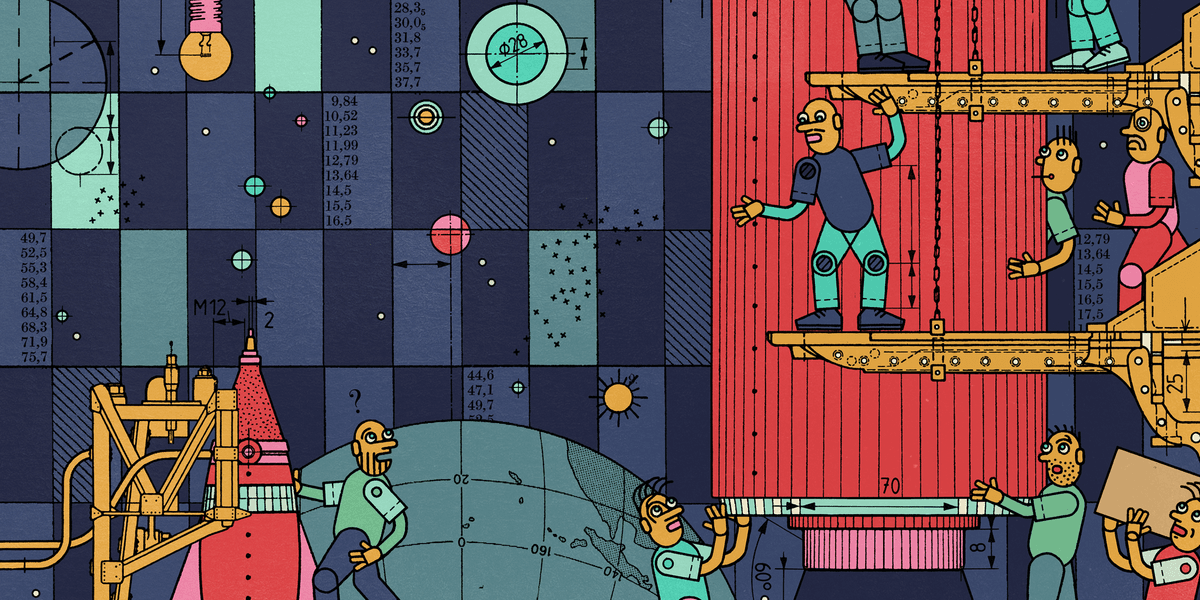
But the work gradually changed. The impossible had become merely difficult—and difficult tasks demand teams, not loners. And yet Goddard acted as though he were still guarding a fragile, misunderstood dream. He resisted collaboration and despite conversations with the U.S. military never established a partnership, instead concentrating expertise in his own workshop. Elsewhere in the United States more freewheeling amateurs and academics partnered to develop early liquid-propelled and later solid-fuel rockets.
Meanwhile, on the Baltic coast at Peenemünde, hundreds of German engineers divided labor into synchronized streams of propulsion, guidance, structures, testing, and production. By 1942, they were flight-testing the V-2. Postwar analysts studying the wreckage saw many of Goddard’s ideas reflected there: liquid propellants, gyroscopic stabilization, exhaust vanes, fuel-cooled chambers, and fast turbopumps, all concepts he’d tested or patented in painstaking, protracted isolation.
Doctor’s Orders
The alpha trap had caught others before him. In 1846, physician Ignaz Semmelweis noticed that one maternity ward at Vienna General Hospital had far higher death rates than another. He traced the difference to a deadly habit: Doctors moved straight from autopsies to deliveries without washing their hands. When he required handwashing with chlorinated lime, deaths plummeted within months.
But the medical establishment resisted. Many refused to accept that physicians themselves could spread disease. Rejection embittered Semmelweis. He grew combative, antagonizing colleagues and publishing in ways that failed to persuade, and framing disagreement as a moral failure rather than as dialogue. Brilliant scientifically, he was disastrous socially. Isolation replaced alliance building, and alliance building was precisely what his discovery needed. In 1865, he died in an asylum, his ideas dismissed as delusions. Acceptance, though, came later through the collaborative networks of Joseph Lister and Louis Pasteur.
The same trait that lets an inventor defy consensus can also blind them to what they need next. When allies became essential, Semmelweis’s anger slowed adoption. When scale became essential, Goddard’s secrecy slowed diffusion. The stubbornness that shielded them early began to repel the help their work required. Goddard kept behaving as though the main problem was still disbelief, and not coordination.
Both men leave visionary and cautionary legacies. A NASA Center bears Goddard’s name despite his isolation; Semmelweis is remembered as the doctor who could have saved countless lives had he found a way to connect with his colleagues rather than combat them.
We love to celebrate the lone genius, yet we depend on teams to bring the flame of genius to the people. The alpha mindset can conquer the impossible and then become its own obstacle. Both men were right about their breakthroughs. But ideas born in solitude must eventually live among multitudes. A founder’s duty is to know when to shift from sole guardian to steward of something larger. That shift requires self-awareness: the discipline to ask whether isolation still serves the work or has become a hindrance.
Escaping the alpha trap means treating stubbornness as an instrument, not an identity. Stubbornness and its cousin, suspicion, are vital when you truly stand alone, but dangerous the moment potential allies appear. Goddard’s dream touched the stars, but it took teams of others to lift it there. And that orchestral surge in Star Wars? It swells from the ensemble, not a single bold trumpet.
From Your Site Articles
Related Articles Around the Web