

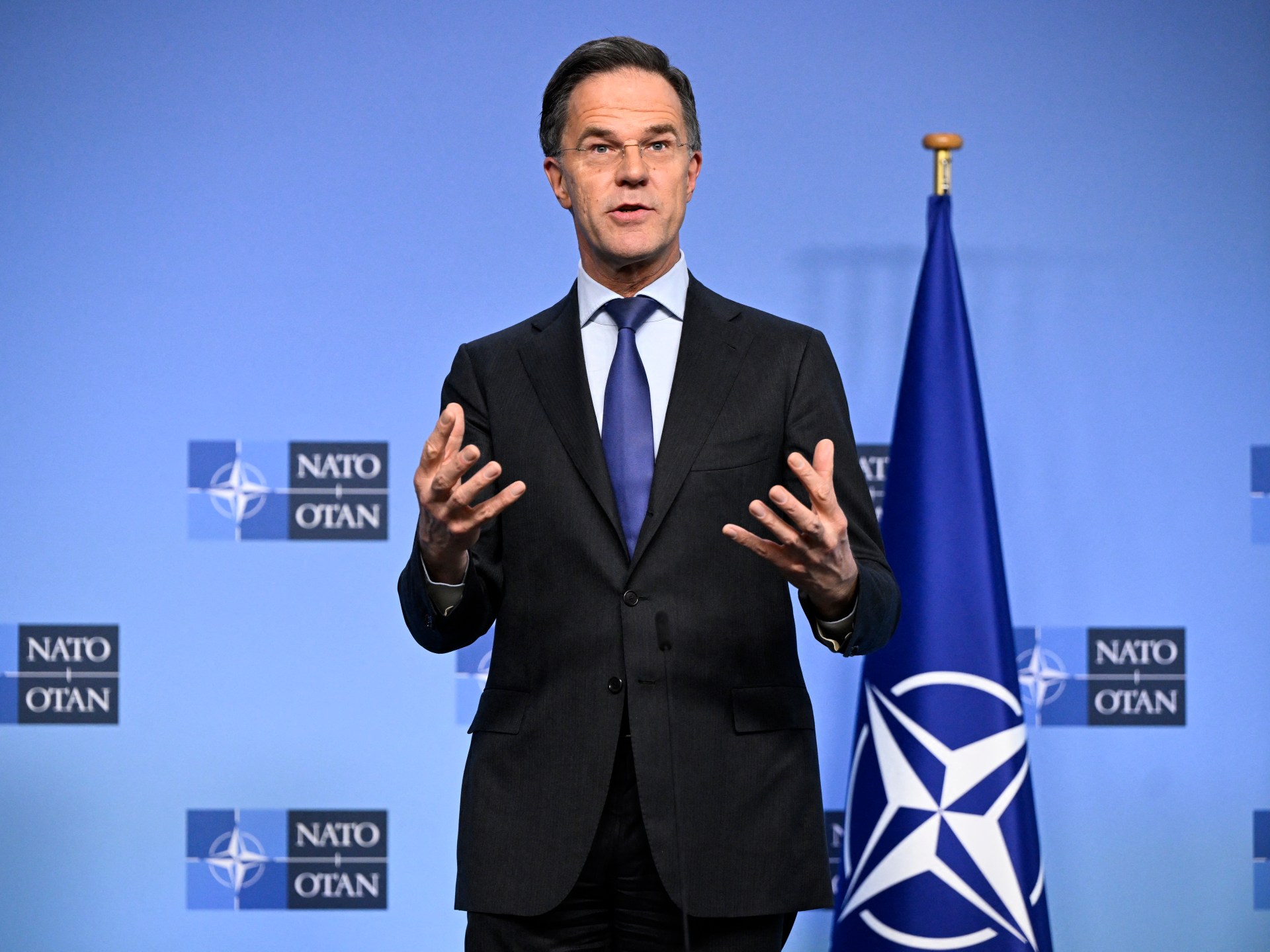
European leaders are seeking to clarify a rarely used mutual defence clause in the European Union treaty as questions grow over Washington’s long-term commitment to NATO during a deepening rift with the United States.
NATO, founded in 1949, is a military alliance of North American and European countries built on the principle that an attack on one member is an attack on all. But years of tension between Washington under President Donald Trump and its European allies have pushed European governments to place greater emphasis on their own defence capabilities.
Recommended Stories
list of 4 itemsend of list
The shift has come as Trump has repeatedly criticised NATO members over their defence spending. He has also questioned the value of the alliance and clashed with European leaders over Ukraine and Iran while threatening to seize Greenland from NATO ally Denmark. The latest tensions escalated after the US and Israel began their war on Iran when Trump accused allies of failing to support Washington and dismissed NATO as a “paper tiger”.
Media reports have said that the Pentagon has also prepared a memo examining options to punish allies viewed as insufficiently supportive during the Iran war. Those options reportedly include exploring the suspension of Spain, which has been particularly critical of the war, from NATO and reviewing the US position on Britain’s claim to the Falkland Islands. NATO has no formal mechanism to expel a member, but the episode has cast doubt over the alliance’s unity and revived questions about Europe defending itself without Washington.
At the heart of Europe’s bid to look for alternative security arrangements beyond NATO is Article 42.7 of the European Union’s founding treaty.
What is Article 42.7?
Article 42.7 of the Treaty on European Union is the bloc’s mutual defence clause. It says that if an EU member state is the victim of armed aggression on its territory, the other member states are obliged to provide aid and assistance by all means in their power in line with the United Nations Charter.
By comparison, Article 5 in NATO’s North Atlantic Treaty states that an attack on one member is considered an attack on all. It is supported by common planning and joint exercises and is underpinned by the military weight of the US.
Unlike NATO’s Article 5, however, the EU clause is not backed by an integrated military command structure, standing defence plans or a permanent force able to respond automatically and the US has no obligation to intervene.
That means it is often seen as less credible as a military guarantee in practice although it remains an important political commitment.
Who is calling for Europe to turn to Article 42.7?
Cyprus, which is an EU member but not a NATO member, has been especially eager to strengthen the clause after a drone struck a British airbase on the island during the Iran war last month. While such an incident may not have been enough to invoke NATO’s Article 5, it could raise questions about Article 42.7, particularly at a time of growing strain between the US and Europe.
Cypriot President Nikos Christodoulides said leaders had agreed it was time to define how the provision would work in practice if it were triggered.
“We agreed last night that the [European] Commission will prepare a blueprint on how we respond in case a member state triggers Article 42.7,” he said on Friday at an EU summit.
French President Emmanuel Macron has also stressed that the clause should be treated as a binding commitment rather than a symbolic gesture. “On Article 42, paragraph 7, it’s not just words,” he said during a weekend visit to Greece. “For us, it is clear, and there is no room for interpretation or ambiguity.”
Antonio Costa, president of the European Council, said the bloc was drawing up a “handbook” for the use of the clause.
And EU foreign policy chief Kaja Kallas said Europe must step up its defence efforts after Trump has “shaken the transatlantic relationship to its foundation”.
“Let me be clear: We want strong transatlantic ties. The US will remain Europe’s partner and ally. But Europe needs to adapt to the new realities. Europe is no longer Washington’s primary centre of gravity,” she said at a defence conference in Brussels.
“This shift has been ongoing for a while. It is structural, not temporary. It means that Europe must step up. No great power in history has outsourced its survival and survived.”
Has the article ever been invoked?
The clause has been used only once before when France invoked it after the 2015 Paris attacks claimed by ISIL (ISIS), in which 130 people were killed and hundreds wounded.
The attacks were the deadliest in France since World War II. After Article 47.2 was invoked, other EU states shared intelligence aimed at helping French authorities unravel the conspiracy that led to the attacks.
NATO’s Article 5 has also been invoked just once – after the September 11, 2001, attacks in the US.
But NATO’s help to the US wasn’t limited to intelligence sharing. Allies contributed tens of thousands of soldiers to the US-led war in Afghanistan. The operations lasted two decades, and more than 46,000 Afghan civilians were killed alongside 2,461 US personnel and about 1,160 non-US coalition soldiers, according to Brown University’s Cost of War project.
Can countries be kicked out or leave NATO?
Europe’s debate over its defence comes amid a string of disputes inside NATO. The reports that US officials have considered punitive measures against allies have revived questions over the alliance’s future cohesion.
Pablo Calderon Martinez, head of politics and international relations at Northeastern University London and a specialist in European affairs, told Al Jazeera that Spain cannot legally be removed from NATO.
“There is no legal mechanism to remove a member. There is, however, a mechanism through which a member can withdraw itself from the organisation,” he said.
He added that some countries have long fallen short of NATO commitments but that does not provide grounds for expulsion. A more likely scenario, he said, would be the US choosing to leave.
Carne Ross, a former British diplomat and founder of Independent Diplomat, a nonprofit diplomatic advisory group, said the deeper issue is whether Europe and Washington still share common values.
“It is abundantly clear that we do not. Trump is anti-democratic. He tried to subvert democracy, challenged the 2020 election result and whipped up a violent crowd to storm the Capitol,” Ross said.
“What more evidence do we need that the values of Europe are not shared in Washington?”
Is Europe preparing for a future without the US?
European countries have pledged to sharply increase their defence budgets with many aiming to spend 5 percent of their gross domestic products each year on their militaries.
Trump cannot withdraw the US from NATO without congressional approval, but doubts over Washington’s commitment have already unsettled many European capitals.
That has created new urgency around strengthening Europe’s own defence capabilities and building a more credible European pillar inside, or alongside, NATO.
Ross said Europe’s major powers should begin planning seriously for greater self-reliance.
“The Europeans themselves, particularly the most powerful countries – Britain, France, Germany and Italy – need to be talking about how to defend themselves without the US,” he said.