
Close Menu
    Trending
    • China’s DeepSeek says it released long-awaited new AI model
    • China’s DeepSeek unveils latest models a year after upending global tech | Technology News
    • Malik Nabers’ reaction to Cowboys drafting Caleb Downs should thrill Dallas fans
    • AI is replacing creativity with ‘average’
    • ‘Kraken’ fossils show enormous, intelligent octopuses were top predators in Cretaceous seas
    • Russell Brand Says He Pushed To Marry Katy Perry Early
    • Meta plans 10% layoffs as AI spending soars: Source
    • US professors sue university over arrest during pro-Palestine protest | Israel-Palestine conflict News
    Benjamin Franklin Institute
    Friday, April 24
    • Home
    • Politics
    • Business
    • Science
    • Technology
    • Arts & Entertainment
    • International
    Benjamin Franklin Institute
    Home»Science»Earth may have formed from two separate rings around the sun
    Science

    Earth may have formed from two separate rings around the sun

    Team_Benjamin Franklin InstituteBy Team_Benjamin Franklin InstituteMarch 24, 2026No Comments3 Mins Read
    Share Facebook Twitter Pinterest Copy Link LinkedIn Tumblr Email VKontakte Telegram
    Share
    Facebook Twitter Pinterest Email Copy Link


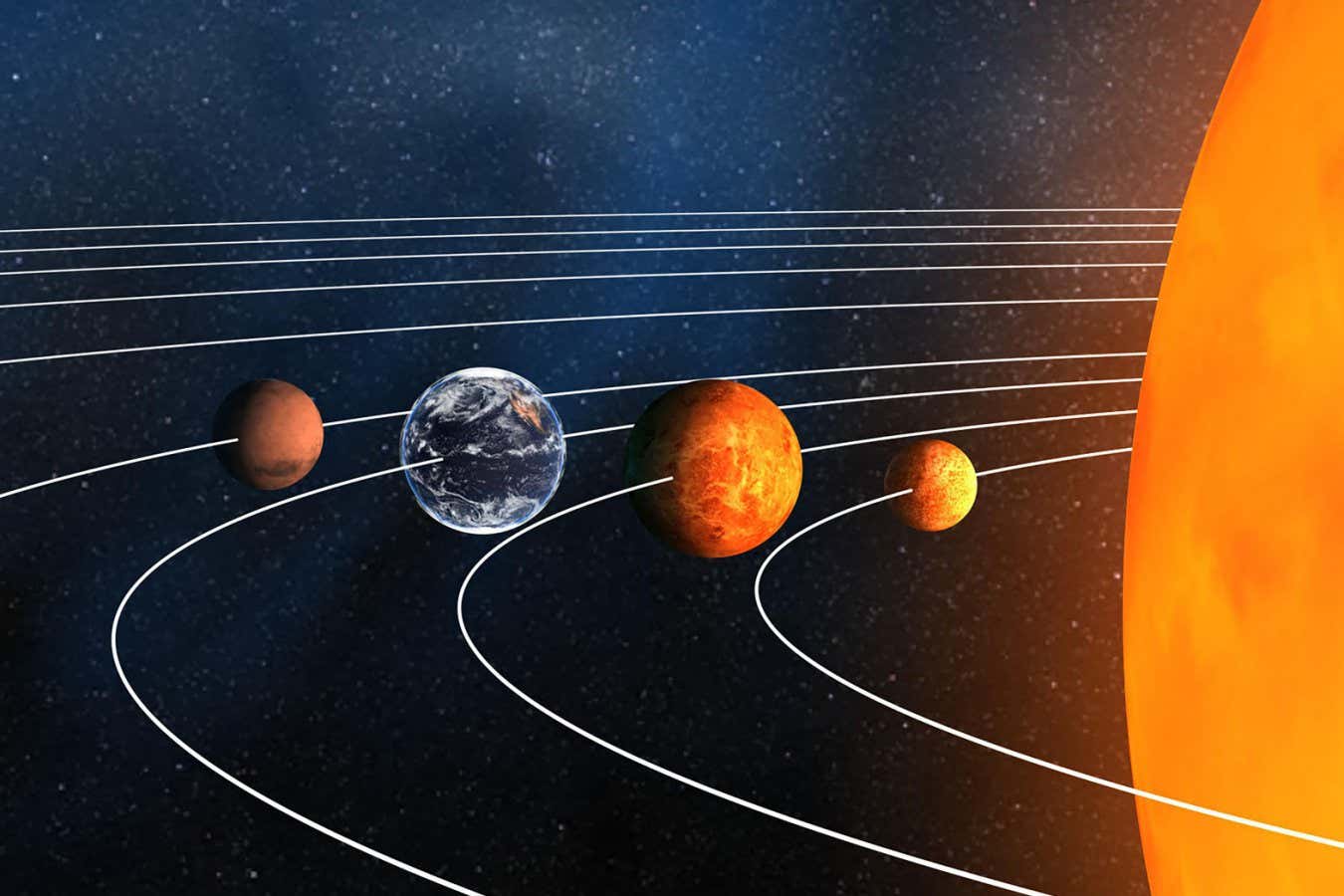
    Models suggest something is wrong with our picture of the early solar system

    Panther Media Global / Alamy

    The inner solar system may have formed differently from how we have long thought it must have. For decades, researchers have thought that the rocky planets formed from a single disc of dust and debris in the early solar system, but new simulations indicate there might have been two separate discs of material.

    Models featuring a single disc or ring of material around the young sun tend to be unable to recreate several features of the solar system as we observe it. For one, Earth seems to be made of two different kinds of rocks, which wouldn’t make sense if they all came from the same ring. Also, single-ring models tend to end up with Mercury and Mars too big, Venus and Earth too close together and the compositions of Earth and Mars too similar.

    Bill Bottke at the Southwest Research Institute in Colorado and his colleagues built a series of detailed simulations of various ways the planets could have formed from a single reservoir of material and evolved afterwards, but the problems persisted.

    “We spent six months at the computer, nothing was working, so we made a desperation play. We said, why don’t we try a second reservoir?” said Bottke while presenting this work at the Lunar and Planetary Science Conference in Texas on 16 March. “It turned out this model not only did a great job of making the terrestrial planets, but it also did a pretty good job of explaining some things that had been bothering us.”

    The best-fitting model had two separate discs, one at about half the current distance from the sun to Earth, and the other at about 1.7 times the sun-Earth distance. This simulation ended up with all the planets at the correct sizes and distances apart.

    It also fits the compositions of Earth, the moon and Mars. “We think that Earth predominantly formed from [inner solar system] material, and only the last bit came from the outer solar system,” said Jan Hellmann at the Max Planck Institute for Solar System Research in Germany during another presentation on the same day. If Earth formed from the inner disc, with slight contributions from the outer disc, as Bottke’s model predicts, it would match those expectations. Mars, on the other hand, would form mostly from the outer disc, which accounts for the differences between the composition of the two planets.

    There is some concern that the model requires very specific initial conditions to reproduce the inner solar system correctly, and it’s not 100 per cent clear why those conditions would have the required values. “Slight changes in the shape of the disc can give you major differences in where the terrestrial planets go,” said Bottke.

    The researchers are now working to refine their model and explore its other implications for the solar system. “We’re using a lot of supercomputer time to try every reasonable possibility,” said Bottke. If it works, this new explanation could account for all sorts of solar system mysteries, from strange asteroids to unexplained rocks on the lunar surface.

    Topics:


    Source link

    Share. Facebook Twitter Pinterest LinkedIn Tumblr Email Telegram Copy Link

    Related Posts

    Science

    ‘Kraken’ fossils show enormous, intelligent octopuses were top predators in Cretaceous seas

    April 24, 2026
    Science

    Largest ever octopus was great white shark of invertebrate predators

    April 24, 2026
    Science

    Do you need to worry about Mythos, Anthropic’s computer-hacking AI?

    April 23, 2026
    Science

    How many dachshunds would it take to get to the moon?

    April 23, 2026
    Science

    The Age Code review: Can you slow ageing with your diet? A new book gives it a go

    April 23, 2026
    Science

    The monstrous number sequences that break the rules of mathematics

    April 23, 2026
    Editors Picks

    Rubio says US is not disputing Navalny poisoning assessment by Europeans

    February 15, 2026

    Israel heavily curbs Palestinians from Ramadan Friday prayers at Al-Aqsa | Israel-Palestine conflict News

    February 20, 2026

    King Charles’ Easter Tradition Marred By Anti-Monarchy Message

    April 2, 2026

    The ‘Leading scorer by NBA franchise’ quiz

    January 28, 2026

    Suns to hire Cavs assistant Jordan Ott as HC

    June 4, 2025
    About Us
    About Us

    Welcome to Benjamin Franklin Institute, your premier destination for insightful, engaging, and diverse Political News and Opinions.

    The Benjamin Franklin Institute supports free speech, the U.S. Constitution and political candidates and organizations that promote and protect both of these important features of the American Experiment.

    We are passionate about delivering high-quality, accurate, and engaging content that resonates with our readers. Sign up for our text alerts and email newsletter to stay informed.

    Latest Posts

    China’s DeepSeek says it released long-awaited new AI model

    April 24, 2026

    China’s DeepSeek unveils latest models a year after upending global tech | Technology News

    April 24, 2026

    Malik Nabers’ reaction to Cowboys drafting Caleb Downs should thrill Dallas fans

    April 24, 2026

    Subscribe for Updates

    Stay informed by signing up for our free news alerts.

    Paid for by the Benjamin Franklin Institute. Not authorized by any candidate or candidate’s committee.
    • Privacy Policy
    • About us
    • Contact us

    Type above and press Enter to search. Press Esc to cancel.