

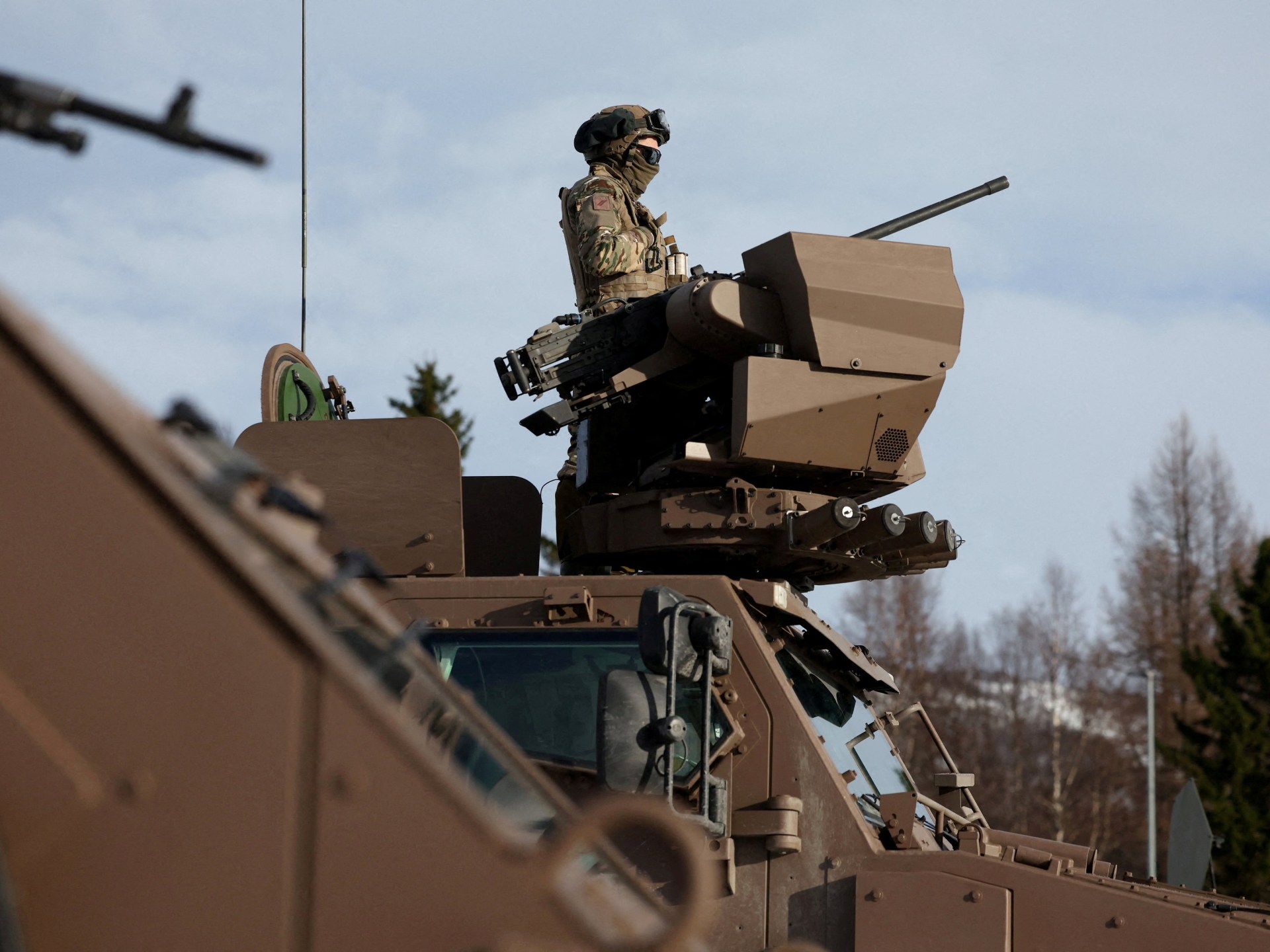
Donald Trump’s disdain for NATO allies dates back to even before he became United States president the first time. From anger over their relatively low defence spending to — more recently — threats to take over Greenland, the territory of fellow NATO member Denmark, the American leader has long left the alliance on edge.
But the decision of NATO allies not to join Trump’s war on Iran has deepened the fracture to unseen levels, say analysts. This week, Trump called their lack of support a stain on the alliance “that will never disappear”. Chancellor Friedrich Merz of Germany put it even more bluntly, hours later: The conflict “has become a trans-Atlantic stress test”.
Recommended Stories
list of 3 itemsend of list
That back and forth underscores a central question exposed by the Middle East crisis that experts say NATO can no longer put off: can the transatlantic alliance survive, especially if the US pulls out?
“There will be no return to business as usual in NATO, during neither this US administration nor the next one,” said Jim Townsend, adjunct senior fellow at the Center for a New American Security. “We are closer to a break than we have ever been.”
Trump can’t pull the US out of the alliance on a whim.
To formally do so, he needs a two-thirds majority in the US Senate or an act of Congress — scenarios that are unlikely to come to pass any time soon, with NATO still enjoying broad support among many legislators in both major American parties.
But there are other things Trump can do. The US has no obligation to come to the aid of allies should they come under attack. The treaty’s Article 5 states members’ collective‑defence obligation, but it does not automatically force a military response — and there is scepticism among allies over whether Washington would ever come to help.
The US can also move the about 84,000 American troops spread across Europe out of the continent. The Wall Street Journal reported on Wednesday that Trump was considering moving some US bases from countries deemed unhelpful during the Iran war and transferring them to more supportive countries. He could close down US military bases and cease military coordination with allies.
Since US security guarantees to Europe have undergirded NATO since its founding, such disengagement would do enough damage.
“He doesn’t need to leave NATO to undermine it; by just saying he might, he has already eroded its credibility as an effective alliance,” said Stefano Stefanini, former Italian ambassador to NATO from 2007 to 2010 and former senior adviser to the Italian Presidency.
Still, allies are not helpless. Russia’s invasion of Ukraine revealed the weakened state of European defence industries and their deep reliance on the US. That, coupled with the numerous diplomatic crises in the US-NATO partnership – including Trump’s threat to take control of Greenland – has pushed European allies to invest more in defence capabilities. Between 2020 and 2025, member states’ defence expenditure increased by more than 62 percent.
However, areas where Europe suffers from overdependence on the US include the ability to strike deep into enemy territory, intelligence, surveillance and reconnaissance, space-based capabilities such as satellite intelligence, logistics and integrated air and missile defence, according to a report by the International Institute for Security Studies (IISS).
These challenges remain considerable. It will take the next decade or more to fill them and about $1 trillion to replace key elements of the US conventional military capabilities. Europe’s defence industries are struggling to ramp up production quickly, and many European armies can’t hit their recruitment and retention targets, the IISS report said.
Still, some experts believe a European NATO is possible. Minna Alander, an analyst at the Stockholm Centre for Eastern European Studies of the Swedish Institute of International Affairs, says NATO has, over the years, become a structure for military cooperation between European countries.
“NATO can therefore survive the Iran war — and even a US withdrawal — as European members have an incentive to maintain it, even if in a radically different form,” Alander said.
For some, the deadline is 2029. That is when Russia may have reconstituted its forces sufficiently to attack NATO territory, according to estimates by Germany’s chief of defence, General Carsten Breuer. “But they can start testing us much sooner,” Breuer said in May last year, ordering the German military to be fully equipped with weapons and other material by then. Others estimate that Moscow could pose that threat as early as 2027.
And what about the US — would it do better without NATO?
According to Stefanini, the former ambassador, the debate about NATO is often “twisted” to portray the alliance’s raison d’être as solely in function of protecting Europe from Russia, as a US favour to the continent.
NATO was a network of alliances born at the onset of the Cold War against the Soviet Union. For decades, the US fought to attract into the alliance as many countries as possible, treating those that refused as friends of the enemy.
Following the September 11, 2001, attacks on the US, NATO invoked for the first and only time Article 5 to rally behind Washington and sent troops to fight in Afghanistan. Thousands of servicemen died there, including nearly 500 from the United Kingdom, and dozens from France, Denmark, Italy and other countries.
And during the war in Iran, European bases were beneficial staging sites for the US military — even if many countries publicly distanced themselves from the conflict.
“NATO served US interests and Trump comfortably overlooks these aspects,” said Stefanini. “Europe has its own responsibility by not investing in defence and creating strong dependence, but thinking that NATO serves only European strategic interests is simply not true.”