

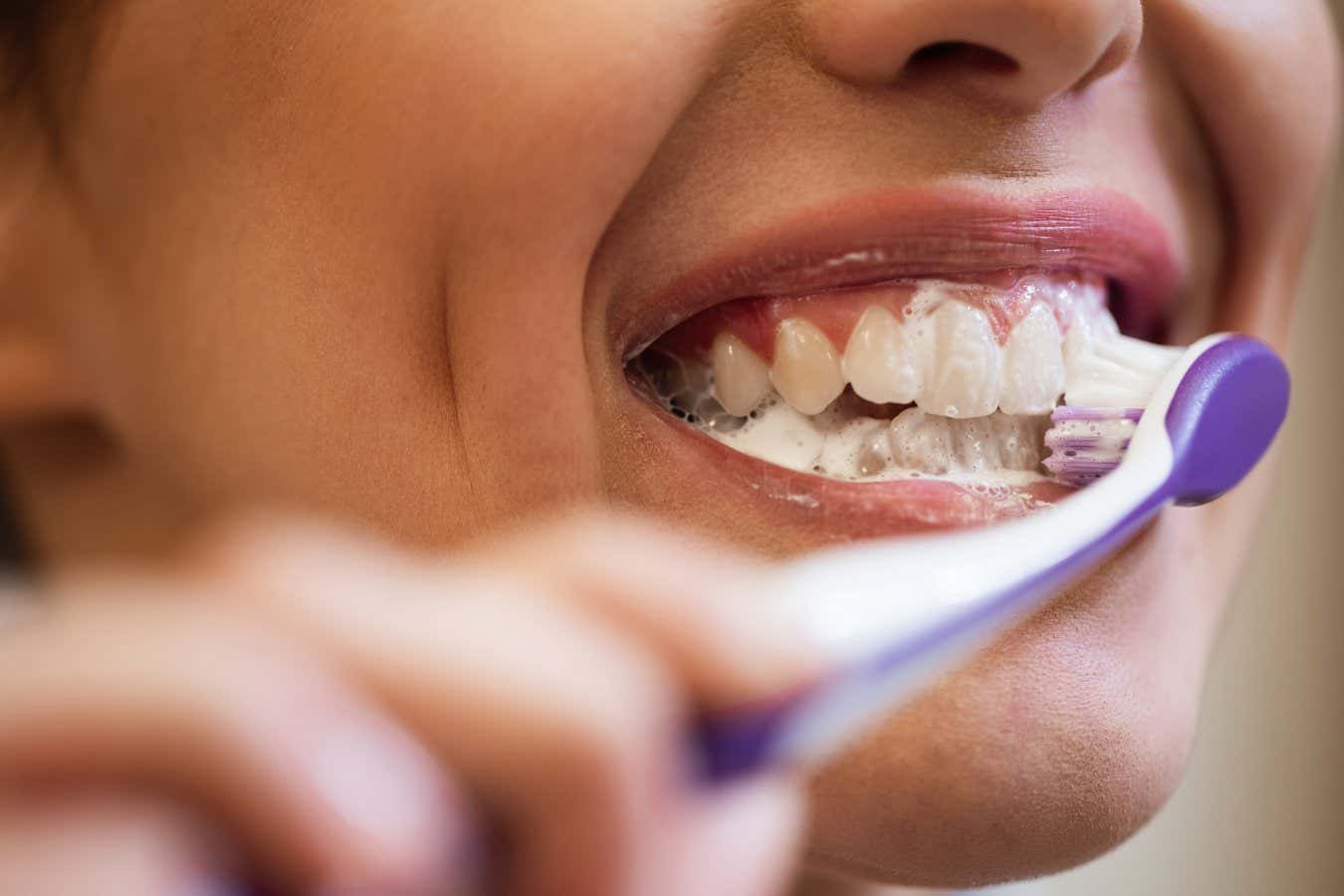
The benefits of brushing in hospital have been overlooked
Drazen Zigic/Getty Images
Brushing your teeth while being treated in hospital can significantly reduce your chances of falling ill with pneumonia.
Many hospitalised patients don’t brush their teeth during their stay, probably for a variety of reasons. Some may have forgotten to bring a toothbrush, while others don’t think about it, feel unmotivated or are physically incapable of doing so. Medical staff often do not include routine oral hygiene care as part of their services to patients.
But in the largest randomised controlled trial of its kind, patients equipped with a toothbrush, toothpaste and dental care advice in hospitals were 60 per cent less likely to develop a common form of hospital-acquired pneumonia, says Brett Mitchell at Avondale University in Australia.
“This just really enforces the need for communication with patients about pneumonia risk, and the importance of oral care and brushing their teeth whilst in hospital,” he says.
It’s widely understood that patients on ventilators often develop pneumonia, due, in part, to the medical equipment interfering with the natural respiratory system. But many non-ventilated hospitalised patients also acquire pneumonia at least 48 hours after hospital admission. Researchers are still trying to understand why this happens and how to prevent it – particularly since hospital-acquired pneumonia is linked to longer hospital stays, higher costs and increased mortality.
“It’s an important problem,” says Michael Klompas at Harvard University, who was not involved in the study. “Hospital-acquired pneumonia is one of the most common and deadly healthcare-associated infections, and rigorous data on how best to prevent it are sparse.”
Mitchell suspected the disease might be linked to the bacteria in people’s mouths. The oral microbiome can affect respiratory health, as people breathe bacteria-laden droplets into their lungs. And the oral microbiome changes when people are hospitalised, says Mitchell. “I felt it was important that we try to do something to address this.”
So, he and his colleagues developed a year-long randomised controlled trial involving 8870 patients in three Australian hospitals to test the effects of oral care on pneumonia risks. He presents the results of this part of the team’s Hospital-Acquired Pneumonia Prevention (“HAPPEN”) study today at the Congress of the European Society of Clinical Microbiology and Infectious Diseases (ESCMID Global) in Munich, Germany.
Each participating hospital divided its study participants into three groups. None of the groups received any intervention for the first three months of the study. After three months, the patients in one group were provided with toothpaste and a toothbrush, labelled “Brushing teeth helps prevent pneumonia” on one side and “Brush away pneumonia!” on the other. The brushes were designed with a special handle for people with reduced dexterity. Patients also received a QR code linking them to educational materials on the HAPPEN website.
After six months, the second group also received the toothbrushes, and the third group was given toothbrushes after nine months – meaning all study participants had the option of brushing their teeth for the final three months of the study.
As for the healthcare staff, the research team organised oral care training for ward nurses and provided them with links to professional advice on their website. They also encouraged the nurses to remind patients to brush and floss their teeth and to help those who had difficulty doing so themselves.
Outside of the intervention periods, only 15.9 per cent of the patients brushed their teeth once a day. During the intervention periods, 61.5 per cent of the patients attended to their oral care at least once per day – with patients doing so 1.5 times per day on average. Web statistics revealed that both patients and nurses frequently accessed the information on the HAPPEN pages during the intervention periods, says Mitchell.
That coincided with a dramatic drop in the number of cases of non-ventilator-associated hospital-acquired pneumonia, says Mitchell. Specifically, the incidence fell from 1 case per 100 admission days in the control group to 0.41 in the intervention group.
“This study is intriguing,” says Klompas, who highlights the large study size and randomised design. “The message is that brushing teeth while in hospital is not only good for one’s oral hygiene and sense of well-being, but it may also literally be life-saving.”
Pyry Sipilä at the University of Helsinki, Finland, says he appreciates the importance of such a significant risk improvement based on such a simple intervention. “Basically the patients were just provided with toothbrushes, toothpaste and advice,” he says. Even so, results might vary depending on reasons for hospitalisation and the patients’ usual oral hygiene habits.
Topics: