

Unlock the Editor’s Digest for free
Roula Khalaf, Editor of the FT, selects her favourite stories in this weekly newsletter.
Bank of England governor Andrew Bailey has said “alarm bells” are ringing over risky lending in the private credit markets following the collapse of First Brands and Tricolor, as he drew a parallel with practices before the 2008 financial crisis.
The comments from Bailey underline the concern among regulators that the rapid demise of US car parts supplier First Brands and subprime auto lender Tricolor in recent weeks are a sign of financial strains in the complex private credit markets.
Referring to how repackaged financial products have in the past obscured the risk of the underlying assets, Bailey said: “We certainly are beginning to see, for instance, what used to be called slicing and dicing and tranching of loan structures going on, and if you were involved before the financial crisis then alarm bells start going off at that point.”
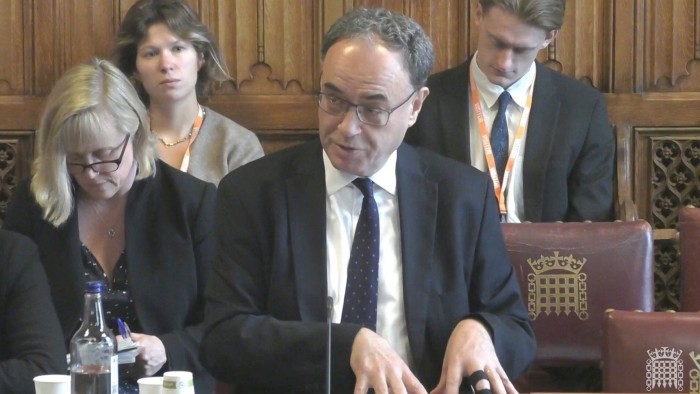
Testifying before the House of Lords’ financial services regulation committee on Tuesday, Bailey added that it was “still a very open question” whether the corporate failures were “the canary in the coal mine”, and whether they indicated “something more fundamental” in private credit markets.
Private credit markets have become a critical source of funding for consumers and businesses as traditional banks have retreated since the financial crisis. Their explosive growth has also raised concerns about high leverage and weak underwriting standards.
Tricolor and First Brands both made use of asset-backed debt, with the subprime lender bundling up car loans into bonds and the car parts manufacturer tapping specialist funds to provide credit against its invoices.
Wall Street’s practice of packaging subprime mortgages into asset-backed bonds fuelled the 2008 financial crisis, with years of loose lending standards leading to a crash in the value of these assets when US house prices fell.
In the run-up to the crisis, bankers and investors had regarded many such complicated financial products as virtually riskless. The perception encouraged large institutions to borrow heavily against their holdings, exacerbating the scale of the losses during the crisis.
“If you go back to before the financial crisis when we were having a debate about subprime mortgages in the US, people were telling us it was too small to be systemic,” Bailey said. “That was the wrong call. I’m not saying therefore the call should be the same this time but it underlines why the question is apposite.”
Bailey’s comments follow a warning last week from the IMF that US and European banks’ $4.5tn exposure to hedge funds, private credit groups and other non-bank financial institutions could amplify any downturn and transmit stress to the wider financial system.
The implosion of Tricolor has in particular prompted comparisons with practices before the 2008 crisis. The company bundled loans made to borrowers with little or no credit history, split them into tranches and sold them to investors.
Some slices of debt were given a prized triple A rating just months before Tricolor’s collapse.
Bailey said the award of top ratings for some of the securities raised questions, and were “another reason to have more drains up, frankly, in terms of how these things are structured”.
Bailey told the committee that the BoE was considering conducting a “system-wide exploratory scenario” next year to test how the private credit market would manage in a crisis.
Sarah Breeden, deputy governor for financial stability, told the same Lords committee hearing: “We can see the vulnerabilities here, the opacity, the leverage, the weak underwriting standards, the interconnections. We can see parallels with the global financial crisis. What we don’t know is how macro-significant those issues are.”
Several private credit and private equity groups had agreed to take part in next year’s scenario planning along with banks, insurers and pension funds, she added.
Additional reporting by Robert Smith in London