

It’s not every week that sees a Federal Reserve development set to shape America for years to come. But two such developments recently occurred two days apart: On July 30, the Fed’s board decided to hold interest rates at their current level, and on Aug. 1, board governor Adriana Kugler resigned.
In its latest Federal Open Market Committee meeting, the Fed overruled the objections of two dissenting governors, Christopher Waller and Michelle Bowman (who favored a 0.25% interest rate cut).
Instead, it decided to maintain the target range for the federal funds rate at between 4.25% and 4.50%.
That marks both the fifth consecutive meeting without a rate change and the most governor dissents since 1993.
The Federal Open Market Committee cites concerns of rising inflation and long-term ambiguity around tariffs as the reason for leaving the target interest rate unchanged.
The Fed is employing the “wait-and-see” approach before committing to a rate reduction, hoping that two more rounds of monthly job and inflation data will assist in its decision. Fed Reserve Chairman Jerome Powell claims he “remains focused on achieving [the Fed’s] dual mandate goals of maximum employment and stable prices for the benefit of the American people.”
Yet Powell simultaneously points to tariff-driven market uncertainty and strong national economic performance as excuses for inaction. These contradictory justifications, coupled with the Fed’s decision to lower interest rates immediately prior to the 2024 election, suggest this might be a political decision, not an economic one.
In his press conference address, Powell referenced several indicators of economic resilience: business investment increase, payroll job gains, low unemployment, wage growth, and reduced inflation. That’s an environment Donald Trump administration’s policies created in just seven short months, even in spite of the Fed’s refusal to lower rates.
While annual inflation has steadily decreased, as of June, it continued to run above the 2% objective—hitting 2.7%. The high inflation of the Joe Biden era still has lingering effects on Americans who experience decreased purchasing power, making everyday essentials like groceries and gas more expensive.
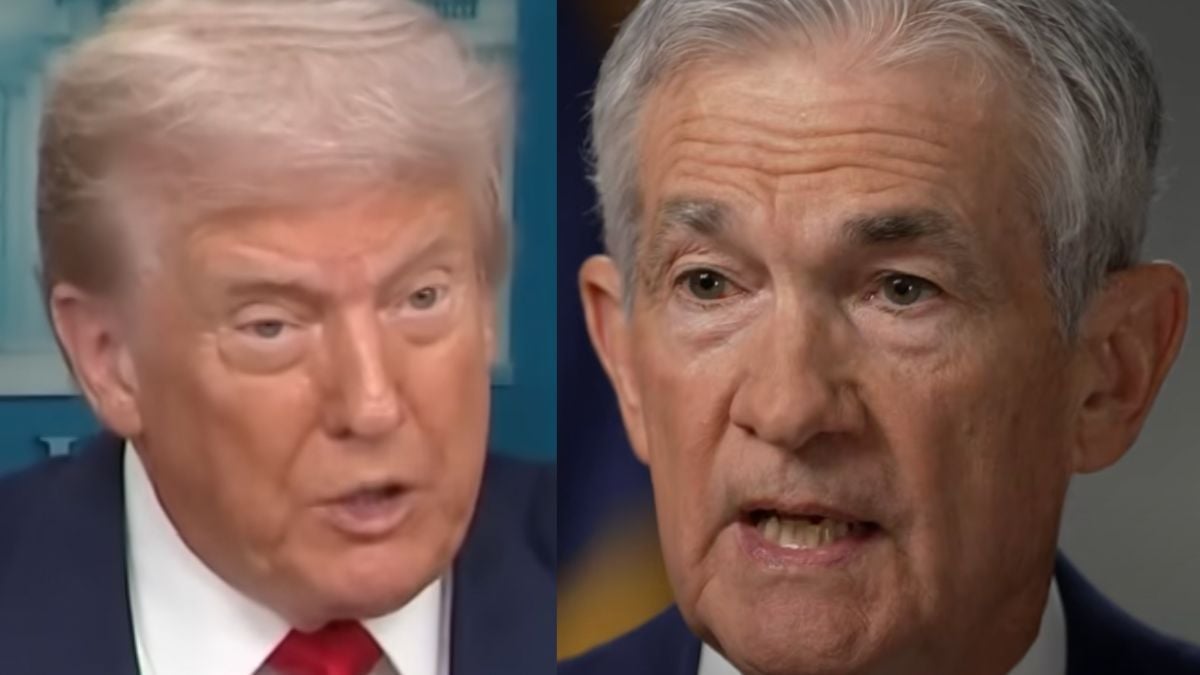
Trump claims that by keeping interest rates high, the Fed is “hurting people” and preventing Americans “from buying houses”—but the Federal Reserve has consistently resisted pressure to cut rates.
This inaction has sparked debates regarding the Fed’s dominance and its future role, if any, in the U.S. economic system. Now congressmen, economists, and American citizens are all calling on the Trump administration to audit the Fed and eliminate its role in determining interest rates.
Such calls find further support from the fact that, while the U.S. has seen positive changes in many economic indicators, others still show room for improvement. As Powell explains, “GDP has moderated, activity in the housing sector remains weak, and [Personal Consumption Expenditure] PCE prices rose 2.5% over the last 12 months ending in June.”
Due to Bidenflation, housing affordability and availability have become increasingly important political issues. The housing market is currently characterized by high costs and high mortgage interest rates.
However, as the federal government continues to run massive deficits now and deep into the future, pressures for both inflation and interest rates to climb even higher will only intensify.
By maintaining the current federal funds rate, the Federal Open Market Committee perpetuates its current policy of passing the costs of the federal deficit on to the American public through higher borrowing costs for mortgages, credit cards, and small business and other loans.
For prospective homebuyers, this can prevent them from achieving the American dream. For businesses, this can limit expansion and hiring—thus leading to slowed innovation and job creation.
If the Fed were to reduce interest rates by just 25 basis points, mortgages would become more affordable, and competition among buyers would intensify.
Lower target interest rates would reduce mortgage and business loan rates, making housing more affordable for Americans and incentivizing businesses to provide well-paying job opportunities.
This would revive housing demand, bringing buyers back into the market, thus easing the housing affordability crisis.
Not only that, but this interest rate reduction would decrease the cost of servicing the national debt.
Despite the Fed’s decision to hold rates constant and Chairman Powell’s ambiguity about the future, economists predict a 25-basis-point cut at the Federal Open Market Committee’s September meeting.
This prediction partly stems from the latest jobs report, which seems to indicate a slowing economic growth.
That’s earned Powell the moniker “too late Powell” from Trump, who decries the chief’s reluctance to adjust interest rates.
The same day that jobs report was released, Kugler, a 2023 Biden appointee, suddenly resigned her governor position (effective Aug. 8) without saying why.
This vacancy offers Trump the chance to appoint a replacement, pending Senate confirmation, with monetary policy views that align closer to his values of low interest rates and low inflation.
While it might be “too late” to lower interest rates for the August cycle, a newly appointed board member could give Trump another chance to advocate for Federal Reserve transparency and offer Americans more hope for a stable and robust economy.
Syndicated with permission from The Daily Signal.