
Close Menu
    Trending
    • When is London Marathon 2026? Start time and how to watch race for FREE
    • Pentagon Requests $54 Billion For AI War
    • Clavicular Hit With New YouTube Crackdown
    • Beijing’s new supply chain rules deepen concerns for US firms in China
    • India denounces ‘hellhole’ remark shared by Trump | Donald Trump News
    • New photos of Mike Vrabel and Dianna Russini emerge
    • AI search demands a new audience playbook
    • How do earthquakes end? A seismic ‘stop sign’ could help predict earthquake risk
    Benjamin Franklin Institute
    Friday, April 24
    • Home
    • Politics
    • Business
    • Science
    • Technology
    • Arts & Entertainment
    • International
    Benjamin Franklin Institute
    Home»Science»Orcas scrub each other clean with bits of kelp
    Science

    Orcas scrub each other clean with bits of kelp

    Team_Benjamin Franklin InstituteBy Team_Benjamin Franklin InstituteJune 23, 2025No Comments3 Mins Read
    Share Facebook Twitter Pinterest Copy Link LinkedIn Tumblr Email VKontakte Telegram
    Share
    Facebook Twitter Pinterest Email Copy Link


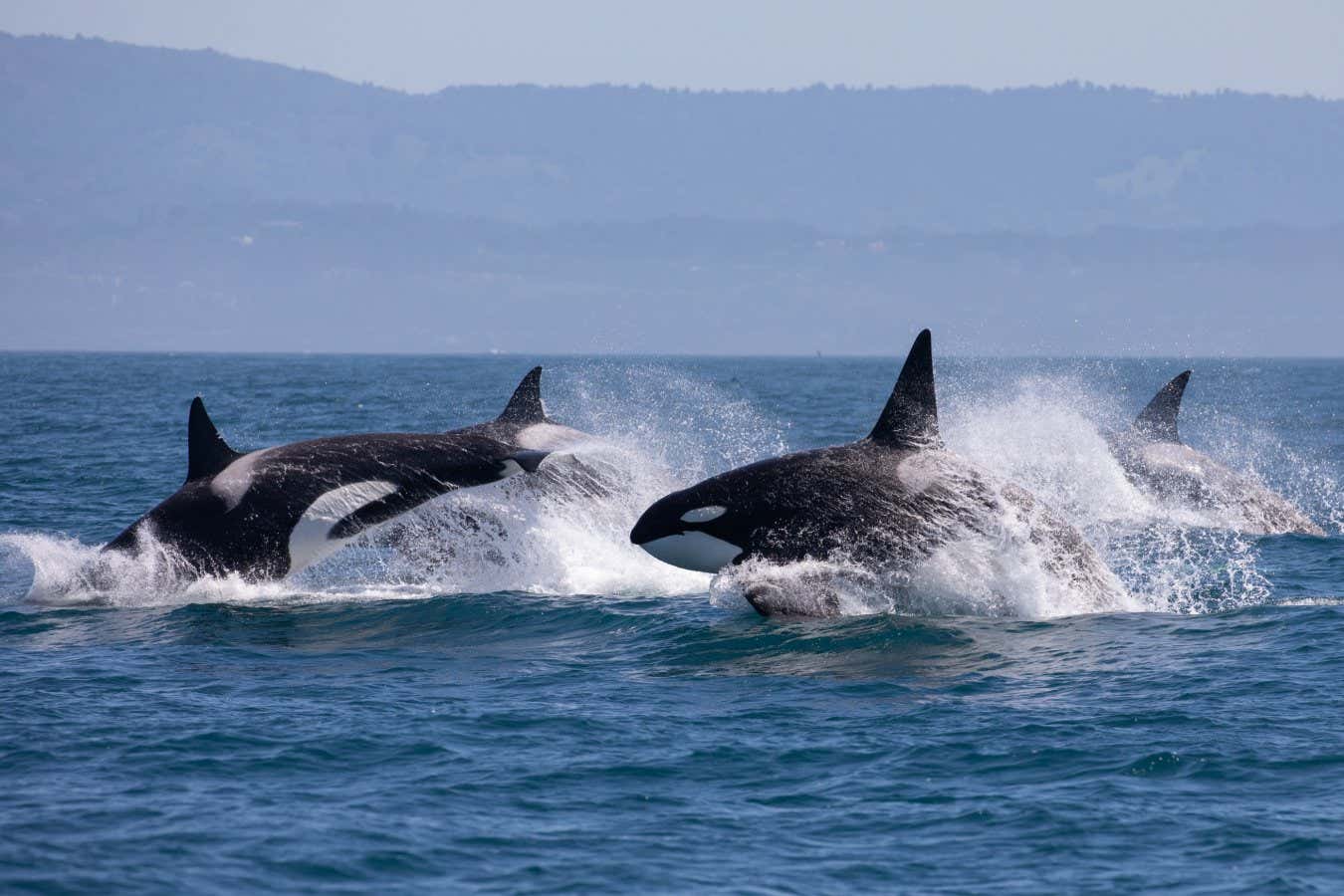
    Groups of killer whales exhibit strong social behaviour

    Shutterstock/Tory Kallman

    Orcas off the west coast of North America are grooming each other with kelp, in a rare sighting of marine mammals manufacturing and using tools.

    For several years, scientists have been keenly observing 80 endangered killer whales in the segment of the Pacific Ocean between British Columbia and Washington state. To get a bird’s eye view of the whales’ lives, the researchers also tracked them with drones.

    While poring over footage from summer 2024, they noticed that the orcas were manoeuvring strands of kelp in odd ways. It was “really weird”, says Rachel John at the Center for Whale Research in Washington state, “but the whales, they do weird things all the time”.

    In the footage, the orcas can be spotted breaking off kelp stalks near where they meet the rock bed by grabbing them with their teeth and jerking their heads back and forth. The short, snapped-off segments were roughly equivalent in length to that of the whale’s beak-like face. Over and over again, the orcas appear to consistently target just that specific segment of the algae, not other random parts of kelp.

    After breaking off a strand, a whale would then sandwich the kelp between their head and the bodies of other whales in the pod, rubbing and rolling it onto each other’s sides. They take turns cleaning each other with the kelp, sometimes grooming each other for up to 12 minutes.

    “What’s cool is that they don’t have any kind of hand-like appendages, and so they’re doing all of this using very deliberate movements of their body,” says John.

    Orcas are known to rub themselves against kelp on their own, known as “kelping”. This could be a social variation of that behaviour. “We know that the social bonds in this population are super, super strong, and we know that contact is one way that they reinforce those bonds,” says John.

    The behaviour was present across all ages and sexes, though the data suggests the whales that were most closely related and those closer in age were more likely to “kelp” together. Crucially, this may be a form of whale hygiene, says John, as the team found that orcas are more likely to scrub each other with kelp if they are shedding their skin.

    It might still be too early to confirm whether this skincare has health benefits, says Olaf Meynecke at Griffith University, Australia. He would like to see the researchers cross-reference the orcas’ skin bacteria with the properties of the kelp to see if they match.

    “It totally makes sense to me that they are seeking out anything that the ocean could offer to help them with potential reduction in skin infections,” says Meynecke. He suspects this is a widespread behaviour among other orca populations and whale species.

    Topics:


    Source link

    Share. Facebook Twitter Pinterest LinkedIn Tumblr Email Telegram Copy Link

    Related Posts

    Science

    How do earthquakes end? A seismic ‘stop sign’ could help predict earthquake risk

    April 24, 2026
    Science

    ‘Kraken’ fossils show enormous, intelligent octopuses were top predators in Cretaceous seas

    April 24, 2026
    Science

    Largest ever octopus was great white shark of invertebrate predators

    April 24, 2026
    Science

    Do you need to worry about Mythos, Anthropic’s computer-hacking AI?

    April 23, 2026
    Science

    How many dachshunds would it take to get to the moon?

    April 23, 2026
    Science

    The Age Code review: Can you slow ageing with your diet? A new book gives it a go

    April 23, 2026
    Editors Picks

    New Dolphins GM noncommittal about future of QB Tua Tagovailoa

    January 23, 2026

    Kandi Burruss Opens Up About Funding Daughter Riley’s Lavish NYC Lifestyle

    February 28, 2026

    FDA wants to make more drugs available over the counter, but experts have raised safety concerns

    February 23, 2026

    Highest-Paying Jobs For Older Adults: New Report

    August 22, 2025

    Double Olympic badminton champion Viktor Axelsen announces retirement

    April 15, 2026
    About Us
    About Us

    Welcome to Benjamin Franklin Institute, your premier destination for insightful, engaging, and diverse Political News and Opinions.

    The Benjamin Franklin Institute supports free speech, the U.S. Constitution and political candidates and organizations that promote and protect both of these important features of the American Experiment.

    We are passionate about delivering high-quality, accurate, and engaging content that resonates with our readers. Sign up for our text alerts and email newsletter to stay informed.

    Latest Posts

    When is London Marathon 2026? Start time and how to watch race for FREE

    April 24, 2026

    Pentagon Requests $54 Billion For AI War

    April 24, 2026

    Clavicular Hit With New YouTube Crackdown

    April 24, 2026

    Subscribe for Updates

    Stay informed by signing up for our free news alerts.

    Paid for by the Benjamin Franklin Institute. Not authorized by any candidate or candidate’s committee.
    • Privacy Policy
    • About us
    • Contact us

    Type above and press Enter to search. Press Esc to cancel.