
Close Menu
    Trending
    • Mamdani, Who Said Israel ‘Not a Place,’ Gets Roasted for Wishing Jewish NYCers ‘Peaceful’ Holiday That’s Definitely About Israel Being a Place
    • ‘The Ultimatum’ Star Blake Robertson Shares Relationship Update
    • US missiles hit Iran as path towards de-escalation uncertain
    • UN rights chief Turk wins second term despite US and Israeli opposition | United Nations News
    • LeBron’s decision might force Jalen Brunson to do the unthinkable
    • 8 Unique Side Hustle Ideas for Summer 2026 and Beyond
    • NHTSA considers new car door safety rules after fatal Tesla crashes
    • PlayStation Network outage resolved after thousands of gamers unable to play
    Benjamin Franklin Institute
    Saturday, July 25
    • Home
    • Politics
    • Business
    • Science
    • Technology
    • Arts & Entertainment
    • International
    Benjamin Franklin Institute
    Home»Science»Most accurate space clock set to launch – and count down to destruction
    Science

    Most accurate space clock set to launch – and count down to destruction

    Team_Benjamin Franklin InstituteBy Team_Benjamin Franklin InstituteApril 18, 2025No Comments4 Mins Read
    Share Facebook Twitter Pinterest Copy Link LinkedIn Tumblr Email VKontakte Telegram
    Share
    Facebook Twitter Pinterest Email Copy Link


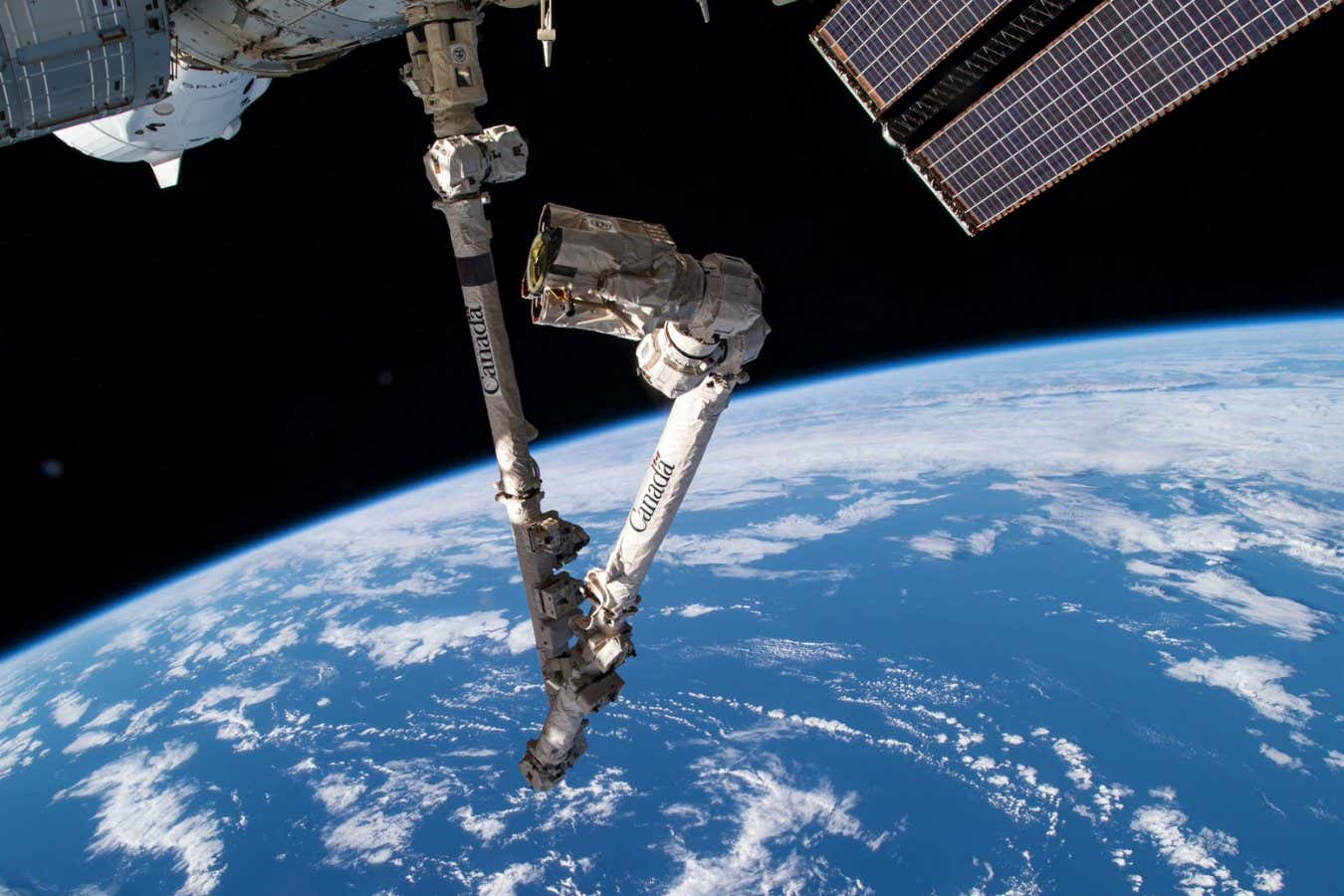
    Canadarm2, the robotic arm on the ISS built by the Canadian Space Agency

    ESA/NASA

    The most accurate clock in space launches within days and will begin building a highly synchronised network out of the best clocks on Earth. But the project, decades in preparation, will only operate for a few years before it burns up as the International Space Station deorbits at the end of the decade.

    The Atomic Clock Ensemble in Space (ACES) is a European Space Agency (ESA) mission that will generate a time signal with unprecedented accuracy and then transmit it via laser to nine ground stations as it passes overhead at 27,000 kilometres per hour. This network of clocks will be in extremely close synchronisation and provide highly accurate timekeeping around the world.

    The result is that ACES will be able to test Einstein’s theory of general relativity, which says that the passing of time is affected by the strength of gravity, with great accuracy. It will also assist with research on everything from dark matter to string theory.

    ACES is scheduled to launch on 21 April aboard a SpaceX Falcon 9 rocket from Kennedy Space Center, Florida. Once at the ISS, the Canadian Space Agency’s robotic arm – Canadarm2 – will attach it to the exterior of ESA’s Columbus laboratory, where it will remain in the vacuum of space.

    The package actually comprises two clocks: one called SHM has the ability to remain stable for short periods, which will allow it to help calibrate the other, called PHARAO. Together, these clocks will be so accurate they would lose less than one second over 300 million years – 10 times more accurate than the clocks aboard GPS satellites.

    PHARAO is fundamentally modelled on an atomic clock in Paris that occupies an entire room. Miniaturising that technology into something that takes up less than a cubic metre, and can also survive the rigours of a rocket launch and life in space, was no mean feat.

    To generate an accurate clock signal, PHARAO spews a fountain of caesium atoms cooled to near absolute zero and observes their interaction with microwave fields. On Earth, this requires a device up to 3 metres tall, but in microgravity these atoms can be sprayed in a slower-moving and smaller fountain, allowing it to be much smaller.

    Simon Weinberg at ESA says that the device is so sensitive that simply putting a teaspoon near it could create an electromagnetic field strong enough to destroy the clock. “Just to put it in context, it’s better than a thousand million millionth of a second that we’re trying to measure here,” says Weinberg. “So it’s one hell of a challenging job.”

    The concept for ACES dates back to the 1990s and was originally planned for launch on the Space Shuttle, which retired in 2011. Once it gets to space, the first signal won’t arrive at an Earthbound clock for a year and a half – it will take around six months to commission the device, and then a year’s worth of measurement will be needed to isolate noise and remove it from the clock signal.

    After that, ACES will operate until 2030, after which the ISS will be deliberately crashed into Earth’s atmosphere and burned up. By that point, new super-accurate timepieces known as optical clocks are likely to have made atomic clocks all but obsolete on Earth, although they may not be small or robust enough for use in space by that time.

    Weinberg says that at some point ESA will look to launch a new generation of ACES to replace what is lost on the ISS, whatever the most appropriate technology is at the time. “We would be a long way off from doing that, and we would have to gather together the support and the financing and so on to make sure that happened.”

    Topics:

    • time/
    • International Space Station


    Source link

    Share. Facebook Twitter Pinterest LinkedIn Tumblr Email Telegram Copy Link

    Related Posts

    Science

    NHTSA considers new car door safety rules after fatal Tesla crashes

    July 24, 2026
    Science

    Fungus made fashion—researchers turn living organisms into textiles

    July 24, 2026
    Science

    How a 99-year-old mathematician unraveled a century-old braid mystery

    July 24, 2026
    Science

    Is it possible to regain a sense of smell? These scientists are working on it

    July 24, 2026
    Science

    Why don’t insects live in the ocean?

    July 24, 2026
    Science

    Why environmental groups are suing over SpaceX’s land swap deal

    July 24, 2026
    Editors Picks

    Elon Musk’s Twitter deal looked like a $44 billion disaster. Now, his investors stand to make a 200% return—thanks to a brilliant (and controversial) M&A move

    June 17, 2026

    Claims that BBC misled viewers with Trump edit ‘incredibly serious’, UK minister says

    November 9, 2025

    Adam Driver’s ‘Star Wars’ Character Returns In An Unexpected Way

    May 16, 2026

    ‘Tis the season to be thrifty: Higher tariffs dampen Christmas spending in US as shoppers cut back

    December 22, 2025

    AI is rewriting business in real time—and most leaders aren’t ready

    March 20, 2026
    About Us
    About Us

    Welcome to Benjamin Franklin Institute, your premier destination for insightful, engaging, and diverse Political News and Opinions.

    The Benjamin Franklin Institute supports free speech, the U.S. Constitution and political candidates and organizations that promote and protect both of these important features of the American Experiment.

    We are passionate about delivering high-quality, accurate, and engaging content that resonates with our readers. Sign up for our text alerts and email newsletter to stay informed.

    Latest Posts

    Mamdani, Who Said Israel ‘Not a Place,’ Gets Roasted for Wishing Jewish NYCers ‘Peaceful’ Holiday That’s Definitely About Israel Being a Place

    July 25, 2026

    ‘The Ultimatum’ Star Blake Robertson Shares Relationship Update

    July 25, 2026

    US missiles hit Iran as path towards de-escalation uncertain

    July 25, 2026

    Subscribe for Updates

    Stay informed by signing up for our free news alerts.

    Paid for by the Benjamin Franklin Institute. Not authorized by any candidate or candidate’s committee.
    • Privacy Policy
    • About us
    • Contact us

    Type above and press Enter to search. Press Esc to cancel.