
Close Menu
    Trending
    • Intel stock price: INTC surges today after Q1 earnings reveal AI data center boom
    • QBox theory may offer glimpse of reality deeper than quantum realm
    • May 2026 Live Webinar Series
    • Damson Idris Says Messi Made Him Quit Soccer
    • Netanyahu says he was successfully treated for prostate cancer
    • Negotiations that enable Israel’s land-grabs | Israel-Palestine conflict
    • True-or-false for Round 1 of 2026 NFL Draft: Will Cowboys regret their trade?
    • Opinion | Stewart Brand, Silicon Valley’s Favorite Prophet, on Life’s Most Important Principle
    Benjamin Franklin Institute
    Friday, April 24
    • Home
    • Politics
    • Business
    • Science
    • Technology
    • Arts & Entertainment
    • International
    Benjamin Franklin Institute
    Home»Science»The evolution of easier births means slower walking and pelvis issues
    Science

    The evolution of easier births means slower walking and pelvis issues

    Team_Benjamin Franklin InstituteBy Team_Benjamin Franklin InstituteApril 11, 2025No Comments3 Mins Read
    Share Facebook Twitter Pinterest Copy Link LinkedIn Tumblr Email VKontakte Telegram
    Share
    Facebook Twitter Pinterest Email Copy Link


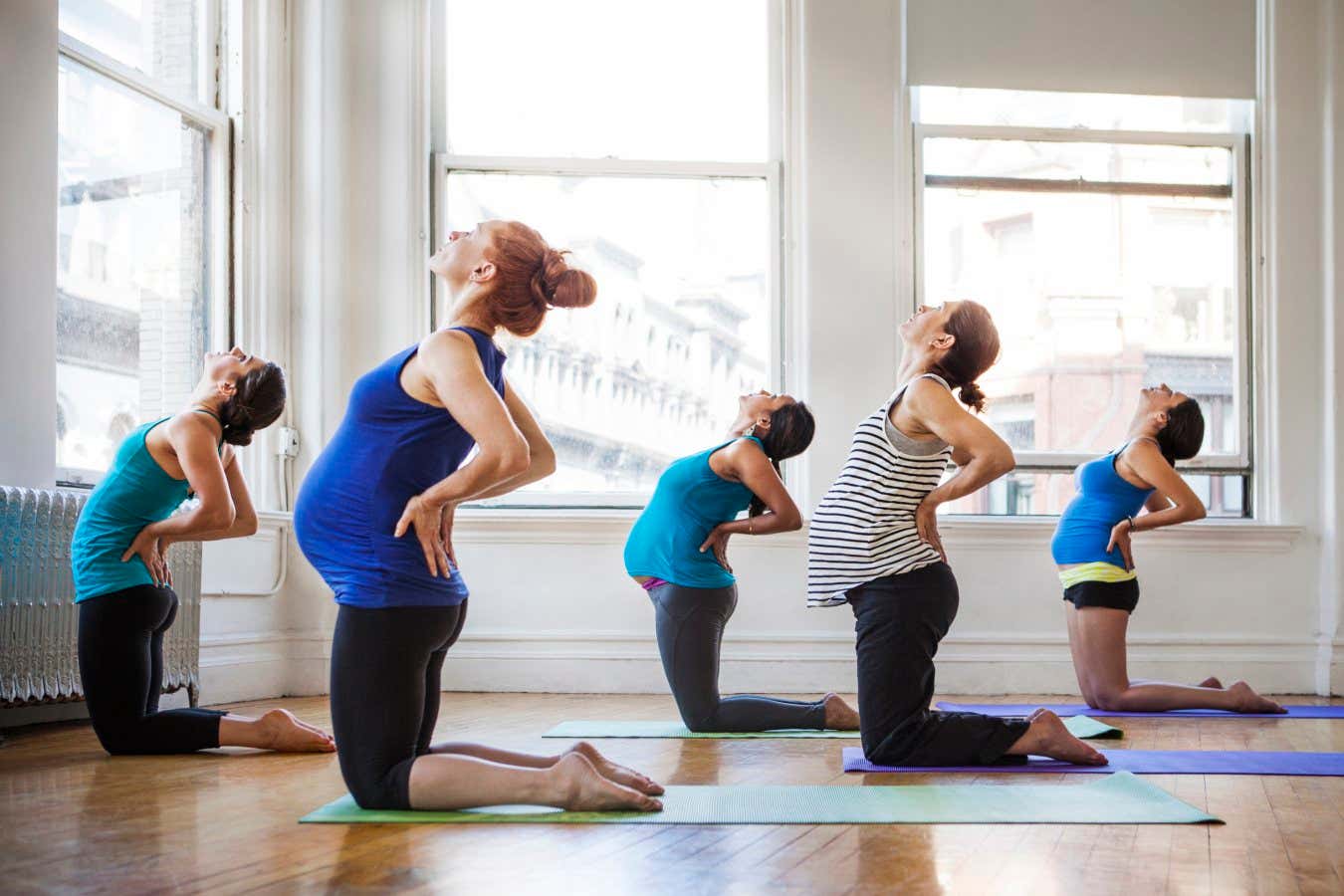
    Pelvis width may influence the risk of birth complications and back pain

    Cavan Images/Getty Images

    The width of a person’s hips seems to be a result of complex trade-offs between the evolution of larger brains and upright walking, according to the largest study of its kind to date.

    “If your brain is getting larger and larger over the same evolutionary time as your pelvis is getting narrower, this, of course, results in conflict,” says Vagheesh Narasimhan at the University of Texas at Austin.

    This idea, first proposed in the 1960s, is known as the obstetrical dilemma. More recently, it has been suggested that the risk of pelvic floor conditions also factors in. The pelvic floor is a layer of muscles that keeps our organs in place. If it weakens or tears, it can lead to incontinence and problems during childbirth.

    “The obstetrical dilemma has been debated very hotly,” says Narasimhan. There have been many previous studies trying to relate the structure of the pelvis to walking speed and efficiency, for instance, but these studies have usually involved small numbers of people and produced conflicting results, he says.

    Now, Narasimhan and his colleagues have used data from the UK Biobank to look at 31,000 men and women. The team measured various aspects of the pelvis based on a type of scan called dual-energy X-ray absorptiometry and looked for correlations with genetic variations and aspects of people’s health, such as requiring emergency caesarians.

    The results indicate that having a wider pelvis reduces the risk of complications during birth, but results in slower walking and a higher risk of pelvic floor-related conditions and osteoarthritis of the hip. Meanwhile, a narrower pelvis may speed up walking but increases the risk of birth complications, back pain and knee osteoarthritis.

    It has previously been suggested that there is a link between having narrower hips and earlier births, to reduce the risk of birth complications, but the team found no association between pelvis width and the length of pregnancies. “This is in line with other studies showing that human children are not born [relatively] sooner than in the other great apes,” says Narasimhan.

    The team did observe an association between pelvic width and the head size of babies at birth. “Individuals who might give birth to children with a wider head often have wider pelvises,” says Narasimhan. “That happens because of natural selection, where we’re continually selecting for individuals which have this correlation.” This selection may now have come to an end because of C-sections, a 2016 study claimed.

    Another finding is that most people have slightly asymmetrical pelvises that correlate with their handedness. Being left or right-handed usually determines which leg is dominant, which affects walking and the development of the pelvis, and this may lead to a slight asymmetry as we grow up, says Narasimhan.

    “This is an extraordinary contribution to a fundamental aspect of human evolutionary biology,” says Scott Simpson at Case Western Reserve University in Cleveland, Ohio. “By integrating anatomic, genetic, clinical and behavioural data, the authors have provided significant insights into this uniquely human adaptation.”

    “It is nice to be able to exploit large datasets,” says Nicole Webb at the University of Zurich in Switzerland, who has shown that the birth canals of chimpanzees aren’t much wider than those of people. Webb points out that all the people in the dataset were aged over 40 and from the UK. “If this work were carried out on younger, more diverse populations, the results could be even more striking,” she says.

    Topics:

    • human evolution/
    • pregnancy


    Source link

    Share. Facebook Twitter Pinterest LinkedIn Tumblr Email Telegram Copy Link

    Related Posts

    Science

    QBox theory may offer glimpse of reality deeper than quantum realm

    April 24, 2026
    Science

    What happens if you’re hit by a primordial black hole?

    April 24, 2026
    Science

    How do earthquakes end? A seismic ‘stop sign’ could help predict earthquake risk

    April 24, 2026
    Science

    ‘Kraken’ fossils show enormous, intelligent octopuses were top predators in Cretaceous seas

    April 24, 2026
    Science

    Largest ever octopus was great white shark of invertebrate predators

    April 24, 2026
    Science

    Do you need to worry about Mythos, Anthropic’s computer-hacking AI?

    April 23, 2026
    Editors Picks

    EU investigates Elon Musk’s X over Grok AI sexual deepfakes

    January 26, 2026

    Opinion | How to Find a Date in a Country with Over 30 Million Extra Men

    December 12, 2025

    Opinion | Can James Talarico Reclaim Christianity for the Left?

    January 13, 2026

    2025 on track to tie second-hottest year on record: EU monitor

    December 9, 2025

    US envoy Witkoff says Ukraine talks with Russia ‘productive’ | Russia-Ukraine war News

    January 31, 2026
    About Us
    About Us

    Welcome to Benjamin Franklin Institute, your premier destination for insightful, engaging, and diverse Political News and Opinions.

    The Benjamin Franklin Institute supports free speech, the U.S. Constitution and political candidates and organizations that promote and protect both of these important features of the American Experiment.

    We are passionate about delivering high-quality, accurate, and engaging content that resonates with our readers. Sign up for our text alerts and email newsletter to stay informed.

    Latest Posts

    Intel stock price: INTC surges today after Q1 earnings reveal AI data center boom

    April 24, 2026

    QBox theory may offer glimpse of reality deeper than quantum realm

    April 24, 2026

    May 2026 Live Webinar Series

    April 24, 2026

    Subscribe for Updates

    Stay informed by signing up for our free news alerts.

    Paid for by the Benjamin Franklin Institute. Not authorized by any candidate or candidate’s committee.
    • Privacy Policy
    • About us
    • Contact us

    Type above and press Enter to search. Press Esc to cancel.