
Close Menu
    Trending
    • Amsterdam Bans Meat Ads As The War On Food Expands
    • Katie Holmes And Joshua Jackson Spark ‘Soul-Level’ Love Chatter
    • Singapore Airlines, Southwest Airlines partner to expand access to nearly 120 US destinations
    • Trump warns Netanyahu: ‘You’ll be on your own’ if attacks on Iran continue | US-Israel war on Iran News
    • Cristiano Ronaldo, ‘The Bosnian Diamond’ headline the World Cup 40-and-over club
    • How housing market inventory is shifting across every state
    • What is a ‘normal’ memory slowdown, and when should I worry?
    • Ariana Grande And Ethan Slater Are ‘Still Friends’ Following Split
    Benjamin Franklin Institute
    Tuesday, June 9
    • Home
    • Politics
    • Business
    • Science
    • Technology
    • Arts & Entertainment
    • International
    Benjamin Franklin Institute
    Home»Science»Scratching an itch could help boost your immune defences
    Science

    Scratching an itch could help boost your immune defences

    Team_Benjamin Franklin InstituteBy Team_Benjamin Franklin InstituteJanuary 30, 2025No Comments2 Mins Read
    Share Facebook Twitter Pinterest Copy Link LinkedIn Tumblr Email VKontakte Telegram
    Share
    Facebook Twitter Pinterest Email Copy Link


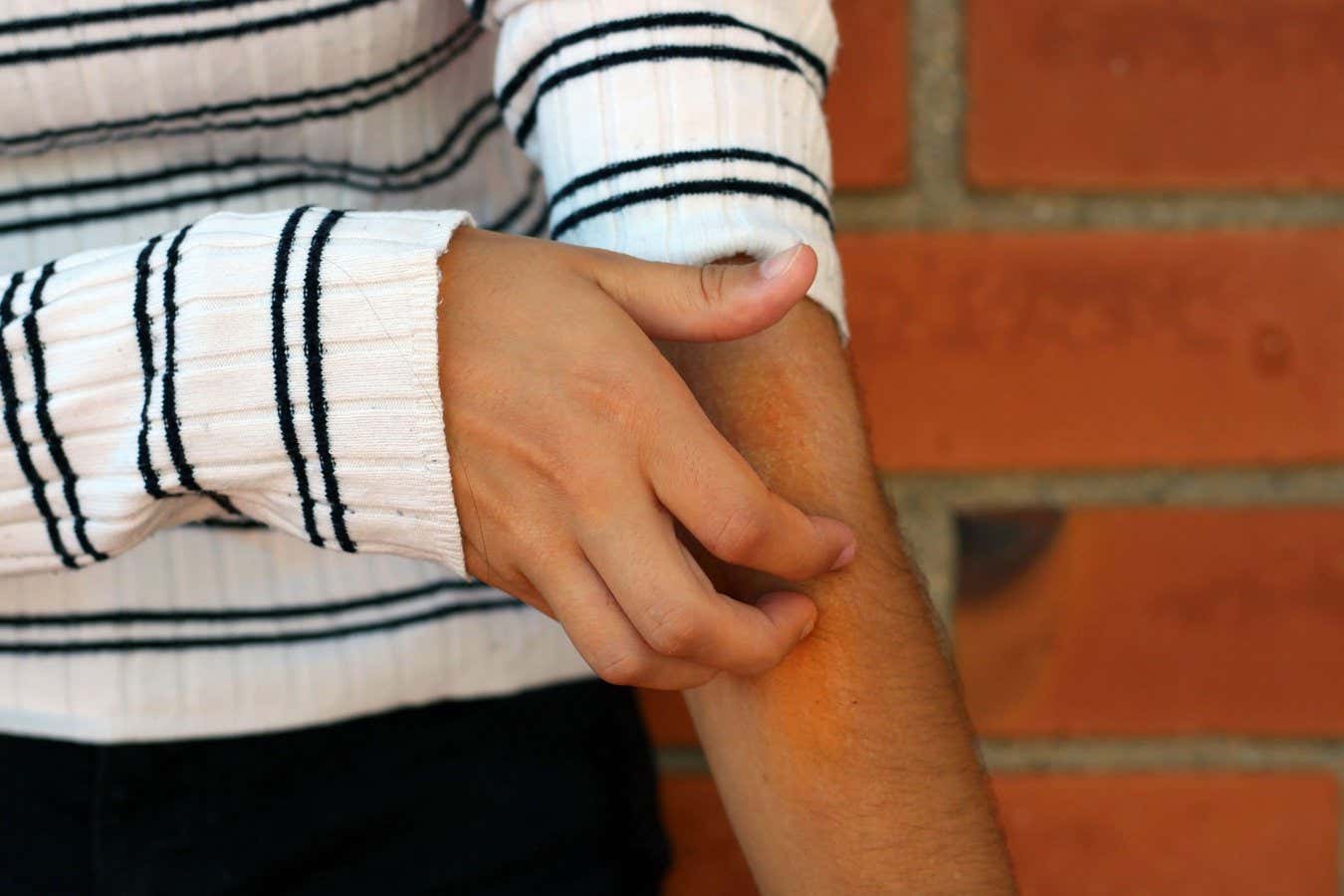
    The urge to scratch an itch may have evolved for a reason, but we have struggled to pinpoint why

    Cavan Images/Alamy

    Forget what your parents told you, scratching an itch may be good for you, by boosting your body’s defence against bacteria.

    Scratching is a paradoxical phenomenon. It can feel nice to run your nails over an itchy bit of skin, which hints that there is an evolutionary reason we get pleasure from doing it, and yet it can also aggravate eczema and rashes or reopen a wound.

    To dig into this dichotomy, Dan Kaplan at the University of Pittsburgh, Pennsylvania, and his colleagues used allergens called haptens to induce eczema-like symptoms on mice’s ears.

    The ears of mice that could scratch at will swelled up more and contained more inflammatory cells called neutrophils – which help our body fight infection – than those wearing a collar that stopped them reaching their ears.

    To see how this scratching was affecting the skin, the researchers looked into what was going on inside the cells. They found that the scratching made pain-detecting neurons release a chemical known as substance P, which then activated white blood cells called mast cells, encouraging the body to produce more neutrophils.

    “It shows that the act of scratching is really important in augmenting mast cell behaviour,” says Holly Wilkinson at the University of Hull, UK.

    The team also found that scratching reduced the amount of Staphylococcus aureus, a bacterium commonly involved in skin infections, on the mice’s skin. This microbe can trigger a lot of skin inflammation, which manifests as dermatitis, says Kaplan. “About 24 hours of scratching is enough to change the microbiome in measurable ways,” he says.

    However, by activating the mast cells, the allergens also triggered a pathway that incited inflammation, showing that in conditions like eczema, a type of dermatitis, the body is effectively getting a double dose of skin inflammation, which is when scratching will probably lead to increased damage.

    “If you’re basically healthy and scratching, it is a good thing,” says Wilkinson. “But there is that tipping point and if you are scratching too much then it could become a negative thing.”

    Kaplan says his team has done preliminary work showing similar benefits from scratching in people.

    Topics:


    Source link

    Share. Facebook Twitter Pinterest LinkedIn Tumblr Email Telegram Copy Link

    Related Posts

    Science

    What is a ‘normal’ memory slowdown, and when should I worry?

    June 9, 2026
    Science

    Wildlife thrives in solar farm built on restored peatland

    June 8, 2026
    Science

    You don’t need to worry about recursive-self-improving AI – yet

    June 8, 2026
    Science

    Understanding anorexia’s grip on the brain could unlock new therapies

    June 8, 2026
    Science

    Why GLP-1 drugs might reduce cancer risk

    June 8, 2026
    Science

    Landmark pancreatic cancer treatment paves way for targeting other tricky tumors

    June 8, 2026
    Editors Picks

    The ‘Most passing yards by an NFL rookie’ quiz

    December 10, 2025

    Opinion | The President’s Personal Spy Chief

    February 7, 2026

    Opinion | The Real Victim of Trump’s War on Numbers Is You

    May 15, 2026

    Google suggests fixes to search monopoly amid antitrust battle

    December 27, 2024

    US wants to sell GM soya and corn to India, farmers wary | Trade War

    December 23, 2025
    About Us
    About Us

    Welcome to Benjamin Franklin Institute, your premier destination for insightful, engaging, and diverse Political News and Opinions.

    The Benjamin Franklin Institute supports free speech, the U.S. Constitution and political candidates and organizations that promote and protect both of these important features of the American Experiment.

    We are passionate about delivering high-quality, accurate, and engaging content that resonates with our readers. Sign up for our text alerts and email newsletter to stay informed.

    Latest Posts

    Amsterdam Bans Meat Ads As The War On Food Expands

    June 9, 2026

    Katie Holmes And Joshua Jackson Spark ‘Soul-Level’ Love Chatter

    June 9, 2026

    Singapore Airlines, Southwest Airlines partner to expand access to nearly 120 US destinations

    June 9, 2026

    Subscribe for Updates

    Stay informed by signing up for our free news alerts.

    Paid for by the Benjamin Franklin Institute. Not authorized by any candidate or candidate’s committee.
    • Privacy Policy
    • About us
    • Contact us

    Type above and press Enter to search. Press Esc to cancel.