QUESTION: You mentioned that the S&L Crisis of the 1980s was caused by the Democrats winning Congress in 1984 and changing the tax code on commercial real estate. Could you explain that connection? Was the banking and real estate crisis primarily driven by Democratic policies at that time?
DD
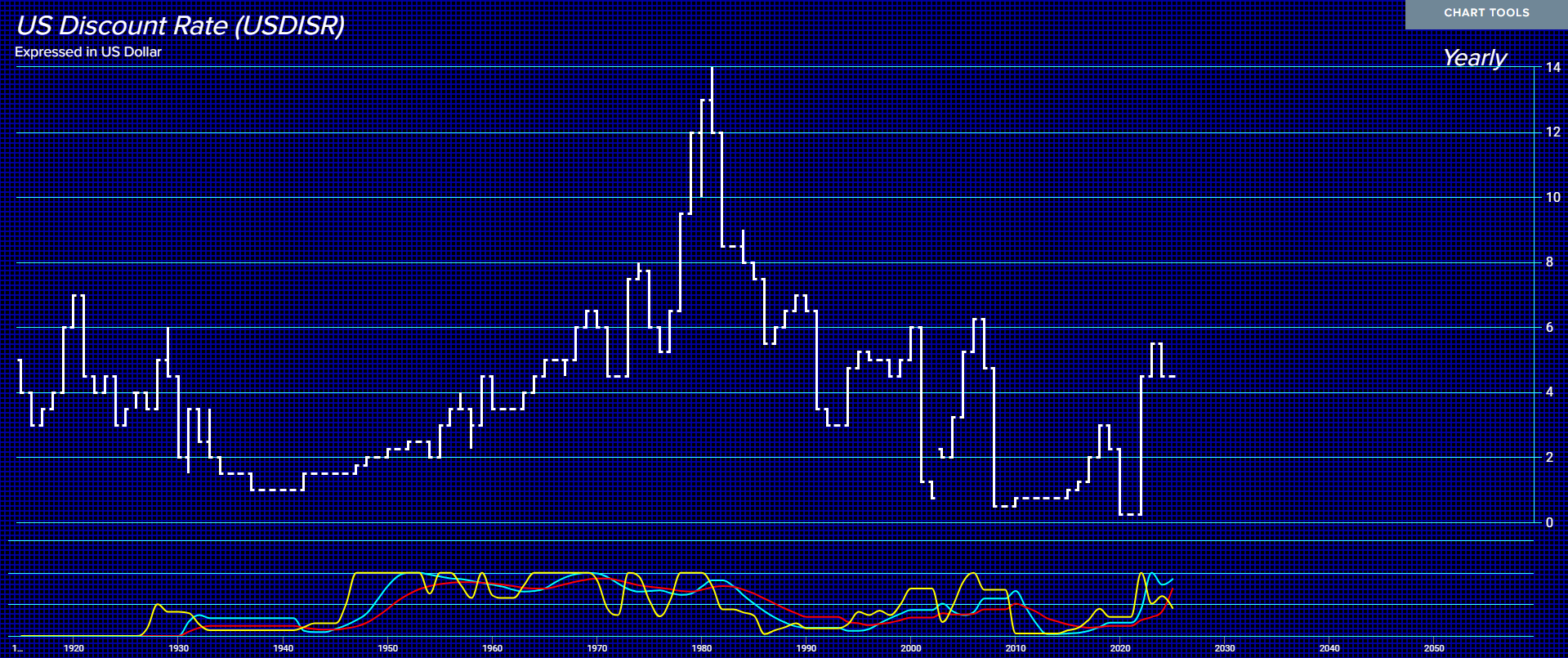
ANSWER: Oh, most definitely. But there were TWO insolvency waves. Because of the OPEC oil shock of the ’70s, that set in motion a cost-push inflation, which Paul Volker raised interest rates to 14% trying to reverse an inflation that had NOTHING to do with DEMAND. Drastically higher interest rates resulted in about one third of S&Ls becoming insolvent, which was the first wave of failures in 1981–1983. The number of insolvent S&Ls did not peak until 1985 that year with 21.7% of the industry in trouble.
 As I have warned many times, that the solution to a problem adopted by politicians always becomes the problem for the next solution. S&Ls were being crippled by high interest rates of Volcker trying to stop cost-push inflation. Their business model, funding long-term, fixed-rate mortgages with short-term deposits, meant that when the Federal Reserve raised interest rates to fight inflation, they had to pay higher rates on deposits but were still earning low rates on their old mortgages, leading to massive losses that the politicians would always blame on the private sector.
Congress responded passing the Depository Institutions Deregulation and Monetary Control Act of 1980. This began the process of deregulation, primarily by removing the caps on the interest rates S&Ls could offer depositors (phasing out Regulation Q), but it didn’t yet give them new lending powers. This tried to allow them to compete with Commercial banking.
Failing to solve the problem, Congress passed the critical legislation that allowed S&Ls to make commercial and commercial real estate loans. This was the Garn-St. Germain Depository Institutions Act of 1982. This act was specifically designed to help S&Ls earn their way out of the crisis by expanding their asset powers to include commercial real estate and construction loans abandoning the restriction on exclusive residential mortgages. The hope was that the higher returns from these new ventures would offset their losses from residential mortgages.
The primary piece of legislation was the Deficit Reduction Act of 1984 (DEFRA), which included several provisions that directly impacted real estate. The act increased the depreciation schedule for real property from 15 years to 18 years. This change meant that investors could not write off the cost of a building as quickly, reducing a key tax benefit for real estate investment. The law introduced new rules targeting “imputed interest,” particularly concerning below-market loans provided by sellers to buyers. These rules made it harder to use creative, seller-financed deals that lowered the buyer’s interest rate in exchange for a higher purchase price. Congress and the Treasury Department viewed this as a tax loophole that allowed sellers to convert ordinary income into lower-taxed capital gains and gave buyers a higher depreciation basis. The new rules were expected to curtail such transactions, which were seen as tax shelters. As if this attack on the Democrat’s hated “rich” imposed restrictions on industrial development bonds and a reduction of tax benefits for property leased by tax-exempt entities. It created a one-way market with an avalanche of sellers and no buyers. Savings and loans, or thrifts, began in the private sector with the first institution of this kind was the Oxford Provident Building Association, founded in 1831 in Frankford, Pennsylvania. The idea was for a group of people to pool their money so members could buy homes, and this model spread across the country.
It was the Great Depression when the Democrats stuck their finger into the pie. The Federal Home Loan Bank Act was signed into law to provide a stable source of funds for mortgage lending trying the resurrect the real estate market. This established the Federal Home Loan Bank System to support S&Ls with low-cost funds for real estate. This was followed by the Home Owners’ Loan Act authorized the creation of federally chartered S&Ls, establishing a national framework for these institutions. The next year saw the Federal Savings and Loan Insurance Corporation (FSLIC) created to insure deposits at S&Ls, similar to what the FDIC did for banks, which helped restore public confidence. The following year, 1935, is often noted in this history because it marked the completion of this initial regulatory framework and usurped the independence of the Federal Reserve branches as Roosevelt installed a Chairman of the Fed replacing the Secretary of the Treasury. The Home Owners’ Loan Act was further amended in May 1935 to allow existing state-chartered S&Ls to convert more easily to federal charters, a trend that grew significantly that year.
The Democrats never saw a dollar they did not want to tax. They never once consider the implication of their endless greed for taxes and how that alters economic behavior. For decades, the primary function of S&Ls was taking in savings deposits and originating residential mortgages, and their powers to make other types of loans were limited.
The critical shift happened with deregulation in the early 1980s. The Garn-St. Germain Depository Institutions Act of 1982 expanded S&L powers significantly. For the first time, they were explicitly given authority to make commercial loans, consumer loans, and other non-residential investments. This move enabled them to make commercial real estate lending. The the greed of the Democrats altering the tax code on commercial real estate set in motion a bear market and when the commercial real estate crashed, they blamed the S&Ls for the crisis.
In the wake of the crisis, the government fundamentally reversed course in 1989. The Financial Institutions Reform, Recovery, and Enforcement Act of 1989 (FIRREA) was specifically designed to push thrifts back to their traditional role. It did this through a key mechanism called the Qualified Thrift Lender (QTL) Test requiring S&Ls to hold 70% of their portfolio assets in “qualified thrift investments,” which were almost entirely housing-related assets like residential mortgages. This was a dramatic increase from the 60% requirement before FIRREA and was implemented with the explicit intent of “pushing thrifts back towards their traditional housing role.”
FIRRE was designed to prevent the commercial and non-housing lending that had bankrupted the industry thanks to the Democrats’ greed for taxation targeting commercial real estate. They always think they can just grab money and never consider any influence and how it will alter society.
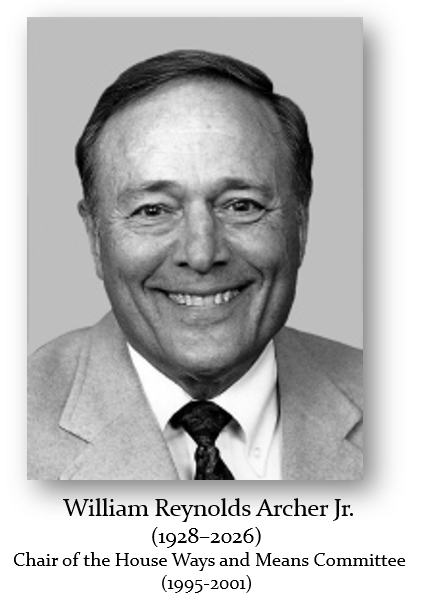
The Democrats created the S&L Crisis since they are ignorant of how the economy functions. I NEVER met a single Democrat, and most Republicans for that matter, with the exception of Bill Archer (1928-2026), who actually understand how the domestic economy functions no less the world economy. The only politician who understood was Bill Archer. Of course, nobody listened that altering the tax code on commercial real estate would result in a crash. When Bill became Chairman of the House Ways & Means Committee, Bill invited me to testify on the dollar and taxation.
Like Mandami in NYC thinks he can just grab money from whomever he pleases. Mayor Mamdani has taken actions targeting landlord misconduct, and various specific eviction pauses or restrictions have been proposed or implemented at different levels of government .
The city helped secure a moratorium on over 300 eviction cases at the Flatbush Gardens complex in Brooklyn. A bill has been introduced in the City Council that would raise fines for unlawful evictions from a maximum of $10,000 to $20,000 per violation, and would bar landlords found guilty of such evictions from receiving city tax breaks for five years.

In Berlin, Germany, a proposal to seize rental properties from large corporate landlords created significant political and legal uncertainty in the real estate market. There was NO BID. Prices did not “crash” because nobody would buy such properties in the face of confiscation. The leader of the Berlin parliamentary group Werner Graf ,
publicly pushed the Green agenda for expropriation “to achieve a housing market that is mostly oriented towards the common good.” It is always the same story, rob the rich and give it to me.
The expropriation proposal, stemmed from a 2021 referendum pushed by socialists, that created considerable uncertainty. The debate alone was seen as a risk that deterred investment and brought to a halt any construction of new housing, as the market relies heavily on private capital. No bank would even lend into such a market when the property could be confiscated as if it was the 1917 Communism Revolution all over again.
Finally, with massive economic damage being inflicted, a federal law was passed only in 2026 to prohibit such expropriations by state governments. This was seen as a key move that neutralized the political risk for property companies, providing them with much-needed legal certainty. The uncertainty contributed to a significant decline in large-volume transactions that collapsed by 82.3% in Q1 2025 compared to the same period in 2024. That was proof that this insanity of the LEFT taxing every dollar they can find to fill their own pockets always results in an economic collapse.
California has become the #1 state people are fleeing from and Newsom wants to become president? These people never look at the track record and how their constant attempt to just steal from people who have more than them to achieve a higher living standard by reducing that of others without having to work for it. The LEFT always tell the people they are the victims of the rich and count on the majority oppressing the minority, which is precisely against the founding principles of the United States, which had Constitutionally prohibited direct taxation to prevent this sort of legal persecution. The Marxist seized power toward the end of the 19th century and then pushed for a 16th Amendment to the Constitution to be allowed to engage in class-discrimination.
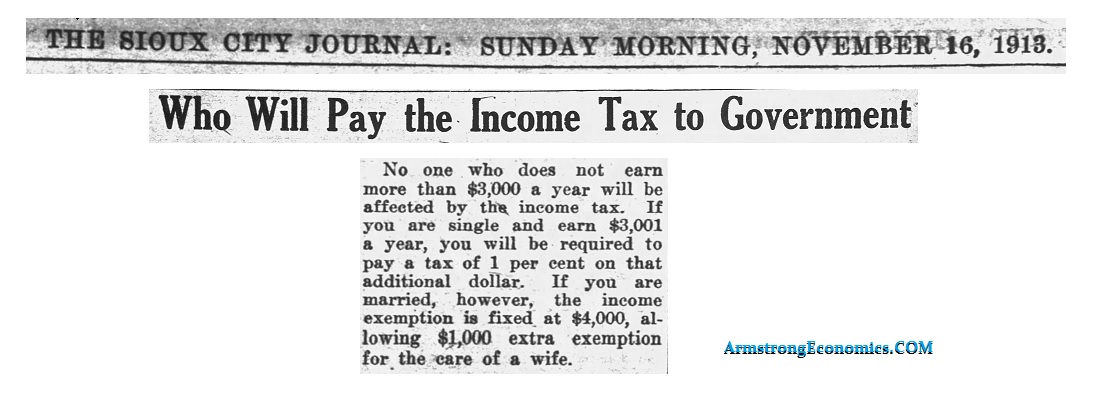
When the Socialists passed the Income Tax engaging in class-discrimination, by World War II, they instituted the Payroll Tax and today nobody escapes. Once the socialist seized control of the government, they ensured that the United States will suffer eventually the same fate as China and Russia.
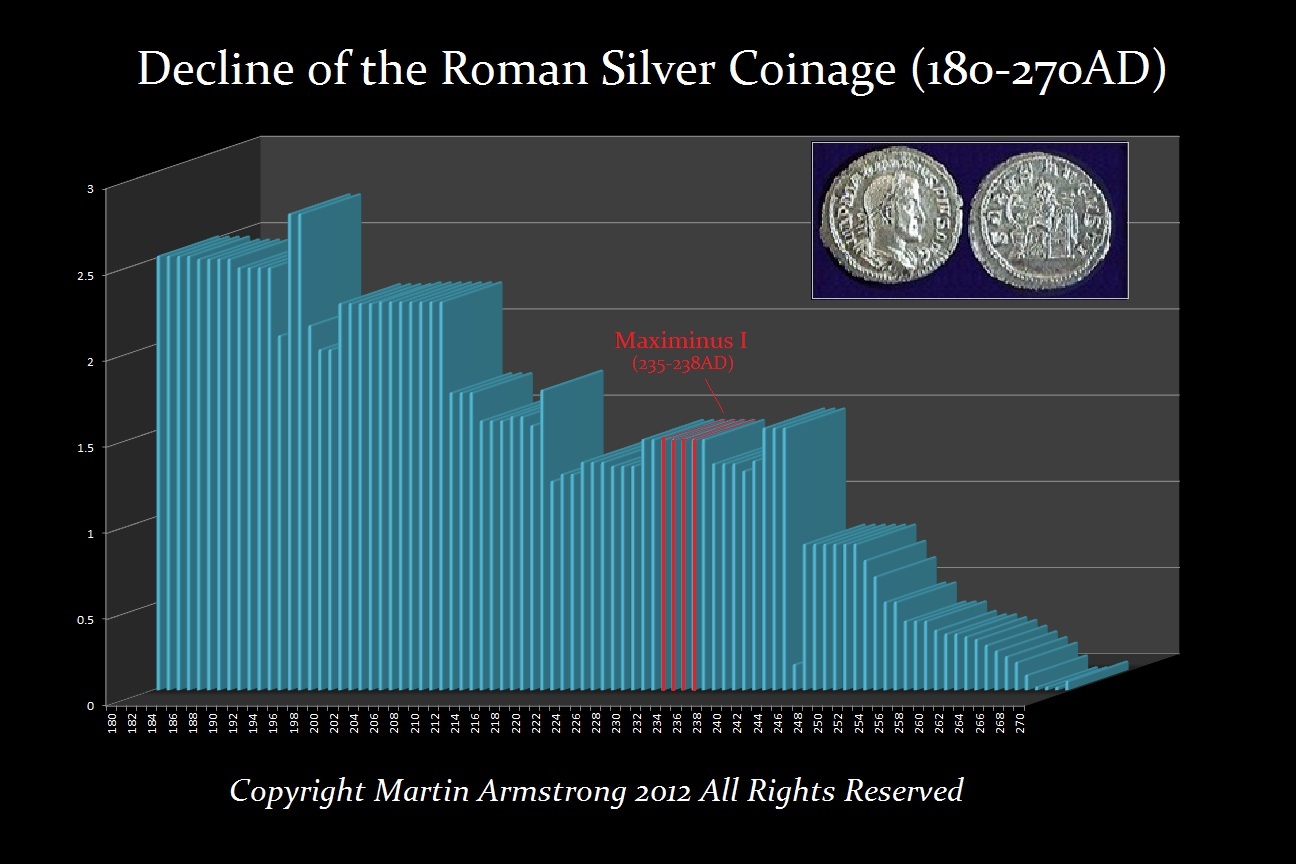
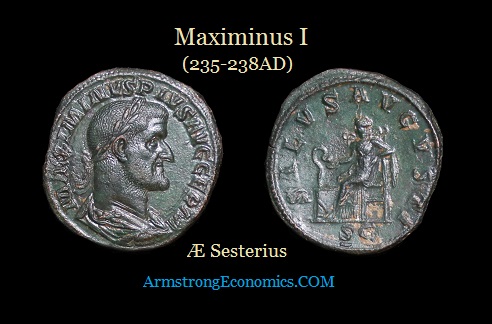
The greater the Marxist agenda, the lower economic growth, and eventually the country will collapse and split just as Rome did as well as the USSR. Maximinus I was to declare that all wealth belonged to the emperor in a communistic fashion. What took place, however, was the complete breakdown of society. Wealth was driven underground, and money was hoarded, causing VELOCITY to collapse as cash flow in circulation vanished and hoarding prevailed. This caused the economy to implode as commerce ceased, fostering an economic depression that naturally reduced tax revenues.
Maximinus I did not stop with simply private wealth. Maximinus I ordered the wealth of all temples to be confiscated as well. Countless died in defense of their religious beliefs. Not even the gods were respected by Maximinus I, whose view was that they never answered prayers because they did not exist.
Where there had once been golden statues of former Emperors, Maximinus ordered their seizure so they could then be melted down. The Rule of Law collapsed, and Historia Augusta tells us that he -“condemned all whoever came to trial” and that he “reduced the richest men to utter poverty.” The LEFT has been the curse of humanity. They always present the dark side of the human race.