

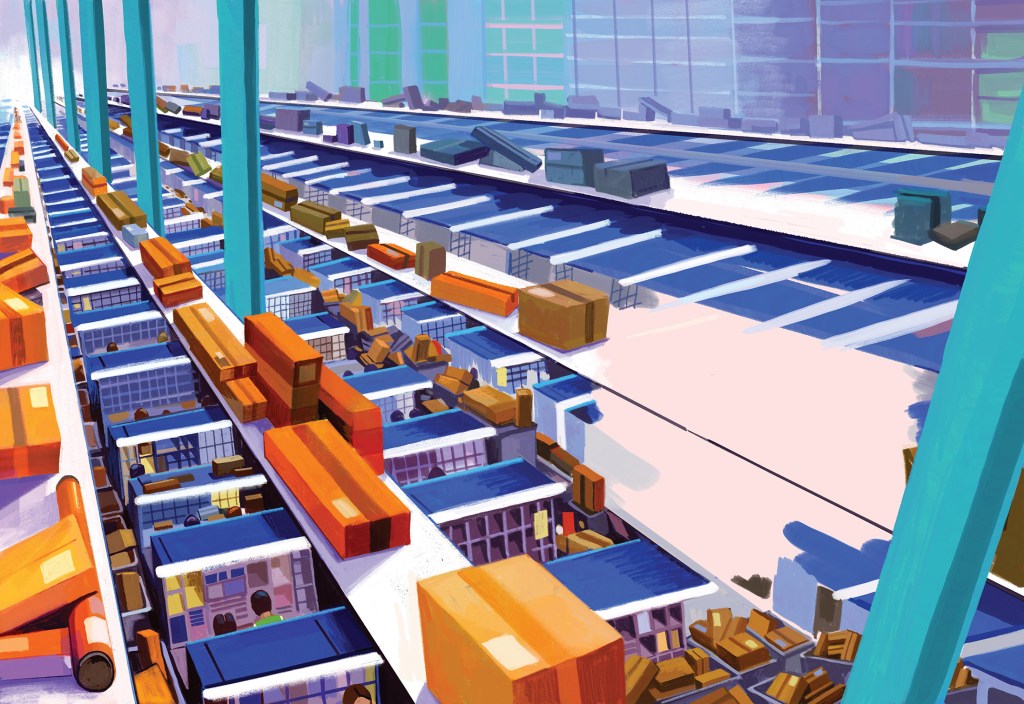
Somewhere out there in Walmart land, on May 27 at 3:18 p.m., a customer returned a Nintendo Switch 2. Maybe the Joy-Con controllers weren’t their vibe. Maybe they spilled juice on it. There could be a million reasons.
But here’s the more urgent question: What happened to that Nintendo Switch next?
The answer is dauntingly complicated. Not to mention, expensive.
For many years, returned merchandise has been a quiet cost of doing business at retailers large and small. What can’t go back on the shelf is often offloaded to liquidators for pennies on the dollar, some of it ending up incinerated or in the landfill. In the past, brands and retailers just tucked that loss into their initial pricing. But as online shopping exploded in the aftermath of the pandemic, and Amazon eased customer hesitation by offering free returns, people started buying things differently. There’s a whole new vocabulary for it, like “bracketing” (when someone orders several sizes at a time to see which one fits and sends back the rest) and “wardrobing” (you buy something, wear it once, then return it).
It’s gotten so bad that people are sending things back as if they’re at an all-you-can-eat buffet in reverse. Nearly one in five online purchases got returned last year. If you look at the value of all that merchandise flowing back to retailers, what we’ve got now is a $1-trillion-a-year problem.
“It hit like a tidal wave,” says Scot Case, who recently served as vice president of corporate social responsibility and sustainability at the National Retail Federation (NRF), the world’s largest retail trade association. “The challenge scaled so rapidly. All of a sudden, everybody’s like, ‘Oh my gosh, we need to fix this.’”
In response, a wave of companies has risen to address the problem. Their names may not be familiar to the average consumer — Optoro, Loop, Redo, ReverseLogix, and Rebel, among others—but they’ve likely managed stuff you returned. They operate in a field called “reverse logistics,” which is exactly what it sounds like: They’re trying to move products back inside retail stores, even though the retail business is designed to move product out to the customer.
One of the most established entrepreneurs in the space, Sender Shamiss, wasn’t surprised by the returns explosion. He has been trying to solve the puzzle of reverse logistics for more than 18 years. His company, ReturnPro, processes and sells about $2.5 billion in retail return value annually and is on track for more than half a billion dollars in revenue this year. And when you understand how he built it, you’ll see just how challenging it is to get a returned Nintendo Switch back into a Walmart — and how much opportunity there is in making it work.
Image Credit: Zohar Lazar
One might assume that a barely touched returned Nintendo Switch could simply be put back on the shelf as brand new. Same with a sweater that someone quickly tried on and didn’t fit. But here’s the thing: Unless you’re in a physical store, the route from A to B is not the same as the route from B to A.
First of all, there’s the identification problem. A thousand Nintendo Switch 2s can share the same UPC code, because they all are exactly the same when being sold. But when those thousand video game consoles are returned, each becomes unique — one has a scratch, another has a torn box, a third is like new, a fourth has been used, a fifth is fake, etc. — so now every single one of those Nintendo Switch 2s needs to be treated differently and tracked accordingly.
Second, if a product is sent back in the mail, it doesn’t go to the store where it originated; it likely goes to a massive warehouse. There can be “almost literal mountains of returns to be processed,” says Will O’Brien, a longtime supply chain specialist who’s now managing partner at True North Growth Partners. And who’s supposed to handle all that? It often hasn’t been a key part of anybody’s job. “If I’m the distribution center operator, that’s not outbound shipping — and my metrics are on outbound shipping. How can I afford to spend 100 hours this week processing those returns?”
Even if a warehouse does process them, the question for the brand or retailer becomes: If I have to ship the product somewhere to be refurbished, sanitized, or repackaged, and then ship it somewhere else to be resold, probably at a discount, does the financial math make sense? Sometimes it’s cheaper just to throw the stuff in the garbage or sell it to the liquidator for pennies on the dollar.
Business owners like Emily Hikade, founder and CEO of the luxury sleepwear brand Petite Plume, are sorely in need of solutions. “We have a very low return rate — only 4%. But that is still a huge number when you’re looking at $100 million for sales,” she says. “We try to restock what we can, and we donate as well. Then we get rid of some of the stuff if we have to. We are trying to get more efficient, but this is a constant pain point.”
The problem, says Shamiss, is that handling returns is a whole other business that’s expensive to build. “And it’s mission drift for these brands and retailers when they’re trying to inbound and outbound new items.” That’s why he decided to make it his business.
Born in Kaliningrad to Russian Jewish parents, Shamiss moved around — first to Israel at age 4, after his father defected in 1981, then to New York just long enough to get a Brooklyn accent, and finally to Toronto. “I’m a highly dyslexic individual. I dropped out of high school. I dropped out of college. And ultimately, I dropped out of university,” he says. In 2001, on a tip from a friend, he found a small business in the outskirts of Toronto selling electronics at crazy discounts and discovered they were all returns from a big chain store. Shamiss decided to try it himself. He borrowed money for a 53-foot truckload with 26 pallets of returns, tested every item, and listed them all on eBay and Craigslist. “I bought the truck for $10,000,” he says. “I sold it all for $26,000 in less than 48 hours. I’m like, There’s money in this business.”
In 2008, Shamiss decided to start what is now ReturnPro. Back then, he admits, he was just trying to make a buck. The returns problem was not top of mind. “And then slowly over time, as I saw how complex it was, I just fell in love with it,” he says.
In those early days, there was a big reverse logistics company called Genco that would handle returns. (It had $1.6 billion in revenue when it was acquired by FedEx in 2015.) But in many ways, Genco was a blunt object, mostly sending returns to liquidation or back to vendors, who probably did the same. The liquidators would pack the items on pallets and auction them off to resellers like young Shamiss. When apparel got returned, the clothes were bundled like bales of hay and thrown onto 18-wheelers, and “shoes would be put into huge cardboard cartons — no boxes, nothing, just loaded up,” says Hitendra Chaturvedi, a reseller back then. Now a professor in the supply chain management department at Arizona State University, he had a business that sold all kinds of returns, and remembers the chaos of it all. He’d buy clothes in bulk for 10 cents on the dollar, most of which he couldn’t resell, and try to make his money on the 15% to 20% that he could. Some 70% to 80% of fast fashion went to landfills, according to his numbers.
As Shamiss got to understand the returns problem better, he started searching for new ways to solve it. Instead of just reselling the items in perfect condition, he wondered if maybe he could also refurbish the rejects. So he began going to small brick-and-mortar electronics stores, and offered to buy their returns, refurbish them, then sell them on consignment. He moved the business to Miami, and around 2013, he started to think bigger. He was making good money on sent-back electronics, but he wasn’t helping retailers with their larger problem of how inefficient and costly the returns issue is. Then it came to him: Instead of just reselling their returns and pocketing the cash, what if he worked with the retailer? Was there a larger opportunity there?
He decided to show retailers exactly how much money he was making off them — 40% margins in some cases — and to offer to let them in on the take. He figured his loss would pay off in gaining long-term clients to do something more significant with. Instead of getting the 43 cents on the dollar for returned items he bought from a retailer, he’d tell them they could make 50 cents or more by paying him a small service fee to rehab the product and get it on the next best shelf. Ideally, that would be their shelf, so they could avoid paying commission on another re-commerce platform. They’d still lose money on the returns, of course, but not as much. Looking ahead, with a higher recovery, they’d not only have more working capital, but they could lower their prices to gain a competitive advantage.
Today, factoring in its fees, Shamiss says, ReturnPro typically increases a client’s net recovery from the 5% to 10% they’d get from liquidation to 45% to 60%.And gross recovery can be as high as 85%. At the beginning, however, he was hazy on how to pull it all off. “He was actually more of a coding geek,” says Tony Sciarrotta, who met Shamiss in those days. “But the passion was there to take care of the people buying this stuff and take care of the products.” That was something they shared, as Sciarrotta went on to run the Reverse Logistics Association in 2016. Started in 2002, the group (later acquired by the NRF) was becoming more and more important as the returns problem grew, and Shamiss would go on to get involved in it.
But at the time, he wasn’t entirely clear what he needed to build. Was this an e-commerce company that would sell returned merch? A physical supply chain with warehouses and trucks? A sophisticated tech startup? It seemed like he’d need all of it to truly handle a company’s returns. But that sounded insane.
Then he started talking to Walmart.
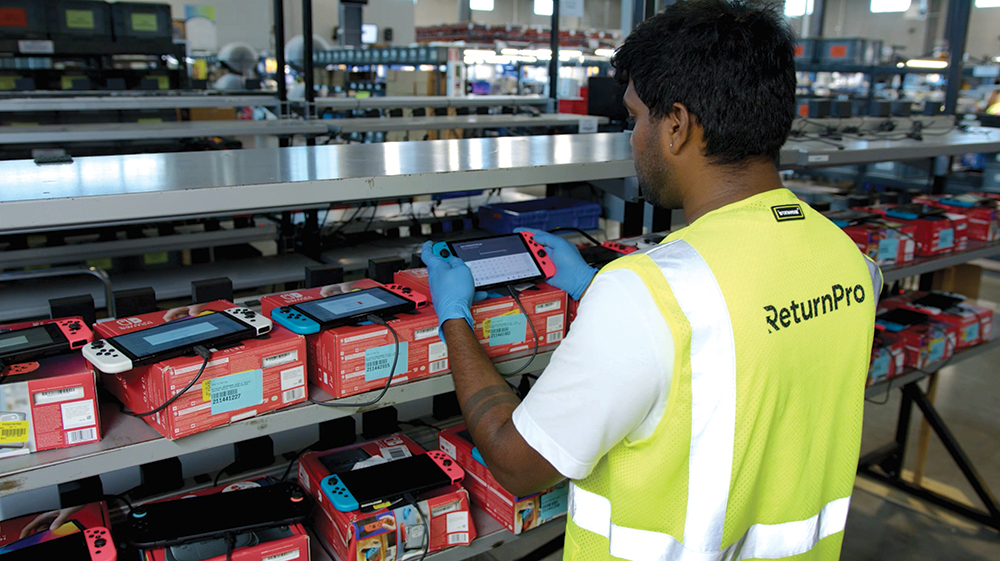
Image Credit: Courtesy of ReturnPro
As America’s largest physical retailer, Walmart was obviously not ignorant to the problem of returns. From early on, they tried to solve it themselves. “I mean, a lot of our reverse logistics operations were set up by Mr. Sam himself [i.e. Sam Walton, Walmart’s cofounder],” says Sylvester John, the retail giant’s vice president and head of reverse supply chain in the U.S.
When Shamiss made inroads at the retailer in 2011, it had already built its own system to manage returns and was set on keeping it in-house. After all, it had huge delivery fleets and warehouse management operations. But there were also gaps in its process. “If you’re talking about putting screws on a laptop in order to bring it back to life, well, that’s not a core retail competency, and that deep expertise could be beneficial to me,” says John. That’s why Walmart was initially interested in working with Shamiss’ team. ReturnPro could refurbish returned items from the retailer and then help resell them at a discount at Walmart or on other re-commerce platforms.
For example, here’s what happened with the Nintendo Switch 2, purchased for $449, that was returned to a Walmart store in May. First, it was sent directly to a ReturnPro facility where an evaluation of options determined that refurbishment and resale would generate more value than sending it back to the vendor or liquidation. Then it was tested and found to be fully functional. ReturnPro cleaned it, replaced some accessories, and put it in a new box. Once that was done, ReturnPro handled the process of reselling it. To do this, their tech analyzed demand, pricing fees, and inventory velocity across more than 25 resale channels, then listed it on several, including Walmart Marketplace; VIP Outlet, a discount website that ReturnPro created; and eBay. Three days later, the video game console sold on eBay for $359, or about 80% of the original price. The whole process took 16 days.
Did Walmart still lose money on this return? Absolutely. But it lost way less than if the Nintendo Switch had been junked — which is better for Walmart and for the environment. John, the Walmart vice president, says the company has achieved a landfill diversion rate of more than 90% across its entire network and is pushing for 100%. But he has also led a major shift on how Walmart sees returns: He wants to actually make a profit on them, which once would have been unthinkable. How’s it possible? He says it’s a matter of becoming extremely cost-efficient, and moving inventory back into sellable channels fast. “You have enough of that revenue, and you’ve got your costs low enough, then you flip,” he says. “Our reverse supply chain business is making strong progress toward becoming a profit-driving part of the company, and we’ve already seen profitable months this year.”
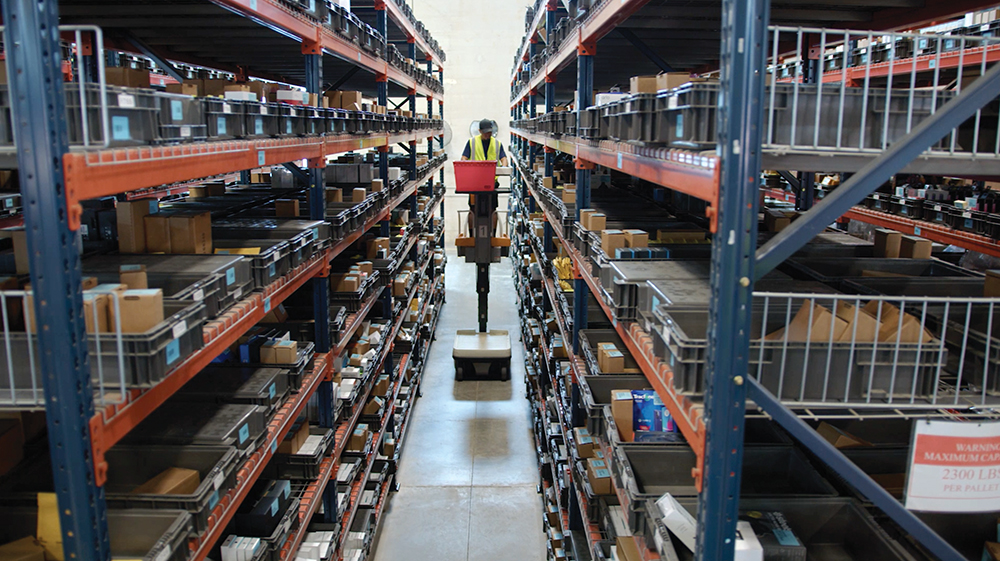
Image Credit: Courtesy of ReturnPro
Once he had a front-row seat to the inner workings of Walmart — along with other retailers that ReturnPro began to work with — Shamiss saw his larger path forward.
He learned, for example, that retailers’ corporate structures often exacerbate the returns problem, because their teams are so siloed. Departments like store operations, online sales, transportation, merchandising, and marketing typically stay in their own lanes to perform at top capacity. While that works for moving products at scale, it’s much less efficient when managing returns. For example, the marketing team must think differently about promoting returns, and must coordinate differently with online sales and operations. Walmart itself realized this, and began fundamentally changing how its teams collaborated. Shamiss saw that and realized he could help other retailers do the same — by providing a unifying platform where their disparate teams could share data, policies, workflows, and performance metrics to make coordinated decisions about their returns.
Then he built out his own reverse logistics octopus — e-commerce, supply chain, and AI-driven technology all in one.
Today, ReturnPro is an end-to-end service. It begins by trying to dissuade a customer from returning something at all. For example, when a shopper initiates the process, the platform might present another product of similar value and encourage an exchange instead. It can also flag customers with an abusive return history (like repeated “wardrobing”), and then require a fee. When someone does send something back, depending on which retailer it is, the item can go straight to one of ReturnPro’s 11 facilities where AI technology instantly decides the optimal route — to go back to the vendor or to be refurbished, repackaged, sanitized, liquidated, resold, recycled, or donated (they aim for zero to the landfill). Factored in are the costs of each option and speed of delivery, because a dress can go out of fashion in three months, and an Easter bunny is only good during Easter. The algorithm always maximizes the financial outcome for each client.
Transportation is handled via the company’s brokerage, which connects its customers directly with shipping and freight companies. (“Owning trucks is a waste of money,” says Shamiss.) Because some retailers and brands don’t have a secondary marketplace to resell their returns, ReturnPro has created three of its own, including VIP Outlet, and integrates with about a dozen others. After a sale, it then ships the product to the new buyer via their own services or a third party.
ReturnPro makes money via multiple revenue streams, a main one being its supply chain services, including refurbishment. ReturnPro also charges monthly fees for its platform based on returns volume, gets a percentage of the resale, and makes a small margin on the shipping arrangements when its services are used.
Over time the company has expanded the kinds of retailers it serves. On top of the Walmarts of the world, ReturnPro offers reverse logistics for small and midsized businesses. It’s an approved provider on Amazon and the Walmart Seller Center, where growing brands can access it to outsource their returns. And it’s available as an integration on Shopify. The economic fit depends on a business’s volume of returns and how much time and money it’s spending on managing them. A smaller business might just sign on for the returns automation software, for example, while a midsize brand would go for the supply chain and resale services as well. Many of ReturnPro’s clients start with one piece of the solution and expand as they see the benefits.
At this point, there’s no going back for retailers. Free returns have become too essential to their economy: 82% of consumers now say that they’re an important consideration when shopping online, according to a 2025 report from the NRF.
That leaves Shamiss with a big question: With more than 1,200 employees today, profitable, and handling some $2.5 billion in returns value a year — all bootstrapped — where else can his business go from here?
One idea was inspired by his work with Walmart. He saw how many vendors the company has, and how complicated it is to track all those relationships. Retailers have separate legal contracts with every brand they work with that specify what percentage of returned merchandise the vendor will take back for credit. To make it easier for his retail clients, Shamiss built a portal where they can put all their contracts in one place and bring their vendors in, so they’re all on the same page. These contracts also inform automated decisions at the warehouse, to determine what should happen to an individual item. But now that new brands were brought into their system, ReturnPro could approach them as possible customers, since they have returns to deal with too. “It’s a big mousetrap,” Shamiss says.
Next he’s looking at counterfeits.
Nine percent of all returns are fraudulent, according to the NRF report — meaning
that people buy a product and send back a knockoff. That’s a huge problem to solve, with major rewards for anyone who does. So this year, ReturnPro is attempting a solution by partnering with a tech startup called Clarity. Working with its founders, Shamiss developed a machine that can scan a package TSA-style using X-ray intelligence, computer vision, and AI. Instead of a human inspecting the goods, Clarity can see inside the box and tell if a product is real, fake or altered in about three seconds. Then the return can be rejected. “I like talking to entrepreneurs on a regular basis,” Shamiss says. “It gives me ideas that I could never come up with on my own.”
As the returns problem evolves, so will ReturnPro. Shamiss muses, “If I told you 15 years ago, ‘Give me $30 million as an investment and I’m going to build you a national supply chain network, a software company, a logistics company, and an e-commerce company, and they’re all gonna function as one,’ you’d say, ‘You’re crazy. Focus on one thing.’ But then you would’ve said the same thing to Jeff Bezos too, right? Because how did he get from books to selling cloud services to streaming services for movies?”
It would certainly be simpler if they had just focused on one of those companies, says Som Mukherjee, ReturnPro’s CFO. “The complexity is immense. But it is also a competitive advantage for us, because you can’t just start a company tomorrow and say, ‘Oh, we will do everything.’ This gives us a moat.”
Right now, Shamiss guesses that ReturnPro owns just 1% of the returns market. But he’s confident that will grow. “For an entrepreneur, the key is: What is the problem to solve?” he says. “And when I found this problem, I got really addicted to it. I couldn’t stop building for it. And when you build a business that way, the money will come.