

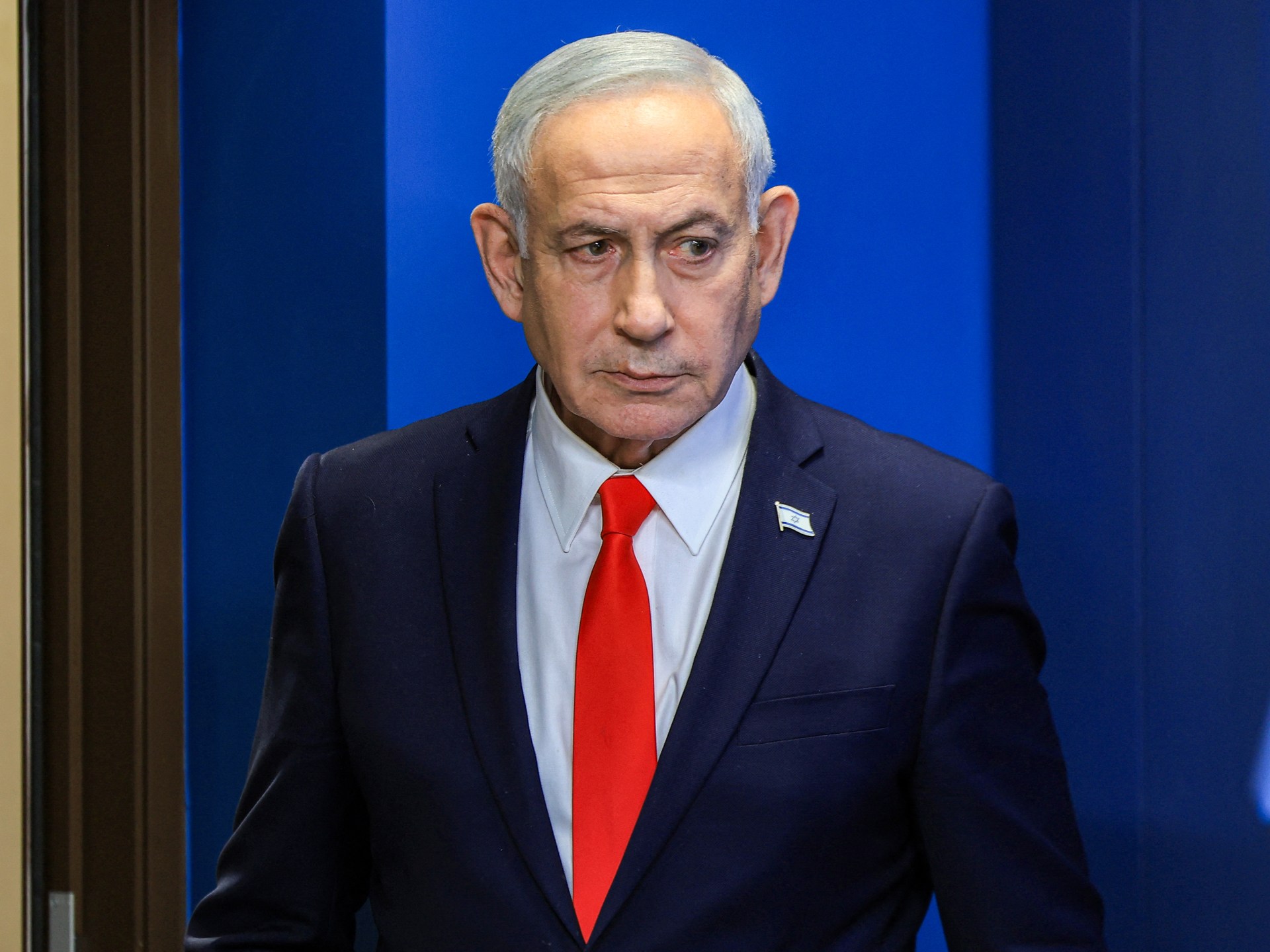
Beirut, Lebanon – A number of Lebanon’s Christian villages released a statement on Monday, refuting claims by Israel’s Prime Minister Benjamin Netanyahu that they had requested Israeli annexation.
“Christian villages in Lebanon, some of them have actually asked to be annexed to Israel, because we protect them against Hezbollah, Hezbollah fanatics who want to kill them, and we do the same things with Christians everywhere,” Netanyahu had told the Fox News programme The Sunday Briefing the day before the villages responded.
Israel currently occupies around six percent of Lebanese territory, despite claiming in the recent Lebanon-Israel framework agreement that it has no territorial ambitions in the country.
Lebanese analysts and southern Lebanon residents also lambasted Netanyahu’s claims, with some using colourful language.
“[Netanyahu’s claims] reflect his cynicism and the fact that he’s a pathological liar,” Karim Emile Bitar, a professor of international relations at the Saint Joseph University of Beirut, told Al Jazeera. “Several Lebanese MPs and government officials called every single mayor of all towns in south Lebanon, and there is absolutely no truth in these statements. It is completely a fabricated claim.”
Officials in 15 towns in southern Lebanon with Christian populations issued the statement denouncing what analysts said was an effort by Netanyahu to inspire sedition and strife between Lebanese.
Division over Hezbollah but rejection of Israel
Netanyahu’s comments come on the back of a highly criticised, US-brokered agreement between Lebanon and Israel aimed at ending Israel’s war on Lebanon.
The latest round of fighting intensified on March 2, when Hezbollah fired six rockets at Israeli targets for the first time in more than a year, and Israel responded by increasing attacks across the country, including the capital Beirut, and invading southern Lebanon.
In recent months, Israel has attracted international criticism for indiscriminate attacks on Lebanese targets, including incidents involving Christians. Most notably, an Israeli soldier sparked global uproar when he smashed a Jesus statue in south Lebanon in April, while in early March a priest was killed by Israeli tank fire in south Lebanon. Additionally, an official of a Christian party was killed in early April in an eastern suburb of Beirut.
Reached on Monday, a Beirut resident from the southern town of Jdeidet Marjayoun described Netanyahu’s statement as “propaganda” and “false”. The resident requested anonymity because their work does not allow them to speak to the media.
Lebanon’s political representation is divided along sectarian lines, with the leadership split between a Maronite Christian president, a Sunni Muslim prime minister, and a Shia speaker of parliament. A sectarian quota also exists for Lebanon’s parliament, and sect is also a consideration when assigning government ministerial posts.
Some analysts believe Netanyahu and the Israeli government are trying to amplify tensions within Lebanon’s sectarian system with the goal of creating internal conflict. During the latest intensification of Israeli attacks, more than 1.2 million people were displaced from their homes. The majority are Shia Muslims who were forced to find refuge in areas with different sectarian makeups, at times leading to fears that communal tensions might boil over into violence.
“This seems to be clearly intended to sow civil strife in Lebanon, to pit the Lebanese against one another to promote this idea that Israel could be a protector of certain minorities to play on the existential angst of Lebanese southerners,” Bitar said. “It’s a decades-old divide-and-conquer strategy, part of an Israeli strategy.”
For the most part, those tensions have not yet culminated in violence. The country is, however, deeply divided on the role of Hezbollah and the issue of its weapons and armed resistance. Despite that division, Lebanese people still overwhelmingly view Israel in a negative light.
A June 2026 poll conducted by Lebanese American University professor Jad Melki backs up this sentiment. Out of 1,000 people polled, 54 percent agreed diplomacy is the only path to liberation, while 35 percent supported armed resistance as the only path.
And while about a third of the people polled supported a peace agreement with Israel (34 percent), 87 percent agreed with the view that Israel is an enemy of the Lebanese.
Divide and conquer
Lebanese officials also spoke out strongly against Netanyahu.
Melhem Khalaf, a Greek Orthodox MP from Beirut, gave a press conference on Monday where he said that Netanyahu “does not have the right to speak on behalf of Christians”.
Hanna al-Amil, the head of the majority Christian municipality Rmeish, located on the southern Lebanese border, told local newspaper L’Orient-Le Jour, “No village in the South has made such a request.”
The strategy of Israel trying to divide and conquer minorities in the region is not new, analysts said. Israel has claimed it wants to play a similar role in Syria, particularly in the Suwayda region, after sectarian violence shook the Druze community there last year. Israel then bombed Damascus in what it said was an effort to defend the Druze community.
“The fact that most Lebanese living in those villages in the south also were shocked and released statements, firmly denying this was quite significant, but it should not be taken lightly because it is part of a wider Israeli strategy,” Bitar said.
“There is a need for all Lebanese to remain united and remain determined to nip in the bud all Israeli attempts to sow civil strife in Lebanon,” he added.