

Belarusian President Alexander Lukashenko said what many leaders will not say publicly. Speaking to Al-Arabiya English, he accused Israel of carrying out a “Holocaust” in Gaza and said: “They already have a bad reputation in the world because of the bombing of Gaza.” He added that Gaza had been “wiped off the face of the earth” and warned that “there is no military solution.” Coming from Lukashenko, the West will dismiss it immediately because they hate the messenger. But that does not erase the condition of Gaza.
The reported Palestinian death toll surpassed 73,000, with more than 173,000 wounded. Save the Children reported in 2025 that more than 20,000 children had been killed. UNICEF said more than 50,000 children had been reportedly killed or injured. Hospitals, schools, homes, roads, water systems, and basic infrastructure were destroyed. This was not a precision operation. Gaza has been completely removed from the map. The Israeli people do NOT support their government and are largely appalled at what Netanyahu has done.
Nearly the entire population of Gaza, roughly 2.1 million people, has been displaced at least once, making it one of the largest displacement crises in modern history. Entire cities were reduced to rubble. Some estimates indicate that well over half of all structures in Gaza were damaged or destroyed.
Netanyahu claimed the goal was to destroy Hamas. That did not happen. Hamas still exists. Analysts have continued to warn that Hamas retained operational capability and would resist disarmament. So what was accomplished? Gaza was destroyed, children were buried, civilians were displaced, and yet the organization Israel claimed it would eliminate remains part of the discussion. That is not victory. You cannot bomb an ideology out of existence.
There has long been speculation surrounding the Ben Gurion Canal project, a proposed alternative to the Suez Canal connecting the Red Sea to the Mediterranean. Released documents prove that this plan has been in the works for decades. When Gaza is reduced to ruins and then people begin discussing strategic corridors, reconstruction plans, resorts, ports, and new trade routes, the public naturally asks who benefits. Lukashenko himself criticized what he described as plans to build a resort on land where people were killed. But the main objective is providing the West with a new artery to trade in the Middle East.


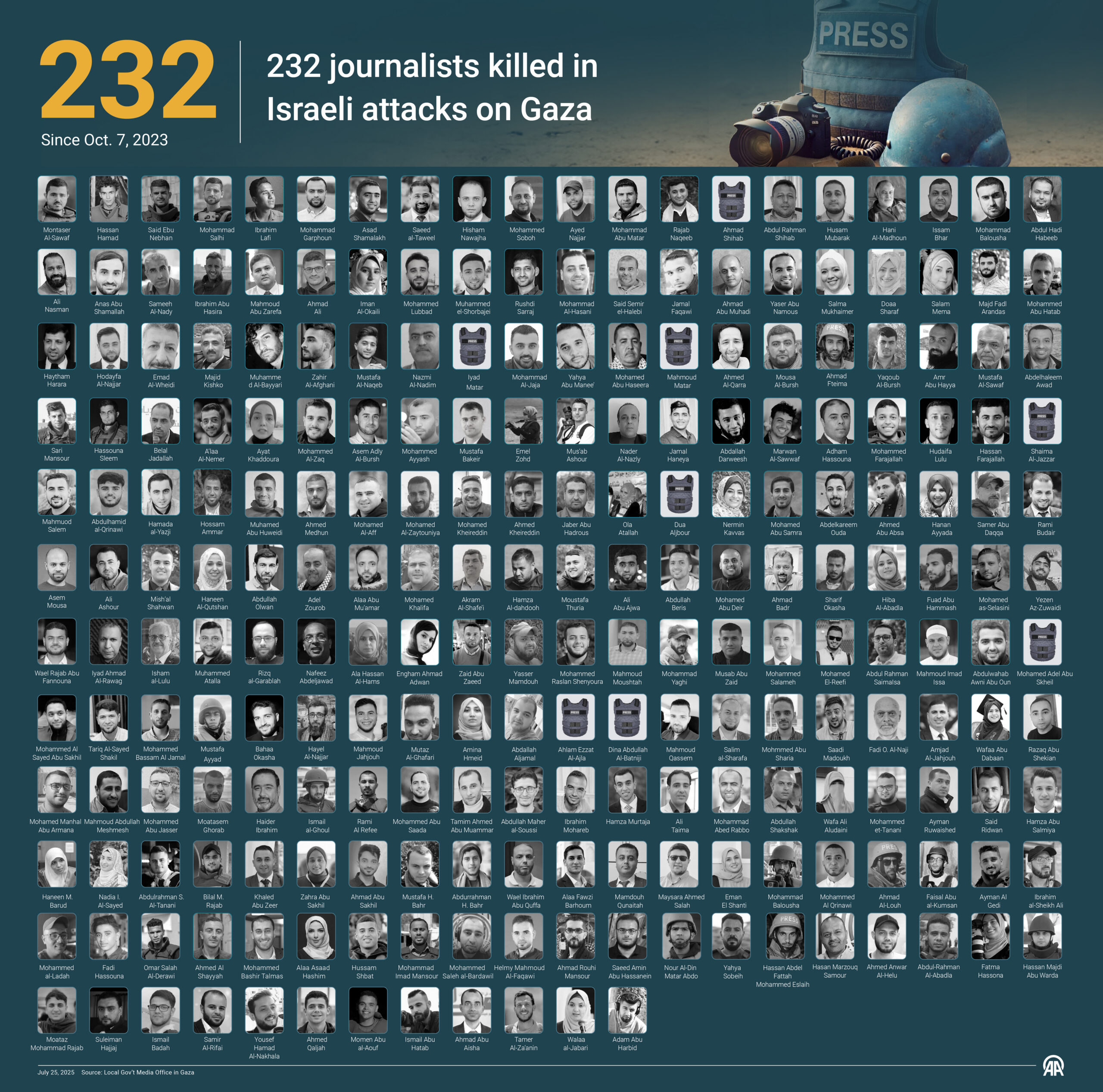
Revealing the horrors of Gaza is punishable by death. Gaza became the deadliest conflict for reporters ever recorded. The Committee to Protect Journalists, the International Federation of Journalists, Reporters Without Borders, and numerous press freedom organizations have all documented unprecedented losses among media workers. Depending on the methodology used, estimates range from roughly 190 to more than 260 journalists and media workers killed since the war began, the overwhelming majority of them Palestinian. The Costs of War Project described Gaza as the deadliest conflict for journalists in modern history. Many were killed while reporting from hospitals, refugee camps, media tents, and civilian areas. Others died alongside their families in airstrikes.
There are plenty of on-the-ground journalists in every corner of conflict. The percentage of journalists who died reporting on Gaza does not coincide with other conflicts. Rumors have swirled that many of these journalists were deliberately targeted, and let’s be honest, such a concept should not be considered a conspiracy or a far-fetched proposition for a government intent on a scorched-earth policy.
Gaza is no longer the daily story because the cycle has shifted to Iran, Lebanon, and the next war. The public is emotionally exhausted, the cameras move, and the destroyed land remains behind. But history does not forget. The war cycle is not finished. It is expanding. Gaza was not the end of the story. It was a warning of what comes next when leaders believe war is policy and civilians are merely collateral damage. Is Lebanon next?
What concerns me going forward is Lebanon. The negotiations with Iran were reportedly supposed to include broader regional de-escalation, yet Israeli officials have repeatedly stated that Israel intends to maintain freedom of military action in Lebanon and reserves the right to continue operations regardless of any agreement reached elsewhere. If a peace deal leaves Iran standing but the fighting simply shifts north into Lebanon, then peace has not been achieved at all.
Few people seem to remember that the United States spent more than $1 billion constructing what is expected to become the second-largest U.S. embassy complex in the world in Lebanon, a 43-acre fortress that dwarfs most government facilities in the country. The timing and scale of that project have raised questions for years about Washington’s long-term strategic expectations for the region. The cycle continues to suggest that the Middle East is moving through a broader period of instability rather than approaching a lasting settlement. Gaza has been devastated, Iran remains unresolved, and Lebanon increasingly appears positioned as the next potential flashpoint. The danger is that politicians will declare peace while the war simply moves to the next battlefield.