
Close Menu
    Trending
    • The new rules of work: Multigenerational workplaces in the Gen Z era
    • Stonehenge’s altar stone probably wasn’t transported by a glacier
    • How Far Has New Jersey Fallen?
    • Tony Hinchcliffe Lands Netflix Special After Kevin Hart Roast
    • CNA Explains: What the US forced labour probe means for global trading partners
    • Ireland’s Black community opens up about racism after ‘George Floyd moment’ | Race Issues News
    • Nick Saban details how NIL spending resembles runaway vehicle
    • Opinion | S the Wolf
    Benjamin Franklin Institute
    Thursday, June 4
    • Home
    • Politics
    • Business
    • Science
    • Technology
    • Arts & Entertainment
    • International
    Benjamin Franklin Institute
    Home»Trending News»CNA Explains: What the US forced labour probe means for global trading partners
    Trending News

    CNA Explains: What the US forced labour probe means for global trading partners

    Team_Benjamin Franklin InstituteBy Team_Benjamin Franklin InstituteJune 4, 2026No Comments3 Mins Read
    Share Facebook Twitter Pinterest Copy Link LinkedIn Tumblr Email VKontakte Telegram
    Share
    Facebook Twitter Pinterest Email Copy Link


    Why is the US focusing on forced labour?

    The International Labour Organization (ILO) defines forced labour as work carried out under threat of penalty and without voluntary consent.

    According to the USTR, economies that fail to block such imports create unfair competition by allowing artificially cheap goods into global markets, burdening US businesses.

    The 60 economies investigated account for 99.4 per cent of US imports.

    “Although it is universally recognised that forced labour is a practice that should not be tolerated, the use of forced labour across the world continues to persist and has even increased in recent years,” the USTR said.

    However, Ms Elms said that the US approach lacks clarity.

    “All of the materials that I’ve read from the case that was released today don’t really clarify very much what the US is looking for and what it would mean to effectively enforce that,” she told CNA’s Asia First.

    How were the tariff rates derived?

    The US is proposing a 10 per cent tariff for a group of economies – including Canada, the EU, Britain, Indonesia, Malaysia, Taiwan and Mexico – that have some form of forced labour prohibition in law or in trade agreements with Washington.

    All others, including Singapore, China and Japan, could face a higher rate of 12.5 per cent.

    It is unclear how these figures were determined.

    However, the 10 per cent rate mirrors the most favourable tariff level previously offered by the Trump administration to any trading partner, Ms Hurlburt noted.

    She also pointed out that many goods are exempted – unlike earlier tariff rounds – including items such as beef, coffee and certain fruits and nuts.

    This reflects concerns about inflation and avoiding disruptions to US industrial production, she added.

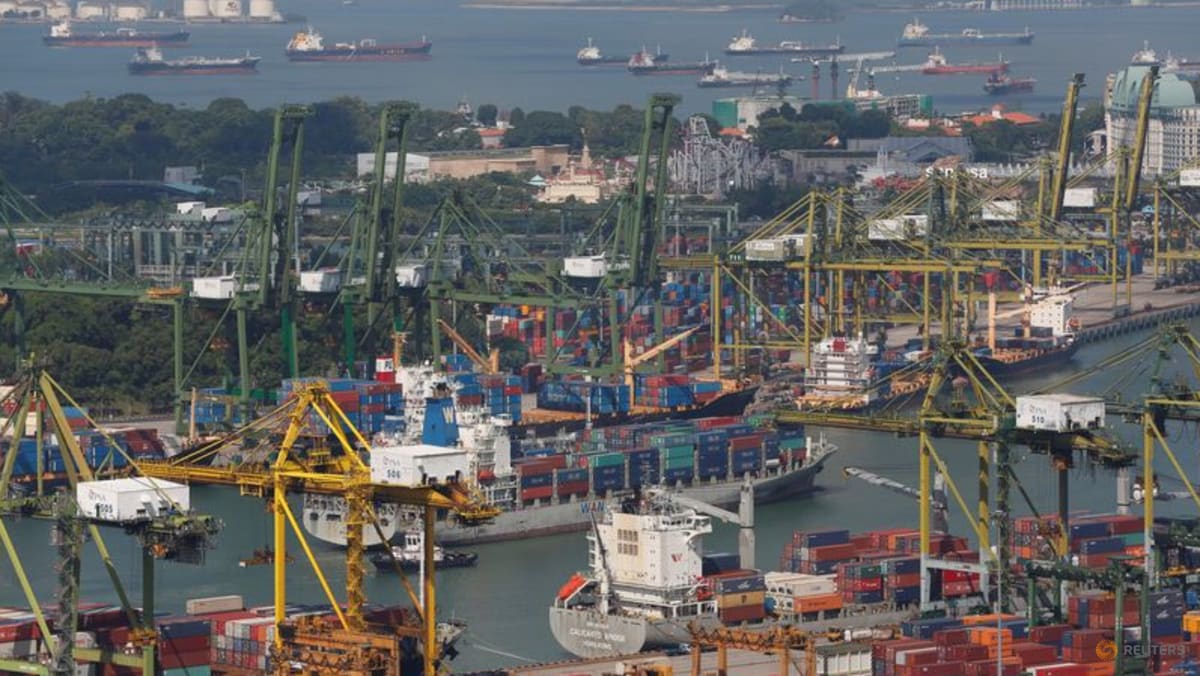
    What effects could the tariffs have on Singapore?

    Singapore has refuted the US’ claims, but a potential 12.5 per cent tariff could still have economic consequences.

    The proposed tariff covers approximately one-third of Singapore’s domestic exports to the US due to various product exemptions, Singapore’s Ministry of Trade and Industry (MTI) said on Thursday.

    The new levies “could erode its competitive advantage and lead to shifts in supply chains”, said Ms Elms.

    She noted that Singapore is also facing a separate US probe into alleged structural excess capacity in manufacturing sectors, compounding the risk.

    For businesses, the key question will be whether exports to the US remain viable.

    “I think firms have to do that internal calculation themselves. What is that sort of magic number … beyond which you can no longer afford to absorb a tariff, and then that’s when you really need to get serious about diversification outside of the United States,” Ms Elms said.

    MTI reiterated that Singapore does not condone the use of forced labour in supply chains, adding that forced labour is a transnational issue that requires international cooperation.

    “MTI will continue to engage the USTR constructively to explore options on this matter, and is assessing the impact of the proposed actions on Singapore’s exports to the US,” it said.


    Source link

    Share. Facebook Twitter Pinterest LinkedIn Tumblr Email Telegram Copy Link

    Related Posts

    Trending News

    ‘We need to do even more’: World Food Programme calls for greater response to Ebola outbreak

    June 4, 2026
    Trending News

    US House votes to curb Trump on Iran war as talks stall

    June 4, 2026
    Trending News

    Meta lashes Australia bid to make tech giants pay for news

    June 4, 2026
    Trending News

    Iran FM warns any attack on Beirut will trigger ‘full-scale resumption of war’

    June 3, 2026
    Trending News

    FBI fatally shoots man who held hostages in California building

    June 3, 2026
    Trending News

    Deadly drone strike on Kuwait airport as Iran, US trade fire

    June 3, 2026
    Editors Picks

    Court documents shed new light on UK-Apple row over user data

    August 30, 2025

    What is the Gaza Humanitarian Foundation, the aid group backed by the US and Israel?

    June 4, 2025

    Duke scores biggest 2026 transfer portal win with John Blackwell news

    April 21, 2026

    Majority of Russians expect Ukraine war to end in 2026, state survey finds | Russia-Ukraine war News

    December 25, 2025

    Exploring a new city? Grab these 3 free, under-the-radar apps first

    December 22, 2025
    About Us
    About Us

    Welcome to Benjamin Franklin Institute, your premier destination for insightful, engaging, and diverse Political News and Opinions.

    The Benjamin Franklin Institute supports free speech, the U.S. Constitution and political candidates and organizations that promote and protect both of these important features of the American Experiment.

    We are passionate about delivering high-quality, accurate, and engaging content that resonates with our readers. Sign up for our text alerts and email newsletter to stay informed.

    Latest Posts

    The new rules of work: Multigenerational workplaces in the Gen Z era

    June 4, 2026

    Stonehenge’s altar stone probably wasn’t transported by a glacier

    June 4, 2026

    How Far Has New Jersey Fallen?

    June 4, 2026

    Subscribe for Updates

    Stay informed by signing up for our free news alerts.

    Paid for by the Benjamin Franklin Institute. Not authorized by any candidate or candidate’s committee.
    • Privacy Policy
    • About us
    • Contact us

    Type above and press Enter to search. Press Esc to cancel.