

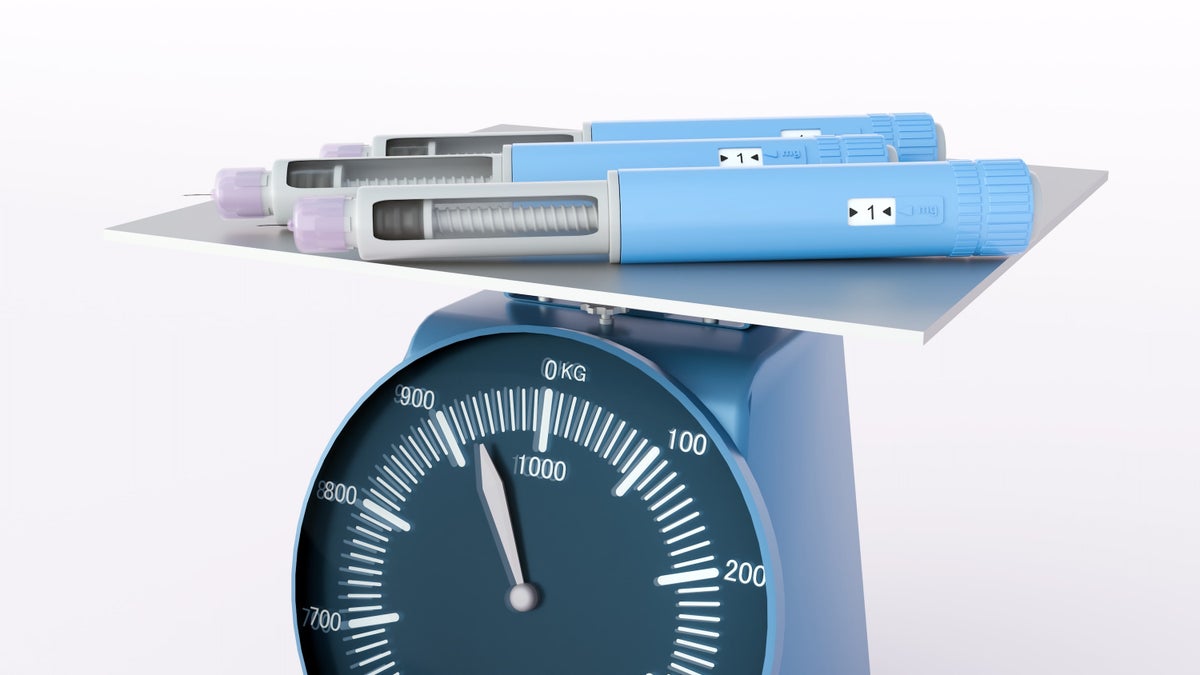
Once people understood glucagonlike peptide 1 (GLP-1) drugs’ potential for weight loss, the race among pharmaceutical companies was on. Among the current options, Wegovy can help people lose an average of 10 percent of their body weight in a year, while people taking Zepbound have had about a 15 percent loss, on average, in the same period. Soon the most powerful GLP-1 treatment to date could hit the market: retatrutide.
Already popular on the online peptide gray market, the new drug, originally developed by Eli Lilly, caused participants in a recent clinical study to lose more than a quarter of their body weight over 80 weeks at the highest dose—results comparable to bariatric surgery. U.S. Food and Drug Administration approval could soon follow.
But bodies don’t just drop weight with no potential adverse effects. Weight loss on its own can change muscle, bone and more. As new-generation GLP-1 drugs promote higher rates of loss, clinicians want to ensure that the desire to shed pounds and see improvements such as better cardiovascular health are balanced with the very real risks that may come with the treatment.
On supporting science journalism
If you’re enjoying this article, consider supporting our award-winning journalism by subscribing. By purchasing a subscription you are helping to ensure the future of impactful stories about the discoveries and ideas shaping our world today.
Fat, Muscle or Bone?
People typically lose weight when they eat fewer calories than their body expends. A common way to cut calories is to diet, while bariatric surgery removes or changes part of the gastrointestinal tract to reduce food—and therefore calorie—absorption.
GLP-1 is a gut hormone released in response to a meal that helps people feel full. It also increases insulin release and reduces glucose in the blood. Semaglutide (sold as Ozempic and Wegovy by Novo Nordisk) binds to the hormone’s receptor for longer periods of time, making people feel fuller for longer and eat less. Newer versions of GLP-1 drugs, such as tirzepatide (sold as Zepbound and Mounjaro by Eli Lilly) and Novo Nordisk’s upcoming drug CagriSema target more than one type of gut hormone receptor, while retatrutide hits three.
With any weight loss, not everything that comes off is fat. “You can’t just burn fat,” says Caroline Apovian, an obesity medicine specialist at Harvard Medical School and at Brigham and Women’s Hospital in Boston. (Apovian has previously consulted for both Novo Nordisk and Eli Lilly.)
When someone takes in fewer nutrients than they need, their body begins to utilize fat stores. This metabolic process requires amino acids, the building blocks of proteins. If amino acids aren’t adequately replenished from dietary protein, the body will recycle parts of muscle instead. “Anything that is going to produce robust weight loss,” Apovian says, “there’s going to be a percentage of that that’s muscle.”
Reports suggest that GLP-1 treatments may cause between 25 to 40 percent loss of lean mass, which includes muscle mass—although more studies are needed to understand how this affects strength.
People losing a lot of weight very quickly will also lose bone mass, Apovian says. Losing muscle and fat puts less pressure on bones, she explains, so a lighter body could lead to lighter bones.
For many people, lighter bones might not be an issue. But women, who have higher rates of GLP-1 treatment use than men, may at be at heightened risk of bone weakening during menopause, when bone loss naturally accelerates. Apovian has seen patients who lose weight on GLP-1 drugs develop osteopenia, or low bone mass. “If that gets worse, they fracture,” she says. “These are women, primarily, who have reported back to us that [using GLP-1s] wasn’t worth the weight loss.”
Eli Lilly’s recent retatrutide clinical trial did not evaluate participants’ changes in muscle or bone mass, a company spokesperson tells Scientific American; “however, Lilly is continuing to evaluate body composition and long-term outcomes.”
Mind Your Gallbladder
People who lose large amounts of body fat in short periods of time may also be at greater risk of developing gallstones, says Rozalina McCoy, an endocrinologist at the University of Maryland School of Medicine. Speedy weight loss increases bile acids, which are used to break down fat during digestion. As this happens, “there’s cholesterol saturation of the bile, so the bile becomes much more thick and gooey,” she says.
GLP-1 drugs also slow gastric emptying—the movement of food through the gastrointestinal tract—which stops the gallbladder from dispensing bile. “It kind of stays there and forms these gallstones,” McCoy says. Obesity raises the risk of gallstones in general, but data from clinical trials have shown that people on GLP-1 treatments have a 37 percent higher relative risk of developing gallbladder disease, which can include the formation of gallstones.
People considering GLP-1 treatments often worry about rare side effects, such as increased risk of thyroid cancer, “but gallstones happen in a decent subset of these patients,” says Armen Yerevanian, an endocrinologist at Massachusetts General Hospital.
Weight Loss, Fast and Slow
The recent retatrutide trial found people on the drug lost 28.3 percent of their body weight—about 70 pounds—in a year and a half. Though this is comparable to long-term results from bariatric surgery, McCoy says the rate of weight loss from retatrutide isn’t actually as fast as with surgery. “With metabolic surgery, people lose a lot of weight in the first month. We don’t see that with the drugs,” she says.
Retatrutide’s results are also not as fast-acting as methods like the protein-sparing modified fast, a medically monitored diet in which people take in around 800 calories per day, Yerevanian says. (A sedentary adult generally needs to take in between 1,600 and 2,400 calories to maintain their current weight). “I don’t think weight loss from retatrutide is fast enough to be worried from that perspective,” he says.
People who might otherwise use modified fasts or bariatric surgery could be candidates for retatrutide—and some scientists think certain individuals could see health benefits from greater weight reductions than the drug provides. Retatrutide and other new-generation GLP-1 drugs might also aid people who don’t respond to the GLP-1s currently available.
Doctors need to closely monitor people on these drugs to ensure they aren’t losing too much weight or suffering from nutrient deficiencies, Yerevanian says. GLP-1 medication doses are “pretty easy to readjust, because if you pull back, they’ll gain the weight back,” he adds.
Preliminary evidence suggests that weight regained after stopping a GLP-1 treatment is more likely to come back as fat than as lean mass. The benefits to cardiovascular health and diabetes also appear to reverse. Experts, including McCoy, have suggested that such weight rebounds could leave people in an unhealthier state than they were before treatment.
Prevention Is Worth a Pound of Lost Muscle
There are ways to reduce muscle and bone loss while taking a GLP-1 drug, Apovian says. Calcium and vitamin D supplementation can help prevent bone loss. For muscle, protein is key. “It seems that most Americans eat enough protein,” she says, but “if you’re on a GLP-1, or you’re trying to lose weight, and you’re on a lower calorie diet, that’s when you need to be cognizant.”
That protein intake must be paired with resistance training, Apovian says. Weight training, even with light weights, can help prevent muscle loss, though she notes most of the patients she treats probably aren’t doing enough resistance training.
As these drugs become more effective and accessible, clinicians need better guidelines around who qualifies for which medication, Yerevanian says. People in larger bodies face significant societal stigma, which may cause some people to feel pressure to lose a lot of weight, fast. But some clinicians say that prescribing these drugs is about balancing risk and benefit, not about a person’s body size. “We never had the ability to lose this much weight in a healthy way before,” McCoy says. “I think as a society, we need to make sure that the focus of all these treatments remains on better health and not on the weight number on a scale.”