

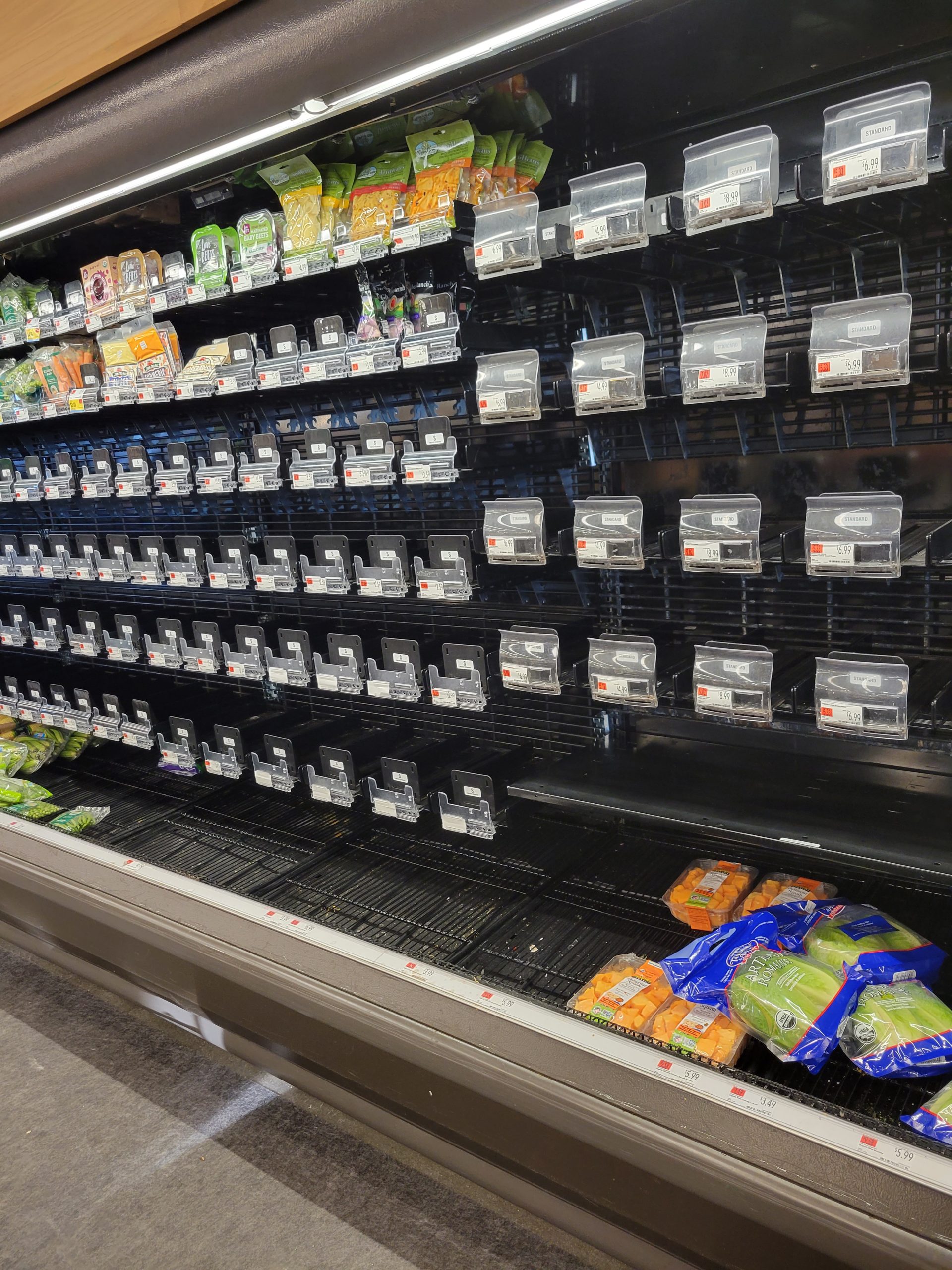
@write.in.cuteri What is Happening in Our Grocery Stores?!
People still think inflation is simply rising costs or supply shortages, but what they fail to understand is that we are entering a completely different phase where prices themselves will become individualized. Two people standing next to each other in the same grocery aisle will eventually pay different prices for the exact same item, not because of shortages, but because the system knows one can be squeezed harder than the other.
This is not science fiction anymore. Grocery chains are rapidly rolling out digital shelf labels, replacing traditional paper price tags with electronic displays connected directly to centralized pricing systems. These labels can change instantly, not overnight, not weekly, but in real time. One report showed stores overseas already changing prices up to 100 times per day. That is where this is heading.
Most people walking through these stores never notice the cameras positioned around the aisles, above checkout lanes, or integrated near the displays themselves. They assume they are there for theft prevention. In reality, these systems are becoming behavioral tracking networks designed to monitor how long you look at a product, what aisles you spend time in, how quickly you make decisions, what brands you repeatedly buy, and increasingly who you are individually.
Grocery stores are already building extensive consumer profiles using purchase histories, browsing activity, online searches, and third-party broker data to infer everything from your economic status to health conditions and family structure. The stores can categorize customers as “not price sensitive” or identify people based on lifestyle and purchasing behavior. Think carefully about what that means once artificial intelligence is connected to dynamic pricing systems.
If the system knows you make $250,000 per year, drive a luxury car, buy premium organic products, and routinely spend without checking prices, why would it offer you the same price as someone struggling paycheck to paycheck? The entire purpose of surveillance pricing is to determine the maximum amount YOU personally are willing to pay.
This is no different from what airlines already do online. Search for a flight repeatedly and suddenly the price rises. Browse hotels from a wealthy zip code and the rates increase. Use a MacBook and booking sites may steer you toward more expensive options. EPIC even highlighted cases where Target reportedly displayed higher prices on its app depending on how close a consumer was to the store itself. Now take that same model and place it inside the grocery store, but this time, the store itself will be monitoring you in real-time.
The digital shelf labels are the mechanism that makes this possible because once prices become electronic, they are no longer fixed. They become fluid, personalized, and adjustable in real time. Grocery chains insist today that they are not using facial recognition for pricing decisions, but governments and corporations always deny where the system is heading until the infrastructure is already installed. Why install cameras everywhere if all you need is a static price tag?
The answer is because the long-term objective is individualized pricing tied directly to behavioral profiling. They want to know your spending habits, your routines, your income level, your loyalty accounts, your shopping history, and eventually your biometric identity itself. Once those systems merge together, your face effectively becomes your barcode. They will squeeze as much as they possibly can out of each and every consumer. This is not capitalism but a predatory practice.
People do not understand the value of data because they still think of themselves as customers. In reality, they have become inventory.
The irony is that consumers themselves volunteered for much of this surveillance. They signed up for loyalty cards to save fifty cents on cereal. They downloaded apps for coupons. They allowed location tracking, purchase histories, and payment systems to merge into a single behavioral profile because it seemed convenient at the time. Now that data is becoming monetized against them.
This is where all of this leads eventually. The wealthy will quietly pay more because the system knows they can. The middle class will be squeezed algorithmically. People under financial stress may receive temporary discounts designed to maximize spending while preserving dependency. Everyone will be forced to spend top dollar based on what “top dollar” means to them. Pricing itself becomes psychological manipulation driven by machine learning models constantly testing human behavior.
The more the system knows about you, the more accurately it can calculate the maximum amount it can extract from you without losing the sale. That is why the data collection never stops.
People think these systems are being built for convenience. They are being built because information has become the most valuable asset in the world economy. Once companies know you better than you know yourself, prices no longer reflect supply and demand. They reflect your personal tolerance for pain.
The public will not fully understand what has happened until the day two people compare receipts and realize the machine decided one of them deserved to pay more simply because the algorithm determined they could afford it.