
Close Menu
    Trending
    • Miles Teller Talks That ‘Paper Tiger’ Fight Scene With Adam Driver
    • Putin hails ‘strong’ momentum in Russia-China cooperation in talks with Xi
    • China’s Xi Jinping and Russian President Vladimir Putin meet in Beijing | Politics News
    • The greatest all-time linebacker in for every NFL franchise
    • Opinion | Is This the End of Close Elections?
    • Your Appearance Speaks Before You Do. What Is Yours Saying?
    • We may finally know why dinosaurs like T. rex evolved tiny arms
    • Ciara Miller Unloads In ‘Summer House’ Reunion Trailer
    Benjamin Franklin Institute
    Wednesday, May 20
    • Home
    • Politics
    • Business
    • Science
    • Technology
    • Arts & Entertainment
    • International
    Benjamin Franklin Institute
    Home»Science»We may finally know why dinosaurs like T. rex evolved tiny arms
    Science

    We may finally know why dinosaurs like T. rex evolved tiny arms

    Team_Benjamin Franklin InstituteBy Team_Benjamin Franklin InstituteMay 20, 2026No Comments3 Mins Read
    Share Facebook Twitter Pinterest Copy Link LinkedIn Tumblr Email VKontakte Telegram
    Share
    Facebook Twitter Pinterest Email Copy Link


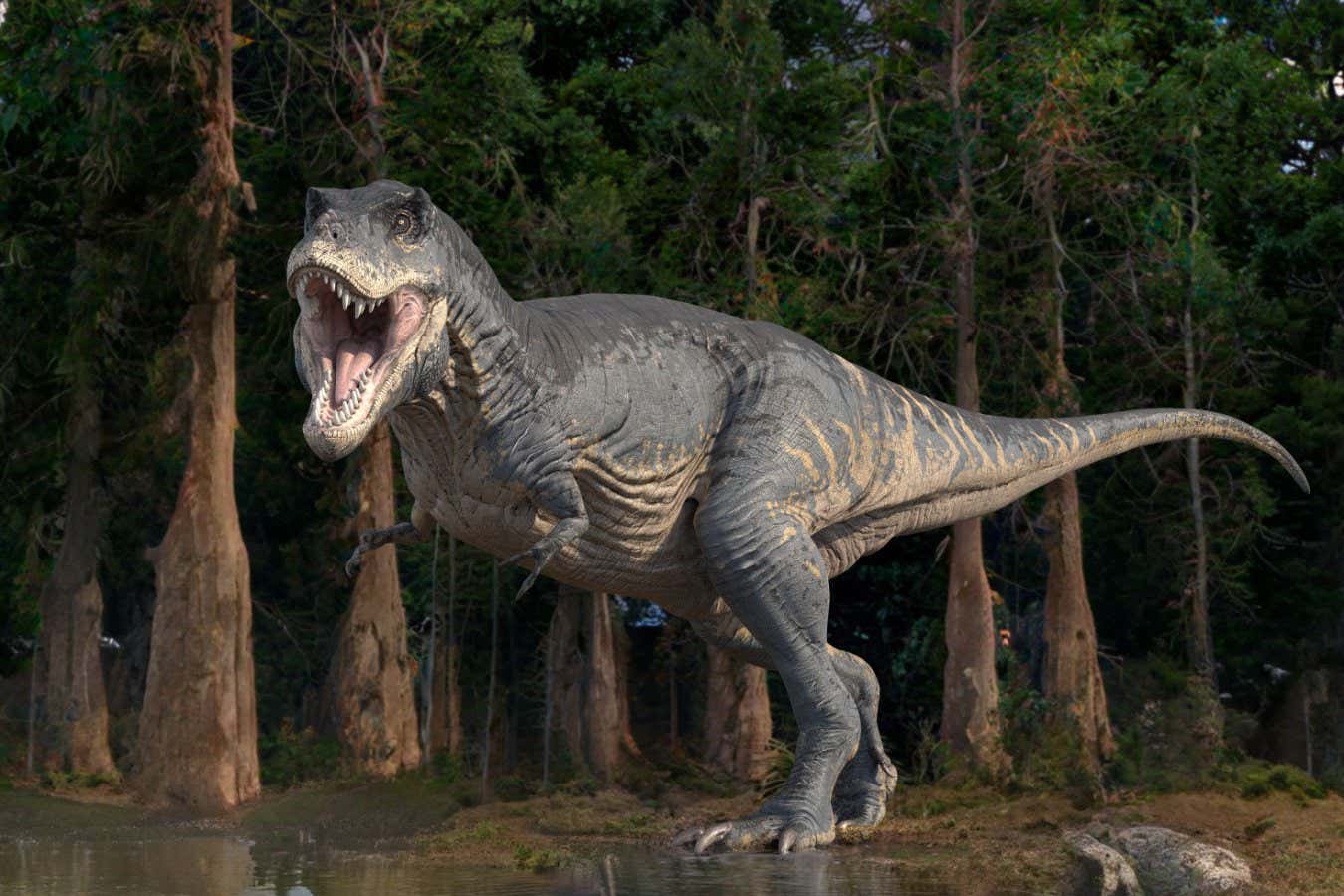
    Tyrannosaurus rex wasn’t the only predatory dinosaur with small arms

    ROGER HARRIS/Getty Images/SCIENCE PHOTO LIBRARY

    With jaws like these, who needs big arms? A new analysis suggests dinosaurs like Tyrannosaurus rex had shrunken forelimbs because their massive, powerful heads became their primary tool for killing large prey, rendering their arms redundant. It is an evolutionary approach that five different lineages of large theropod dinosaurs took independently.

    Researchers are well aware that a number of large, predatory theropods followed a trend towards bigger bodies, bigger heads and smaller, shorter arms over time. But it wasn’t known why this pattern repeated across multiple predatory dinosaur families, scattered across the globe and separated by many millions of years, says Charlie Scherer at University College London. There was also little understanding of how the bones in their ever-heftier skulls changed as their arms became proportionally smaller.

    “This paper tackles one of the big evolutionary questions in theropod dinosaurs,” says Andre Rowe at the University of Bristol, UK, who wasn’t involved with the research.

    Scherer and his colleagues compiled data on the proportions of the forelimbs and skulls of 85 theropod species, along with body-mass data. This allowed them to calculate a ratio between the skull dimensions and forelimb lengths, quantifying just how small the arms were compared with the head. The researchers then compared this ratio with other measurements of the dinosaurs’ bodies, along with a measure of the skulls’ strength based on factors such as bite force and skull rigidity.

    The team found that skull durability was associated with smaller arms, regardless of where the species sat in the theropod evolutionary tree. “If it’s a predatory theropod and has a very robust skull, it will most likely have relatively small forelimbs,” says Scherer.

    The researchers found this head-arm divergence evolved independently in five theropod groups: tyrannosaurids, the short-snouted abelisaurids, the knife-toothed carcharodontosaurids, ceratosaurids and megalosaurids. This evolutionary pattern hadn’t been identified in the last two groups until this study, points out Fion Waisum Ma at the University of Hong Kong, who wasn’t involved in the research. This shows how hidden evolutionary signals can be revealed when traits are quantified in this way, she says.

    The findings provide clues as to why the dinosaurs’ arms kept shrinking. These predators’ increasing skull strength and body size coincided with the rising mass of their quarries. The theropods evolved huge, sturdy skulls for subduing their large, difficult-to-control prey. Their heads were clearly doing the majority of the work, says Scherer, reducing the need for strong, grappling arms.

    “Nature doesn’t like to have everything all at once,” he says. A big, powerful head plus strong forelimbs would require a lot of energy to maintain.

    This creates a trade-off between jaws and claws. Other theropods like the megaraptorans and spinosaurs were also very large predators, but they took the opposite route to dinosaurs like T. rex, coupling long arms with slender skulls.

    Rowe is curious about the mechanical function of the jaw-centric theropods’ arms, even in their shortened state. “Yes, tyrannosaurs had tiny, vestigial arms, but that does not necessarily mean they were completely useless,” he says.

    He adds that the study emphasises the evolutionary diversity of dinosaurs. “It reminds me of why I fell in love with dinosaurs in the first place,” he says. “They were some of the most innovative and successful animals to ever exist.”

    Topics:


    Source link

    Share. Facebook Twitter Pinterest LinkedIn Tumblr Email Telegram Copy Link

    Related Posts

    Science

    Odd “butterfly” molecule could lead to new parts of the quantum realm

    May 20, 2026
    Science

    Solar farm on the ocean outperforms land-based solar in Taiwan

    May 19, 2026
    Science

    Wind-assisted cargo ships could more than halve shipping emissions

    May 19, 2026
    Science

    Colossal claims an artificial eggshell will help it bring back the moa

    May 19, 2026
    Science

    How I used psychology to come back from the worst year of my life

    May 19, 2026
    Science

    What is love? Even a meeting on the subject can’t find the answer

    May 19, 2026
    Editors Picks

    Israel’s war on Iran – decades in the making | TV Shows

    June 21, 2025

    Psychedelics may be no better than antidepressants for depression

    March 21, 2026

    How the Cuba Fuel Crisis Is Affecting Everyday Life

    March 31, 2026

    Iran still playing in World Cup 2026 despite withdrawal rumours, AFC says | US-Israel war on Iran News

    March 16, 2026

    Toothless Arsenal falls 3-2 to resurgent Manchester United

    January 25, 2026
    About Us
    About Us

    Welcome to Benjamin Franklin Institute, your premier destination for insightful, engaging, and diverse Political News and Opinions.

    The Benjamin Franklin Institute supports free speech, the U.S. Constitution and political candidates and organizations that promote and protect both of these important features of the American Experiment.

    We are passionate about delivering high-quality, accurate, and engaging content that resonates with our readers. Sign up for our text alerts and email newsletter to stay informed.

    Latest Posts

    Miles Teller Talks That ‘Paper Tiger’ Fight Scene With Adam Driver

    May 20, 2026

    Putin hails ‘strong’ momentum in Russia-China cooperation in talks with Xi

    May 20, 2026

    China’s Xi Jinping and Russian President Vladimir Putin meet in Beijing | Politics News

    May 20, 2026

    Subscribe for Updates

    Stay informed by signing up for our free news alerts.

    Paid for by the Benjamin Franklin Institute. Not authorized by any candidate or candidate’s committee.
    • Privacy Policy
    • About us
    • Contact us

    Type above and press Enter to search. Press Esc to cancel.