

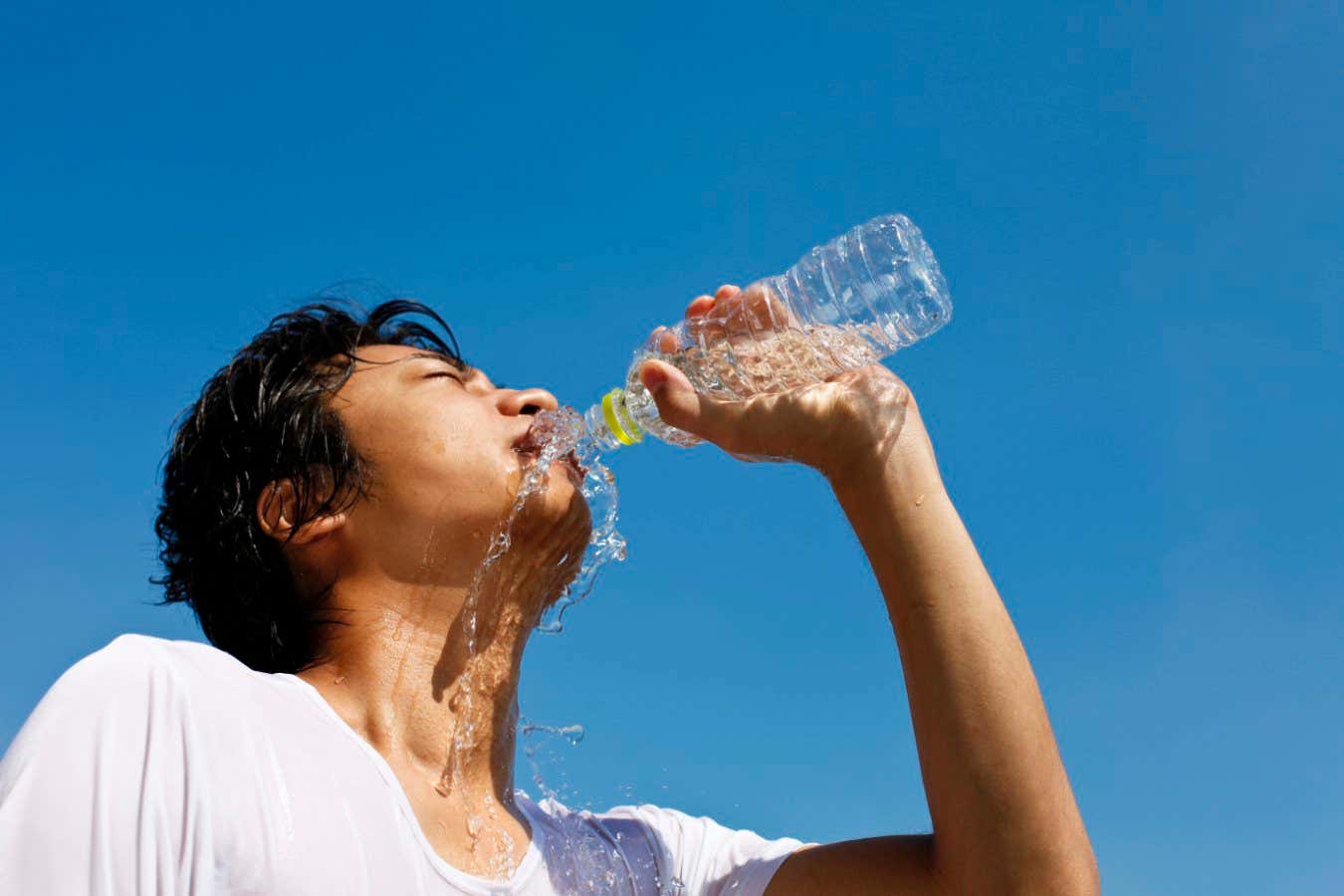
Are you drinking the right amount of water?
kazoka30/Getty Images
Water bottles have become comically large in recent years, as health influencers urge us to drink more water for glowing skin, better brain function, improved athletic performance and just about everything else. But is gulping down litres of water a day really necessary? And can you overdo it? Tamara Hew-Butler is a physiologist who has been studying hydration for over two decades and is currently the medical research director of the Western States Endurance Run in California, one of the most gruelling ultramarathons in the world, which requires careful hydration planning. She’s here to pour water on some of the common myths.
1. Myth: Everyone should aim to drink at least 6 to 8 glasses of water per day
The amount of water required per day differs for everybody, and it even varies for each person on a daily basis. You always hear that everybody needs 2 litres a day, which is about eight glasses, but there isn’t a one-size-fits-all rule. If you weigh 45 kilograms and you sit at your desk all day, you probably aren’t going to need as much water as a 100-kilogram rugby player who is outside in the sun.
How much an individual needs to drink should basically match how much water they lose during the day. We don’t know how much water we are losing, but that’s why we have thirst. The brain is always sampling your blood and if you need more water, it creates the sensation of thirst so you drink more, and that protects you from dehydration. If you get thirsty and don’t drink, the sensation of thirst gets stronger and stronger until you do.
There is a misconception that, by the time you start to feel thirsty, it’s too late: your body is running out of water. But this is just the point where you might need a little bit more water in your system. Personally, I just drink when I’m thirsty. As a general rule, that works for 98 per cent of people.
2. Myth: It’s better to hydrate with plain water than coffee
I don’t drink plain water myself because I don’t like it. Instead, I drink a couple of cups of coffee in the morning, and I eat soup, fruit, vegetables and smoothies, which all contain water. I only drink plain water if I’m outside, I’m really thirsty and I have nothing else to drink. Otherwise, I get all the water I need from other fluids and foods that contain it.
It’s a misconception that you shouldn’t hydrate with coffee because it’s a diuretic. It isn’t actually a diuretic – when you have a cup of coffee, it’s the water content that makes you need to pee, not the caffeine. Alcohol is different, though: it is a diuretic, so drinking beer and wine will make you pee more.
3. Myth: Topping up with extra water when you aren’t thirsty provides additional health benefits
There aren’t really any health benefits to drinking more water than you need, other than maybe helping to lose weight because it fills your stomach so you might eat less. Your body regulates its water levels quite strictly, so, if you drink a little bit more, you just pee out a little bit more. There’s not a lot of scientific evidence to say that drinking large amounts of water make your skin clearer, helps with constipation, is good for your immune system or the other things you hear.
It’s not going to hurt, though, unless you do it to excess. I actually got into hydration research to begin with after two runners died from drinking too much water during marathons. When you drink too much water, it dilutes the sodium in your blood, a condition known as hyponatraemia. That can make your brain swell, and if your brain swells so much it runs out of room, then you die instantly.
Estimates suggest that drinking 3 to 4 litres of water within a one-hour span can lead to signs and symptoms associated with hyponatremia. These signs and symptoms include headache, nausea, and bloating.
4. Myth: Sports drinks are essential when you are exercising
People often think they need to hydrate with sports drinks when they are exercising. These contain electrolytes like sodium and potassium to replace the electrolytes you lose in sweat. But most studies show that you only need those extra electrolytes if you are doing very intense exercise, like for over 17 hours in a hot climate that you are not used to. Even if you exercise for 2, 3, 4 hours a day, you will replace the small amount of electrolytes you lose with the foods you take in afterwards. Sports drinks also contain carbohydrates, which can be beneficial if you are running out of carbohydrates while doing very intense exercise. But most of us don’t need them.
As told to Alice Klein
Topics: