

Tanking is ruining NBA basketball. Can math save it?
Several teams appeared to spend the second half of the U.S. professional basketball season losing games on purpose for a better chance at a high draft pick. New ideas propose to fix this incentive problem

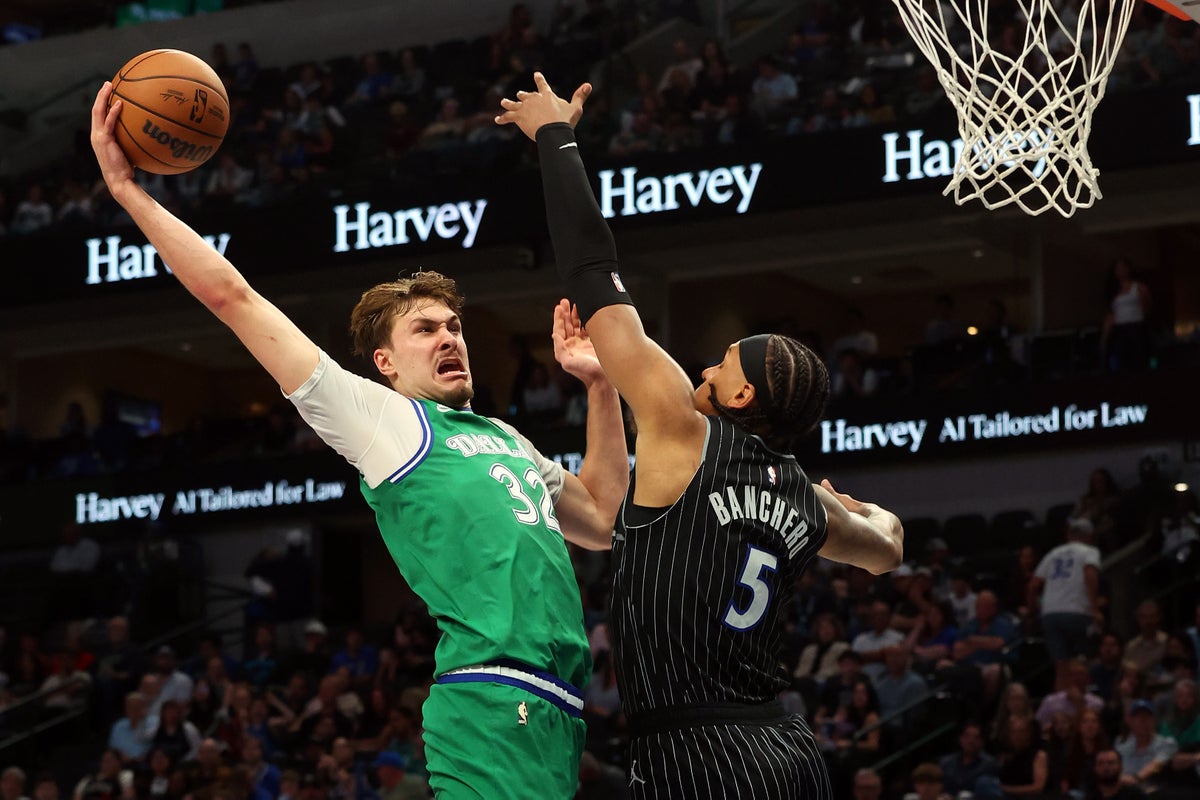
Cooper Flagg, the first overall pick of last year’s NBA draft, goes up for a dunk. Paolo Banchero (2022’s first pick) meets him at the rim.
Richard Rodriguez/Getty Images
Yesterday, the National Basketball Association (NBA) rewarded the Washington Wizards handsomely for the team’s fifth consecutive losing season. In next month’s NBA draft, the Wizards will get the first selection from a stacked field of young talent entering the league.
A high draft pick is among the most coveted assets in basketball because bagging a future superstar can turn an ailing franchise into a decadal dynasty. The draft lottery is an attempt to dole out the top slots to the teams that need them most.
At the end of the regular season, the 14 teams that fail to make the playoffs enter a lottery to determine the first four slots in the draft order. The odds are assigned based on the teams’ performances during the season—the worst teams get the best odds.
On supporting science journalism
If you’re enjoying this article, consider supporting our award-winning journalism by subscribing. By purchasing a subscription you are helping to ensure the future of impactful stories about the discoveries and ideas shaping our world today.
This method is meant to promote a healthy, competitive league over time. But in a way, it has had the opposite effect: a number of teams spent the latter half of this season in a race to the bottom, seeming to intentionally lose games to secure the best possible odds. This tactic, called “tanking,” is against league rules but very difficult to prove.
The NBA has floated a number of fixes for the problem. On May 28 the association will vote on a proposed “3-2-1” system. The name refers to the number of lottery entries, in the form of Ping-Pong balls, that different teams would receive, according to the plan. It would flatten the odds overall but also penalize the three teams with the very worst records, making it optimal to perform badly but not too badly. Some have already pointed out the system’s pitfalls, however.
“Ironically, this type of format will ensure that the bottom three teams are truly the weakest ones,” says Justin Olmanson, a professor at the University of Nebraska-Lincoln. Under this system, the worst teams are more likely to stay the worst.
Mathematicians and social scientists deal with these kinds of “incentive” problems all the time. What do they have to say about the new proposal?
Olmanson authored a working paper with an alternative system that breaks the worst teams into three tiers. In this arrangement, the lower tiers still get better odds of a top pick, but there’s less difference among teams in the same tier. Although teams might still aim for a lower tier, the jockeying should be less intense game-to-game because a team’s exact spot within each tier isn’t important.
Olmanson’s plan and the 3-2-1 proposal reveal a tension between the lottery’s two aims of both evening out the league and discouraging tanking. “If the NBA uses the draft to help with long-term competitive balance in the league, there will always be some tanking,” says Evan Munro, an assistant professor of econometrics at the University of Chicago Booth School of Business.
In 2021, when Munro and his collaborator Martino Banchio were graduate students at Stanford University, they actually proved that this trade-off was mathematically unavoidable—that is, as long as the draft positions were determined based on end-of-season stats.
This is what leads to games where a team is already out of playoff contention but still stands to improve its draft position. “A rational team that values draft picks a lot should try to lose in that game,” Munro says.
He and Banchio proposed something the NBA has reportedly considered: a cutoff date earlier in the season. The logic is that draft-pick positions for the next year should most favor whoever is performing worst in that initial phase, before teams have given up on making the playoffs. Munro notes, however, that NBA officials have expressed concerns that such a system could backfire: draft-hungry teams, they fear, might start tanking from the beginning of the season to ensure better odds.
Other approaches try to battle the countervailing incentives with fancier math. The method used in the Women’s National Basketball Association (WNBA) bases lottery rankings on the past two seasons combined, buffering the payoff for any tanking.
Another approach, called Carry-Over Lottery Allocation (COLA), also combines statistics from multiple seasons—with the twist of having bankable “lottery tickets” that teams can stash and spend in every draft. The worse a team’s performance is, the more tickets they get, but making the playoffs or netting a high draft pick requires giving up some or all of a stockpile.
“We ran the model on the real NBA teams’ records going back to 1999,” says Tannah Duncan, a student at La Salle University, who coauthored a preprint paper outlining the idea. “And it showed that the worst teams would really have gotten the best picks over time.”
Of course, there are those who already find the lottery system too convoluted. But where the math leads, teams will follow. So if the NBA wants to chase parity without teams tanking, it might just have to up the math.
It’s Time to Stand Up for Science
If you enjoyed this article, I’d like to ask for your support. Scientific American has served as an advocate for science and industry for 180 years, and right now may be the most critical moment in that two-century history.
I’ve been a Scientific American subscriber since I was 12 years old, and it helped shape the way I look at the world. SciAm always educates and delights me, and inspires a sense of awe for our vast, beautiful universe. I hope it does that for you, too.
If you subscribe to Scientific American, you help ensure that our coverage is centered on meaningful research and discovery; that we have the resources to report on the decisions that threaten labs across the U.S.; and that we support both budding and working scientists at a time when the value of science itself too often goes unrecognized.
In return, you get essential news, captivating podcasts, brilliant infographics, can’t-miss newsletters, must-watch videos, challenging games, and the science world’s best writing and reporting. You can even gift someone a subscription.
There has never been a more important time for us to stand up and show why science matters. I hope you’ll support us in that mission.