

The following essay is reprinted with permission from The Conversation, an online publication covering the latest research.
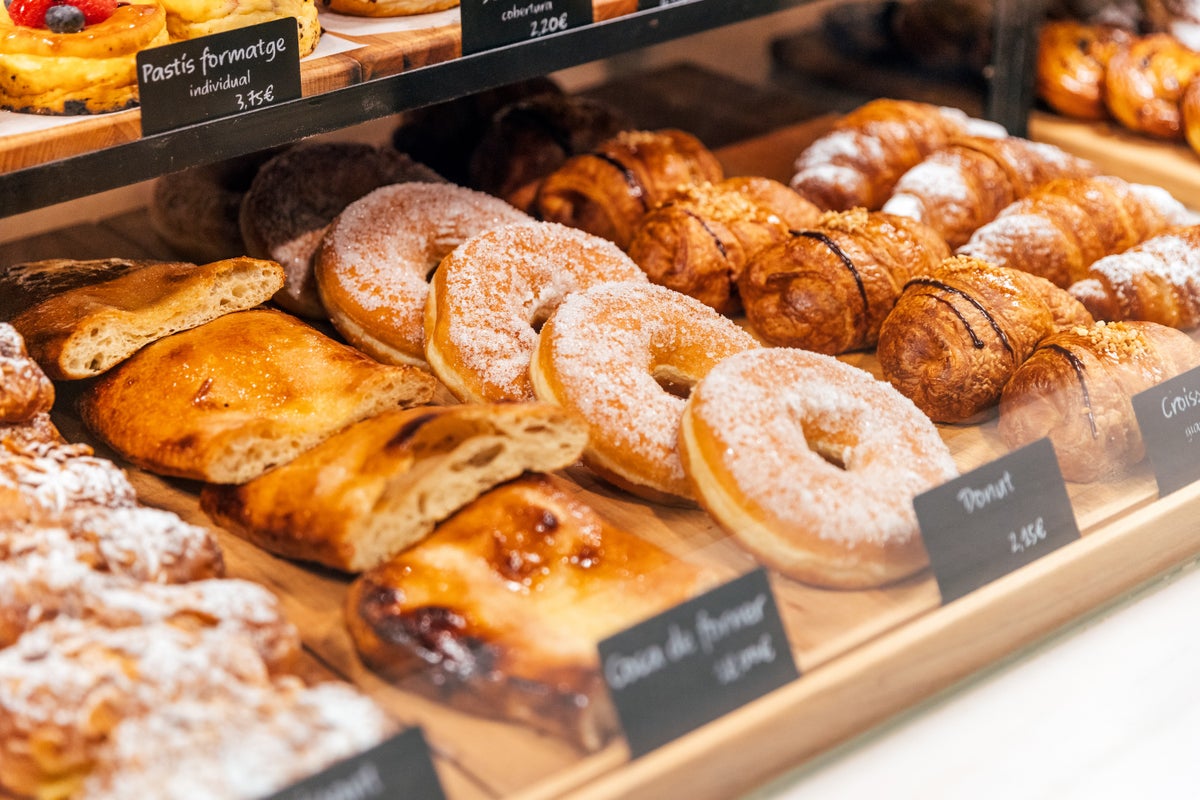
Imagine you’re in line at your favourite bakery, deciding whether to have a doughnut or a tart. You weigh them up, the doughnut wins, and you settle on that.
By the time you’re at the front of the line, however, only tarts are left. So, you buy one.
On supporting science journalism
If you’re enjoying this article, consider supporting our award-winning journalism by subscribing. By purchasing a subscription you are helping to ensure the future of impactful stories about the discoveries and ideas shaping our world today.
These two decisions feel completely different. One involves deliberation based on our unique and personal preferences, while the other involves simply recognising and picking the only available option.
But our latest research published in the journal Imaging Neuroscience shows our brains actually make these decisions in surprisingly similar ways.
What exactly is a free choice?
When we make free decisions, we recognise multiple options exist, weigh them up, and commit to one based on something internal: our preferences, values and goals.
Forced decisions are different. There’s only one possible outcome, and our job is simply to identify the option and take it.
Because free decisions feel so closely tied to who we are, neuroscientists have long assumed they rely on different processes in the brain compared to forced decisions. Some brain imaging studies support this, showing different patterns of neural activity distributed across the brain.
However, knowing where in the brain free choices happen tells us little about how they are formed – and whether this process is any different from forced decisions.
How does the brain form a decision?
Decades of research have shown that, to make decisions, our brains gradually gather evidence for each option over time.
Think of it like a judge evaluating the facts of a case. Once enough evidence has been accumulated in favour of one party, a verdict is reached. For some types of decisions, this happens very quickly (over hundreds of milliseconds), making it feel like the choice just popped into your head.
By measuring electrical brain activity, researchers have identified a brain signal that reflects this accumulation of evidence during simple decisions – such as judging whether a traffic light is red or green.
Like a loading bar building to 100%, the signal gradually rises to a particular level before a decision is made. Because the action of neurons in the brain is noisy, this decision-making process also occurs in a noisy fashion: rather than climbing steadily towards one option, the signal fluctuates back and forth between the alternatives.
This partly explains why we aren’t always consistent with our choices – even when our preferences are stable, some days we will go for the tart and others, the doughnut.
This signal has been identified for forced decisions with a clear correct answer. But what about choices that are open-ended – shaped not just by what’s in front of us, but by something internal like preferences or personal goals?
Tracing brain signals of decision formation
To answer this question, we recorded people’s brain activity while they chose between sets of coloured balloons. They viewed either two balloons of different colours to freely choose between, or a single balloon they were forced to pick.
They pressed a button the moment they made their choice, and we tracked how brain activity unfolded in the lead-up to that moment.
For both free and forced decisions, the brain activity unfolded in a very similar way. Like a loading bar, it climbed steadily to the same peak level just before a choice was made. When people decided quickly, the signal increased faster. When they took longer, it rose more slowly.
That’s exactly what you would expect if the brain were tracking and weighing up evidence over time, rather than simply reacting to a decision at the last moment.
Does this mean our free choices aren’t really free?
From this finding, one might assume the brain forms free and forced decisions in the same way, suggesting decision-making in the brain may be more automatic than it feels.
This echoes famous experiments by neuroscientist Benjamin Libet in the 1980s. He and colleagues found brain activity begins ramping up before people are even consciously aware of their intention to act – suggesting the brain has already begun deciding before the person consciously realises they’ve made a choice.
But while the process may be automatic, what the brain is accumulating tells a different story. The evidence it weighs up is drawn entirely from who you are – your preferences, your goals, your experiences. Two people may go through the same neural process and land on the same choice, and yet arrive there for completely different reasons.
So rather than asking whether our choices are truly free, perhaps the better question is what it really means for a choice to be yours. And the next time you find yourself in line at the bakery, know that your brain has already been quietly gathering evidence toward your baked good of choice, and that choice happens a little faster than you realise.
This article was originally published on The Conversation. Read the original article.