
Close Menu
    Trending
    • Can Apple and Google stop children from sharing explicit images?
    • Amsterdam Bans Meat Ads As The War On Food Expands
    • Katie Holmes And Joshua Jackson Spark ‘Soul-Level’ Love Chatter
    • Singapore Airlines, Southwest Airlines partner to expand access to nearly 120 US destinations
    • Trump warns Netanyahu: ‘You’ll be on your own’ if attacks on Iran continue | US-Israel war on Iran News
    • Cristiano Ronaldo, ‘The Bosnian Diamond’ headline the World Cup 40-and-over club
    • How housing market inventory is shifting across every state
    • What is a ‘normal’ memory slowdown, and when should I worry?
    Benjamin Franklin Institute
    Tuesday, June 9
    • Home
    • Politics
    • Business
    • Science
    • Technology
    • Arts & Entertainment
    • International
    Benjamin Franklin Institute
    Home»Science»Hidden fossils reveal secrets of oceans before major mass extinction
    Science

    Hidden fossils reveal secrets of oceans before major mass extinction

    Team_Benjamin Franklin InstituteBy Team_Benjamin Franklin InstituteApril 10, 2026No Comments3 Mins Read
    Share Facebook Twitter Pinterest Copy Link LinkedIn Tumblr Email VKontakte Telegram
    Share
    Facebook Twitter Pinterest Email Copy Link


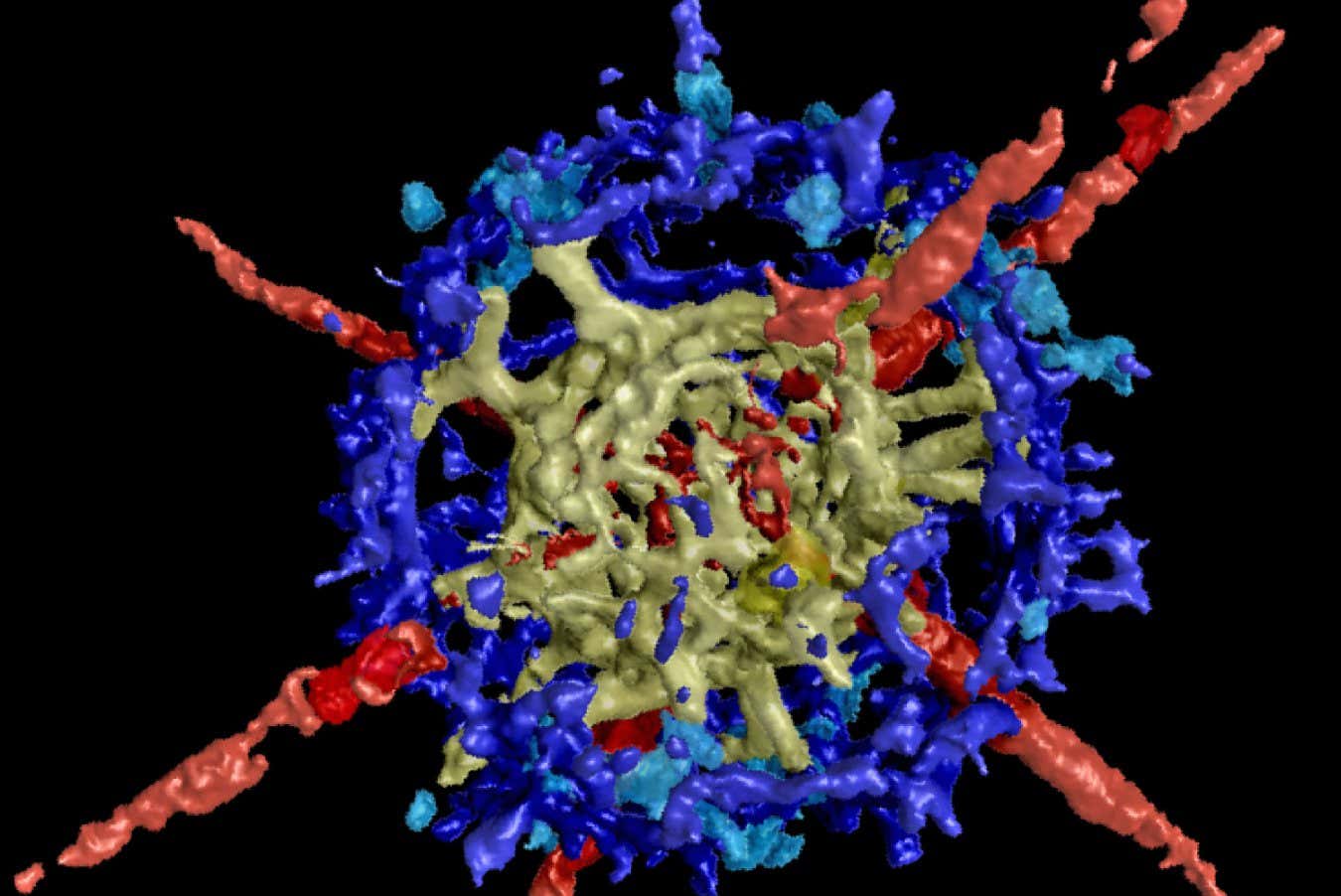
    One of the radiolarian fossils found inside the rock sample

    Courtesy of Jonathan Aitchison

    A tiny pellet of ancient rock, a mere half the size of a grain of rice, has yielded 20 microscopic fossils representing eight different species, including one that is entirely new to science. The discovery will enhance our understanding of the second-largest known mass extinction. It also shows how new analytical techniques are unlocking parts of the fossil record that have previously gone overlooked.

    Jonathan Aitchison at the University of Queensland, Australia, and his colleagues extracted the pellet from a rock that was collected in late 2018 from the Sichuan basin in China, about 300 kilometres south of Xian. The rock is445 million years old, which means it formed just before the Late Ordovician mass extinction – the second most severe to have occurred over the past 500 million years.

    Inside the pellet, they found eight different species of radiolarians, which are single-celled plankton that make their shells from silica. Radiolarians are still found throughout the oceans today.

    The fossils found in the grain-sized sample represent five genera, four families and three orders, including a new species that the researchers have named Haplotaeniatum wufengensis.

    The specimens were so well preserved because both their exteriors and internal structures were completely surrounded by and filled in with bitumen, leaving perfect impressions.

    Patrick Smith at the Geological Survey of New South Wales in Sydney, Australia, who was not part of the research, says the fossils come from a period before the extinction event was fully under way.

    “The high number and diversity of fossils show that marine ecosystems, particularly microscopic plankton communities, were rich and active shortly before the extinction,” says Smith. “The Ordovician oceans were far richer biologically than previously recognised, especially at the microscopic level. These fossils reveal thriving communities of plankton at a time when Earth’s oceans were on the precipice of major environmental change.”

    Traditionally, such tiny fossils are studied by dissolving the surrounding rocks with acid – an incredibly destructive method, says Aitchison.

    Instead, the researchers used a powerful X-ray machine – the Australian Nuclear Science and Technology Organisation’s Synchrotron, located in Melbourne – to scan the rock pellet and, within seconds, generate detailed 3D scans of the fossils it contained.

    “I grew up looking at Mad comics, and there were always advertisements in the back for X-ray glasses where you could see through things,” says Aitchison. “Well, we could see right through this sample. We didn’t even have to get them out of the rock. We could look right through the rock and see these radiolarian plankton.”

    “This is the biggest technological advance I’ve ever encountered during my whole career,” he says.

    Aitchison adds that the richness of life found in such a small sample suggests that the diversity of marine life in other rocks from the Late Ordovician might have been “grossly underestimated”.

    Smith says one of the key messages from the work is that there is still a great deal of Earth’s fossils to explore – not because they are missing “but because our traditional methods haven’t been able to detect or recover them”.

    Topics:


    Source link

    Share. Facebook Twitter Pinterest LinkedIn Tumblr Email Telegram Copy Link

    Related Posts

    Science

    Can Apple and Google stop children from sharing explicit images?

    June 9, 2026
    Science

    What is a ‘normal’ memory slowdown, and when should I worry?

    June 9, 2026
    Science

    Wildlife thrives in solar farm built on restored peatland

    June 8, 2026
    Science

    You don’t need to worry about recursive-self-improving AI – yet

    June 8, 2026
    Science

    Understanding anorexia’s grip on the brain could unlock new therapies

    June 8, 2026
    Science

    Why GLP-1 drugs might reduce cancer risk

    June 8, 2026
    Editors Picks

    Trump says he is losing patience with Iran, did not ask China for favours

    May 16, 2026

    Jaxon Smith-Njigba wants the Brinks truck treatment

    February 21, 2026

    Which Republicans Could Vote For A Debt Ceiling Increase?

    August 19, 2025

    Opinion | Is America Headed for ‘Greater Disorder’?

    May 7, 2026

    Rare Saturn-sized rogue planet is first to have its mass measured

    January 2, 2026
    About Us
    About Us

    Welcome to Benjamin Franklin Institute, your premier destination for insightful, engaging, and diverse Political News and Opinions.

    The Benjamin Franklin Institute supports free speech, the U.S. Constitution and political candidates and organizations that promote and protect both of these important features of the American Experiment.

    We are passionate about delivering high-quality, accurate, and engaging content that resonates with our readers. Sign up for our text alerts and email newsletter to stay informed.

    Latest Posts

    Can Apple and Google stop children from sharing explicit images?

    June 9, 2026

    Amsterdam Bans Meat Ads As The War On Food Expands

    June 9, 2026

    Katie Holmes And Joshua Jackson Spark ‘Soul-Level’ Love Chatter

    June 9, 2026

    Subscribe for Updates

    Stay informed by signing up for our free news alerts.

    Paid for by the Benjamin Franklin Institute. Not authorized by any candidate or candidate’s committee.
    • Privacy Policy
    • About us
    • Contact us

    Type above and press Enter to search. Press Esc to cancel.