

NASA’s Artemis II moon mission prepares for a host of science observations
The Artemis II crew will spend about six hours on Monday observing the moon. Here’s what they’ll be looking for
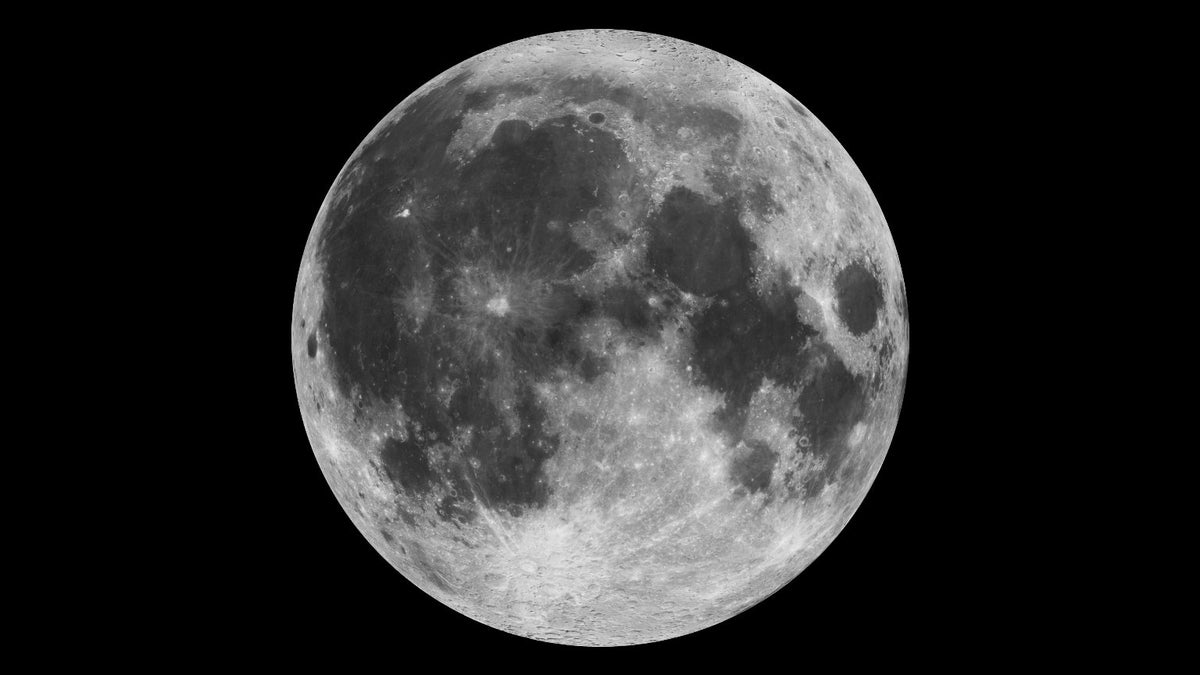
The near side of the moon as seen by in Clementine spacecraft data from 1994.
NASA has launched four astronauts on a pioneering journey around the moon—the Artemis II mission. Follow our coverage here.
The four crew aboard NASA’s Artemis II mission will soon become the first humans to ever see a swath of the far side of the moon while it’s illuminated—and scientists have tasked them with lots of reconnaissance work to do.
NASA astronauts Reid Wiseman, Victor Glover and Christina Koch and Canadian Space Agency astronaut Jeremy Hansen will conduct the bulk of that work during a six-hour window on Monday, April 6, as their Orion capsule loops around the far side of the moon.
Then, the astronauts will be consulting a detailed wish list from scientists who have scouted out targets along their path for them to observe. These scientists have plenty of detailed observations of the moon from satellites and the Apollo missions, but the Artemis II crew will be the first people to see the moon up close since 1972—and that matters.
On supporting science journalism
If you’re enjoying this article, consider supporting our award-winning journalism by subscribing. By purchasing a subscription you are helping to ensure the future of impactful stories about the discoveries and ideas shaping our world today.
“The human eye is the most nuanced detector there is, especially when connected to a well-trained human brain,” says Kelsey Young, planetary scientist at NASA Goddard and lunar science lead for the Artemis II mission.
A key feature scientists want the astronauts to notice is the color and brightness of the lunar surface. “A common misconception is the moon is black and white,” Young says. “But when astronauts have a chance to let their eyes become accustomed to what they’re seeing, they can detect subtle color nuances.”
Apollo astronauts emphasized this in their reports back home—Apollo 12 astronaut Alan Bean even became a painter after his flight, with his art displaying the colorful lunar surface. And during Apollo 17, geologist and astronaut Harrison Schmitt famously noticed a patch of orange dust that later analyses revealed told a story about volcanic activity on the moon that scientists hadn’t expected.
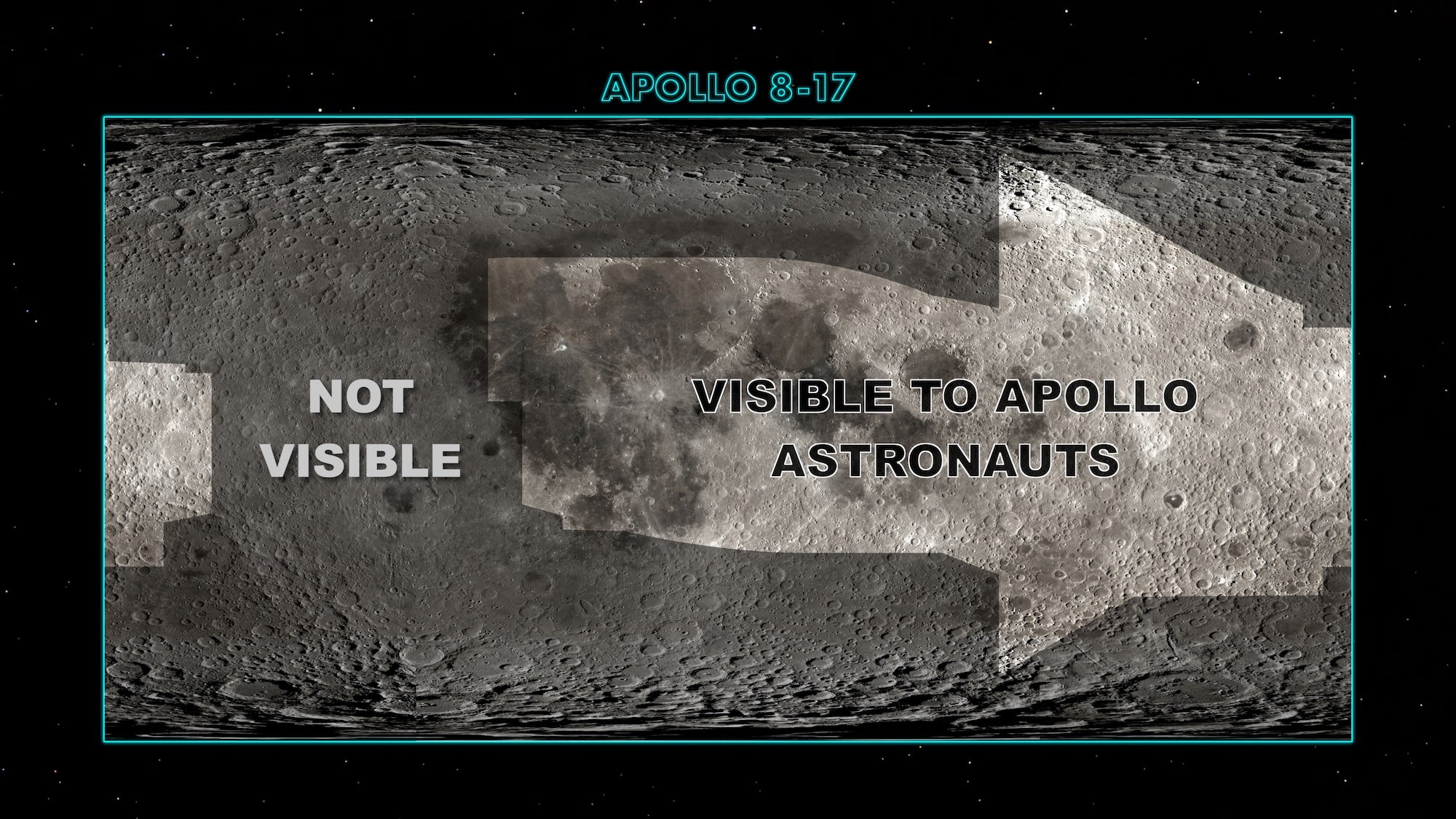
A global map of the lunar surface comparing the portions astronauts have seen before and those they haven’t.
“Color is really important for us,” Young says. “Color traces back to formation process and evolution, so it tells us something about geological processes and how recently they were active at the moon.”
Although some Apollo astronauts orbited the moon much closer to the surface than the Artemis II crew will pass, their greater distance—about 4,000 miles (6,000 kilometers) above the moon—offers a different perspective and could provide more context for their observations, Young says. During the flyby, about 20 percent of the moon’s far side will be sunlit.
Before Artemis II even launched, the crew memorized 15 distinctive features on the moon to help them stay oriented throughout the flight. One of those is of particular scientific interest, Young says: the Orientale basin. This massive impact crater is located along the edge of the moon as seen from Earth, where the near and far sides meet.
Scientists believe the Orientale basin formed about 3.8 billion years ago, after a 40-mile-wide impactor slammed into the moon. The massive amounts of debris that impact created then crashed back to the lunar surface, creating a tidal wave 11 times taller than Mount Everest and then sloshing around for two hours to form the outer two of the basin’s three concentric rims. The innermost rim formed later, when a mountain at the crater’s center collapsed.
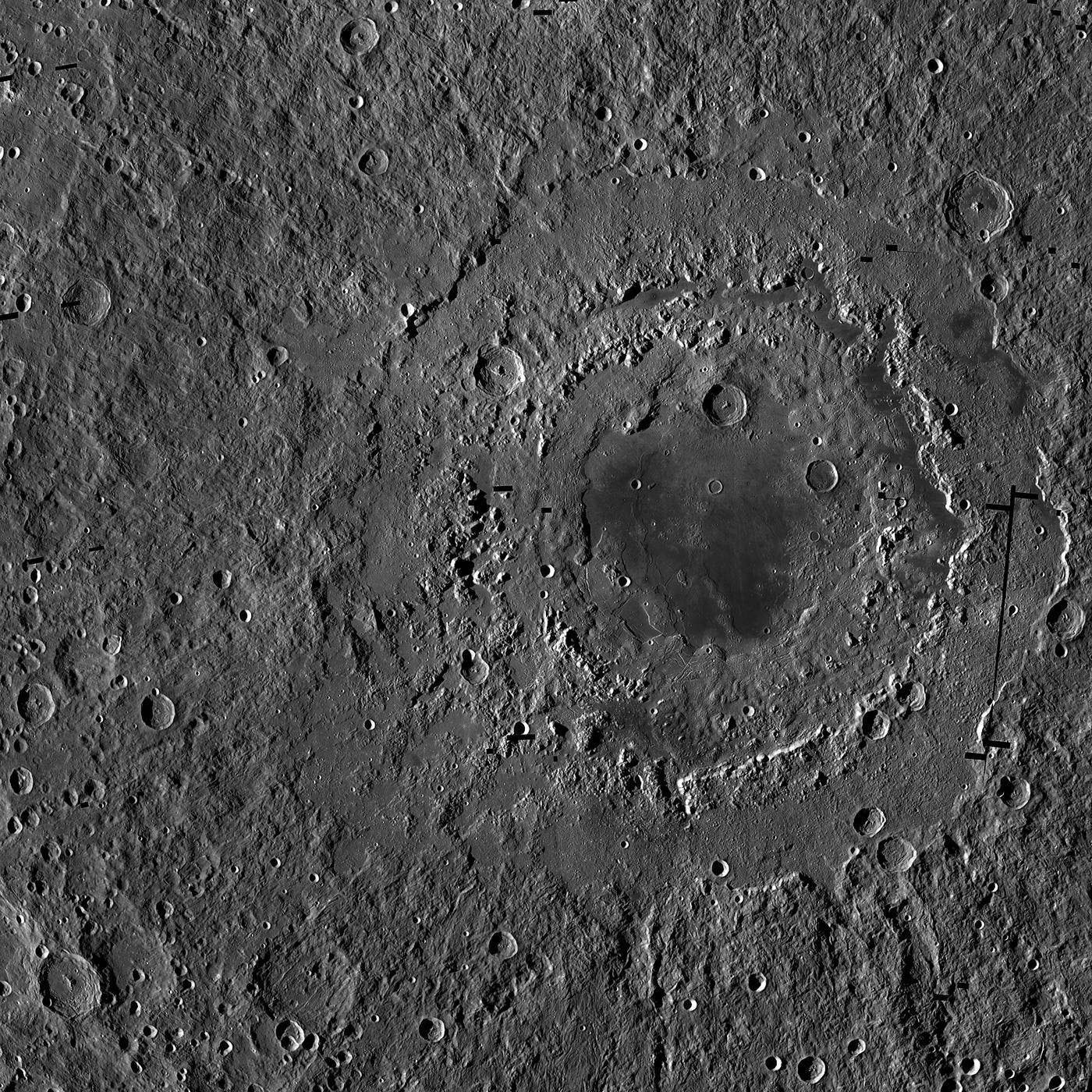
A view of Orientale basin created by the Lunar Reconnaissance Orbiter.
NASA/GSFC/Arizona State University
Orientale is a scientific archetype, offering clues to similar impacts on even more distant worlds, Young says. But “Apollo crews never saw it,” she says. The Artemis II astronauts will be the first humans to observe the famous crater directly.
A second feature that the crew will see for the first time is the far side’s Ohm crater, a relatively new impact site with particularly bright rays—this is what scientists call the lines splaying out from a crater. A third, the Pierazzo crater, is located within the debris released by the Orientale impact and sports dark lines of lunar rock that melted, flowed and then froze. Another crater in the planned observations—which could only be finalized after Artemis II launched on Wednesday—will be Glushko crater, a young large crater near the edge of the moon.
Throughout the observing period, the astronauts will also be keeping their eyes peeled for impact flashes, caused when debris slams into the moon in real time as it has for billions of years.
As part of their mission training, the Artemis II astronauts learned how to communicate what they observe with such precision and detail that scientists can see the moon through their eyes. In addition, scientists have prepared specific prompts that crewmembers can reference as they observe each target to guide the report they provide.
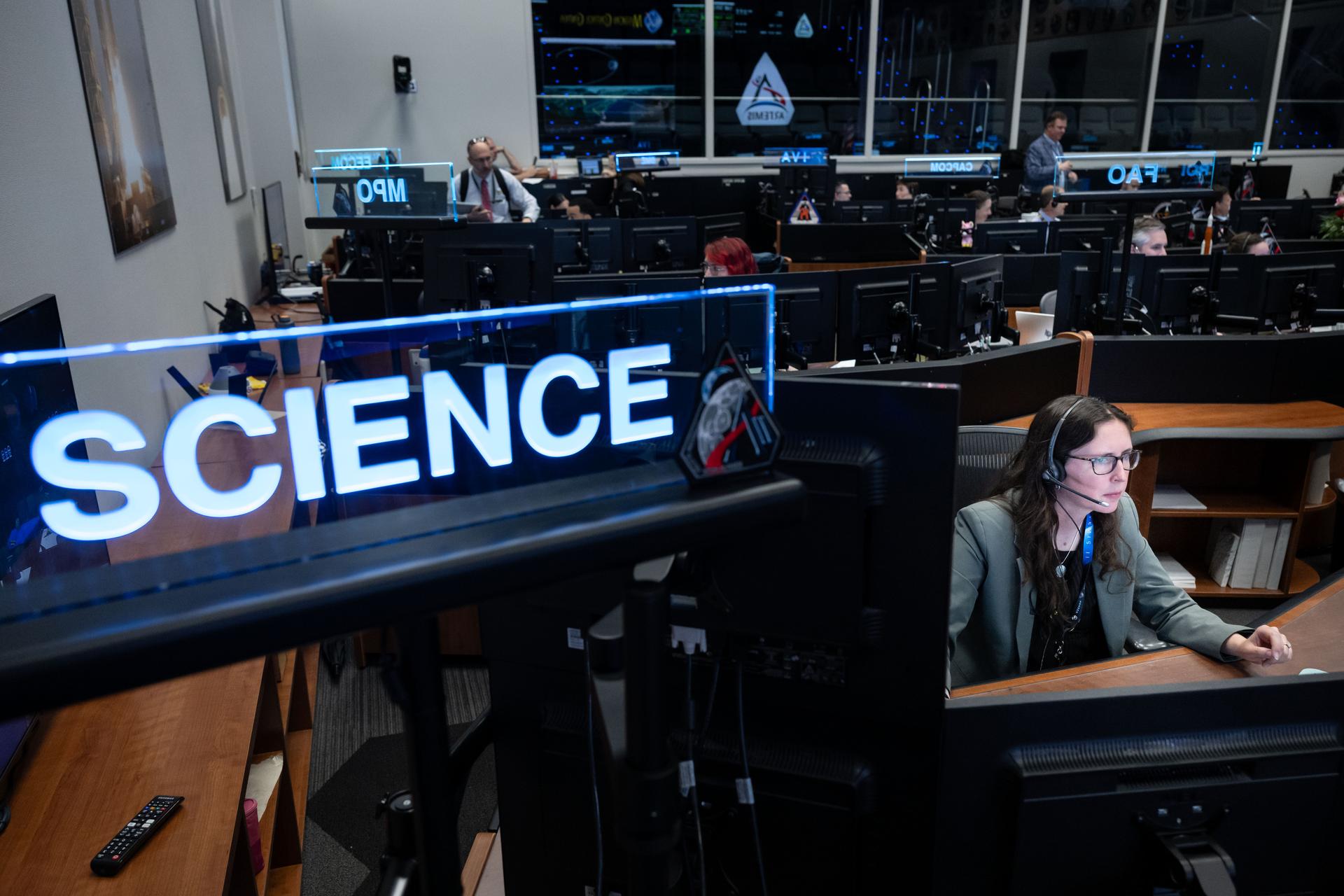
Artemis II science officer Kelsey Young at the Science console in Mission Control.
The astronauts have already begun providing initial descriptions from more than 100,000 miles (160,000 kilometers) away, Young says—but she knows the best is yet to come. She isn’t alone—scientists will fill at least two “back rooms” at NASA’s Johnson Space Center in Texas during the flyby, where they will be on standby for any support needed during the operation. Meanwhile, Young will be posted at a desk in Mission Control: the science console, a new addition to the room since the Apollo era.
“I am excited for the moon to feel a lot closer on Monday than it does right now,” Young says. “I cannot wait.”
It’s Time to Stand Up for Science
If you enjoyed this article, I’d like to ask for your support. Scientific American has served as an advocate for science and industry for 180 years, and right now may be the most critical moment in that two-century history.
I’ve been a Scientific American subscriber since I was 12 years old, and it helped shape the way I look at the world. SciAm always educates and delights me, and inspires a sense of awe for our vast, beautiful universe. I hope it does that for you, too.
If you subscribe to Scientific American, you help ensure that our coverage is centered on meaningful research and discovery; that we have the resources to report on the decisions that threaten labs across the U.S.; and that we support both budding and working scientists at a time when the value of science itself too often goes unrecognized.
In return, you get essential news, captivating podcasts, brilliant infographics, can’t-miss newsletters, must-watch videos, challenging games, and the science world’s best writing and reporting. You can even gift someone a subscription.
There has never been a more important time for us to stand up and show why science matters. I hope you’ll support us in that mission.