
Close Menu
    Trending
    • India denounces ‘hellhole’ remark shared by Trump | Donald Trump News
    • New photos of Mike Vrabel and Dianna Russini emerge
    • AI search demands a new audience playbook
    • How do earthquakes end? A seismic ‘stop sign’ could help predict earthquake risk
    • Trump Announces Cease-Fire Between Israel and Lebanon
    • Google Is Tracking Your Life – Photo Cloud Feeding AI System
    • Rachel Zoe Confronts Amanda Frances In ‘RHOBH’ Reunion Clip
    • China’s DeepSeek says it released long-awaited new AI model
    Benjamin Franklin Institute
    Friday, April 24
    • Home
    • Politics
    • Business
    • Science
    • Technology
    • Arts & Entertainment
    • International
    Benjamin Franklin Institute
    Home»Science»Tobacco plant altered to produce five psychedelic drugs
    Science

    Tobacco plant altered to produce five psychedelic drugs

    Team_Benjamin Franklin InstituteBy Team_Benjamin Franklin InstituteApril 1, 2026No Comments3 Mins Read
    Share Facebook Twitter Pinterest Copy Link LinkedIn Tumblr Email VKontakte Telegram
    Share
    Facebook Twitter Pinterest Email Copy Link


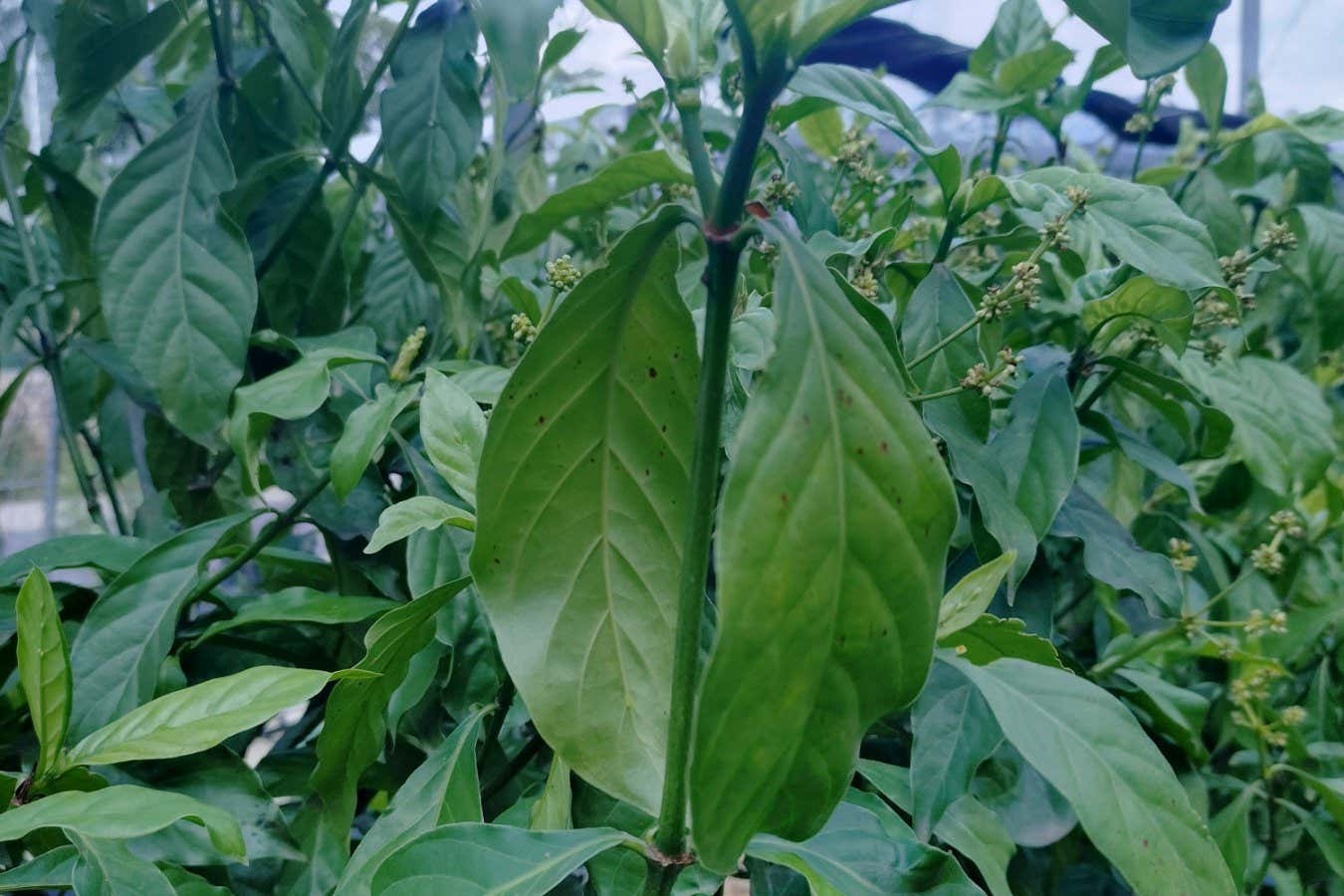
    A tobacco plant has been modified to produce five psychedelic drugs

    Aharoni lab, Weizmann Institute if Science

    Scientists have engineered tobacco plants to produce five powerful psychedelic compounds normally found in other plants, fungi and animals in a single crop. They argue that using plants to manufacture the drugs would be simpler and more sustainable than existing processes, making research into therapeutic uses and production of future medicines easier.

    Asaph Aharoni at the Weizmann Institute of Science in Israel and his colleagues modified Nicotiana benthamiana plants using a technique called agroinfiltration, which involves using a bacterium to introduce genes from other organisms into a plant. The modified plant then makes the proteins encoded by those genes, but the DNA isn’t incorporated into the plant’s genome, so the effect is short-lived.

    With the addition of nine genes, the plants were able to produce psilocin and psilocybin, usually found in mushrooms; DMT from various plants; and bufotenin and 5-methoxy-DMT, compounds secreted by the Colorado river toad (Incilius alvarius).

    Plants could easily be altered permanently with changes that become inheritable, but doing so could be problematic, given that the compounds produced are commonly used as recreational drugs, says Aharoni. “It’s a little bit tricky if we have it inherited, and then people will ask for seeds,” he says. “We can do it also in tomato, potato, corn.”

    The medical uses of psychedelic compounds are becoming more popular and better understood, says Aharoni, but harvesting them from natural sources risks populations threatened by habitat loss and overexploitation. The drugs are chemically synthesised for use in research, but producing them in tobacco plants, which are easily cultivated in greenhouses, would be much simpler.

    The idea of growing drugs through pharmaceutical farming, or “pharming”, certainly isn’t new. Plant-produced protein drugs have been approved in the US since 2012, and as far back as 2002, maize has been modified to produce a pharmaceutical protein. Another research team used tobacco plants in 2022 to synthesise cocaine, discovering that it could produce about 400 nanograms of cocaine per milligram of dried leaf – about a 25th of the level in a coca plant.

    Rupert Fray at the University of Nottingham, UK, says around 25 per cent of prescription drugs are derived wholly or partially from plants, and there are massive opportunities to create “green factories” that can grow new compounds in greenhouses.

    “If you want to understand something, you’ve got to be able to build something, so showing that you can make it in tobacco plants is useful,” says Fray. “As a technical accomplishment, to show that you understand the pathways and can do it, I think it has value.”

    Topics:


    Source link

    Share. Facebook Twitter Pinterest LinkedIn Tumblr Email Telegram Copy Link

    Related Posts

    Science

    How do earthquakes end? A seismic ‘stop sign’ could help predict earthquake risk

    April 24, 2026
    Science

    ‘Kraken’ fossils show enormous, intelligent octopuses were top predators in Cretaceous seas

    April 24, 2026
    Science

    Largest ever octopus was great white shark of invertebrate predators

    April 24, 2026
    Science

    Do you need to worry about Mythos, Anthropic’s computer-hacking AI?

    April 23, 2026
    Science

    How many dachshunds would it take to get to the moon?

    April 23, 2026
    Science

    The Age Code review: Can you slow ageing with your diet? A new book gives it a go

    April 23, 2026
    Editors Picks

    Beware Of February Onward | Armstrong Economics

    February 1, 2026

    Food groups develop a taste for cocoa alternatives

    December 27, 2024

    Why oil prices aren’t what you think – and what it means for global supply | Oil and Gas

    April 13, 2026

    Opinion | Where Is A.I. Taking Us? Eight Leading Thinkers Share Their Visions.

    February 2, 2026

    US plaintiff testifies she was hooked on social media

    February 26, 2026
    About Us
    About Us

    Welcome to Benjamin Franklin Institute, your premier destination for insightful, engaging, and diverse Political News and Opinions.

    The Benjamin Franklin Institute supports free speech, the U.S. Constitution and political candidates and organizations that promote and protect both of these important features of the American Experiment.

    We are passionate about delivering high-quality, accurate, and engaging content that resonates with our readers. Sign up for our text alerts and email newsletter to stay informed.

    Latest Posts

    India denounces ‘hellhole’ remark shared by Trump | Donald Trump News

    April 24, 2026

    New photos of Mike Vrabel and Dianna Russini emerge

    April 24, 2026

    AI search demands a new audience playbook

    April 24, 2026

    Subscribe for Updates

    Stay informed by signing up for our free news alerts.

    Paid for by the Benjamin Franklin Institute. Not authorized by any candidate or candidate’s committee.
    • Privacy Policy
    • About us
    • Contact us

    Type above and press Enter to search. Press Esc to cancel.