

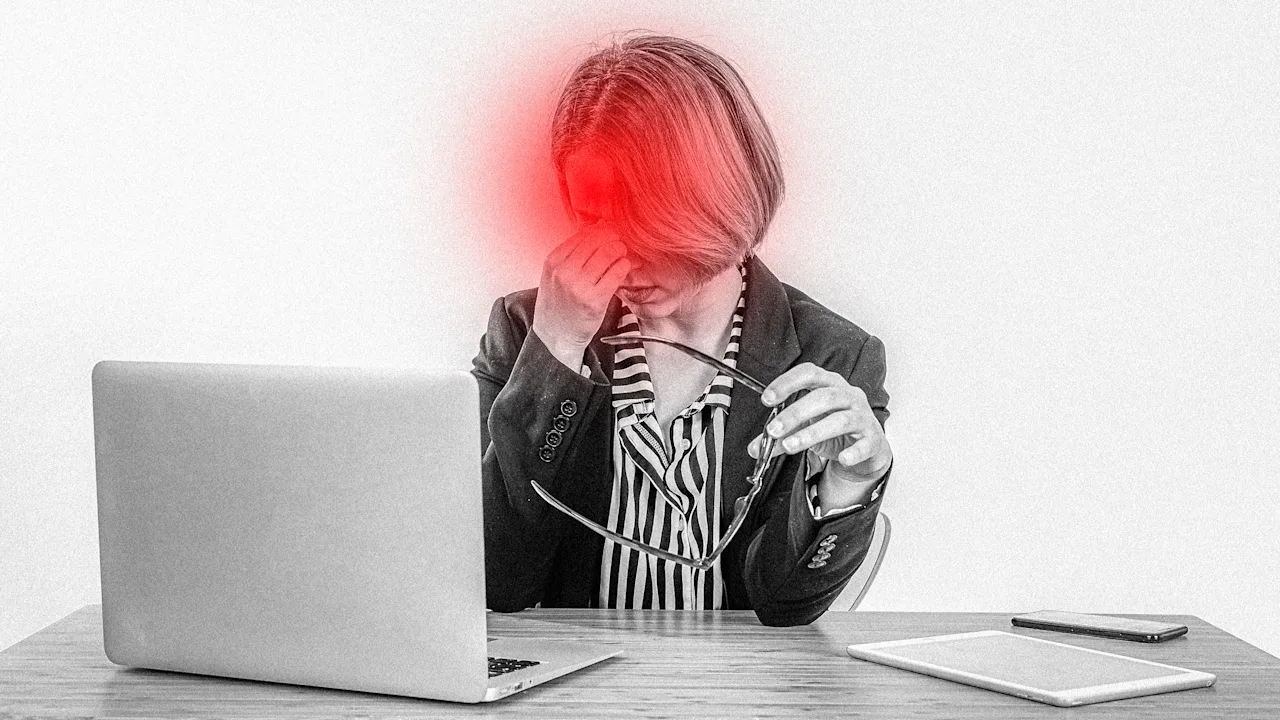
Your back pain gets worse as you sit through a long meeting. Your wrist pain flares when you’re typing furiously to meet a tight deadline. During a busy shift at the grocery store, you feel a migraine coming on.
If that sounds familiar, you’ve got plenty of company. About one in four U.S. adults suffer from chronic pain. The share who say they are in chronic pain either on most days or every day in the past three months is growing: It jumped by nearly 4 percentage points to 23% of U.S. adults in 2023, up from 19% in 2019.
Chronic pain is not only hard on workers trying to do their jobs, but it also takes a toll on employers and the economy as a whole by costing an estimated $722 billion in lost productivity each year.
As management scholars who study how people feel at work, we wanted to understand why chronic pain so often makes it impossible for employees to do their work—and even to keep their jobs.
Bad for your health
With this in mind, we teamed up with two other management researchers, Kimberly Rocheville of Creighton University and Njoke Thomas of Boston College, to conduct a study that Academy of Management Journal published online in January 2026 and will include in an upcoming print edition.
We interviewed 66 people between 2019 and 2021. All of them said that they were in chronic pain—meaning pain that lasts for at least three months. They were all U.S. workers and at least 18 years old. They lived all over the country, in relatively more urban than rural areas. Our sample was 78% women because women tend to experience more chronic pain than men and tend to be more open to talking about their pain.
This professionally diverse group included lawyers, grocery store workers, teachers, police officers, and healthcare professionals. They experienced many different kinds of pain, such as back pain, migraines, arthritis, and fibromyalgia.
We found that this wide array of workers and white-collar professionals pushed through their pain because they felt pressure to have what we call an “ideal worker body”: a body that is healthy and strong enough to do anything their job requires.
Regardless of what job they had, people described a surprisingly similar pressure to perform despite their pain. From warehouse workers to lawyers, people felt they had no choice but to walk without a limp, lift heavy things, and sit still during meetings.
Many of these people felt compelled to be ideal workers who put work before everything else in their lives. Previous research has found that these expectations can harm their mental health. We found that it can harm your physical health too.
Trapped in a cycle of pain and shame
Because they were in chronic pain, all of the participants in our study said their body wasn’t healthy and strong enough to do everything their job required when it required them to do it.
Even though they were more than intellectually capable of doing their work, they felt ashamed that their bodies fell short. This led them to hide their pain. They took the stairs, instead of the elevator, to seem more like their coworkers who felt fine. They avoided managing their pain in ways their colleagues could see, such as by applying ice to areas of their body that were in pain.
Ironically, trying to make it seem like their bodies were ideal worsened pain for all 66 of the people we interviewed. Most of them eventually reached a point where their pain became so intolerable that they could not function at or outside of work.
Some of them ultimately had to leave their jobs and found other ones that were more compatible with their chronic pain symptoms. In a few cases, they exited the workforce entirely.
This is not unusual. Chronic pain is the leading reason for workers becoming eligible for long-term disability benefits.
Breaking free of the cycle
A few of the people we interviewed told us that they managed to escape the damaging cycle of shame and pain.
Why were they able to break free?
First, they found doctors who told them their pain was real. Getting a clear diagnosis and having a medical professional recognize their physical limitations helped them understand that they could never look healthy and strong as expected, no matter how hard they tried.
This released them from the pressure of trying to do so.
Second, most of these people had employers who cared more about what they did—the work itself—and less about how their body looked and moved, even if this meant finding a new job or even changing their profession. As a result, they felt free to ask colleagues for help, stretch during meetings, use dictation software instead of typing, or keep the camera off during Zoom calls so they could lie down when their backs were aching.
They also came up with creative ways of working that were more efficient and better for their bodies. For example, an ultrasound technician told us that she learned to scan patients using both her arms instead of constantly using the same arm. A deli worker said she started using a cart to move heavy meats around the store.
Although we focused on how pressure to be strong and healthy can hurt workers with chronic pain, we believe our findings could matter to everyone—no matter their size, strength, age, or employment status.
After all, it’s possible to feel social pressure to conceal aches and pain when you’re in public settings of any kind. And failing to move around when needed or take care of your body in other ways can make you vulnerable to more pain.
Beth Schinoff is an assistant professor of management at the University of Delaware.
Elana Feldman is an associate professor of management at UMass Lowell.
This article is republished from The Conversation under a Creative Commons license. Read the original article.