
Close Menu
    Trending
    • Negotiations that enable Israel’s land-grabs | Israel-Palestine conflict
    • True-or-false for Round 1 of 2026 NFL Draft: Will Cowboys regret their trade?
    • Opinion | Stewart Brand, Silicon Valley’s Favorite Prophet, on Life’s Most Important Principle
    • Struggling to scale your company? Here are five things that could be holding you back
    • What happens if you’re hit by a primordial black hole?
    • When is London Marathon 2026? Start time and how to watch race for FREE
    • Pentagon Requests $54 Billion For AI War
    • Clavicular Hit With New YouTube Crackdown
    Benjamin Franklin Institute
    Friday, April 24
    • Home
    • Politics
    • Business
    • Science
    • Technology
    • Arts & Entertainment
    • International
    Benjamin Franklin Institute
    Home»Science»We could protect Earth from dangerous asteroids using a huge magnet
    Science

    We could protect Earth from dangerous asteroids using a huge magnet

    Team_Benjamin Franklin InstituteBy Team_Benjamin Franklin InstituteMarch 28, 2026No Comments3 Mins Read
    Share Facebook Twitter Pinterest Copy Link LinkedIn Tumblr Email VKontakte Telegram
    Share
    Facebook Twitter Pinterest Email Copy Link


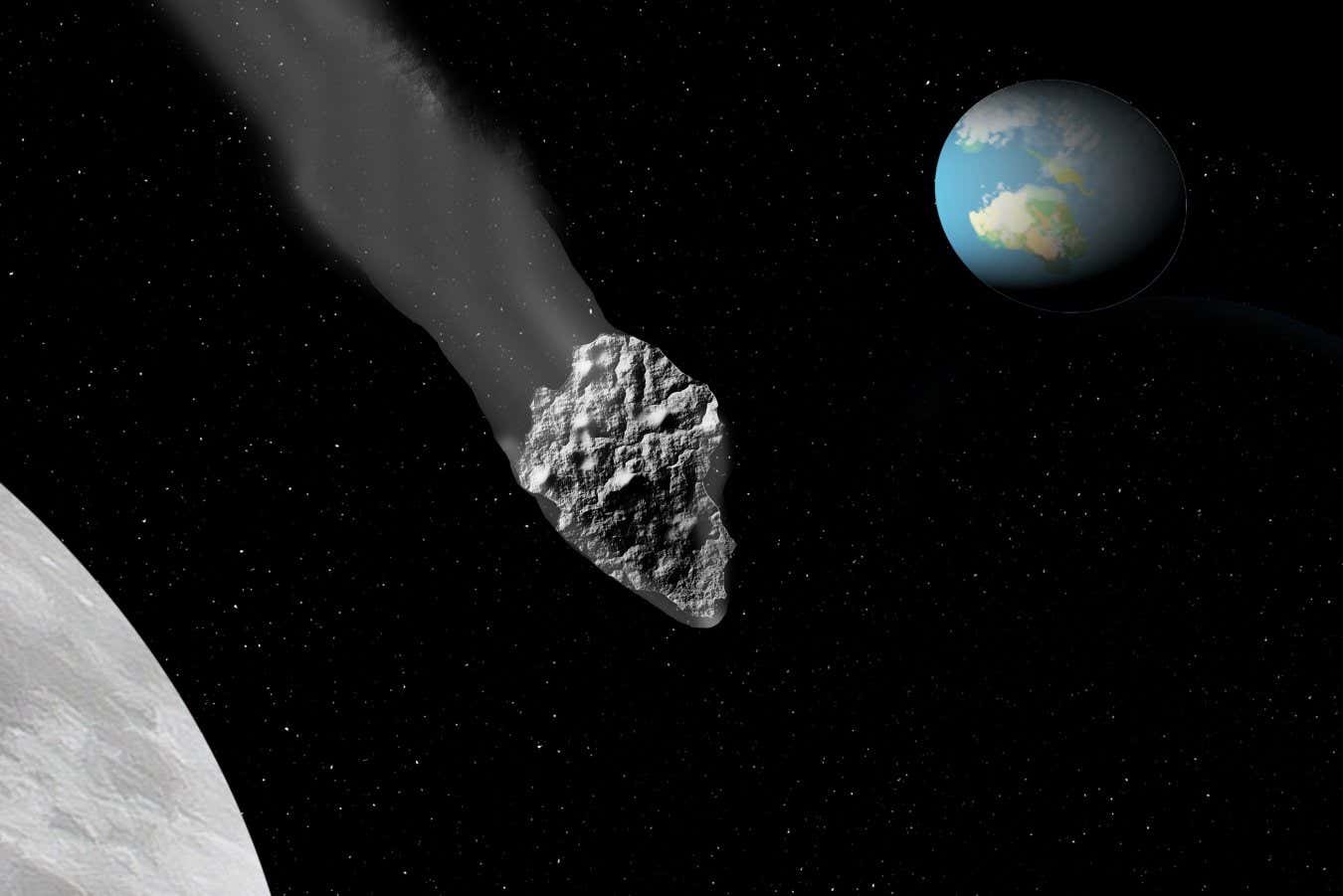
    A magnet could help us divert asteroids away from Earth

    TimothyOLeary/Getty Images

    We could deflect potentially hazardous asteroids by using an enormous magnet to gently pull them apart. This idea avoids some of the pitfalls of the more traditional kinetic impactor method, which involves smashing something into an asteroid to move it, but it has yet to be tested, so we can’t be sure it would work.

    The idea is called non-contact orbital velocity adjustment, or NOVA, and Gunther Kletetschka at the University of Alaska Fairbanks presented it at the Lunar and Planetary Science Conference in Texas on 17 March.

    In his calculations, he applied the NOVA concept to an asteroid called 2024 YR4, which briefly seemed like it might be on a trajectory to hit Earth or the moon in 2032, although further observations showed that it will pass safely by. The asteroid is small, less than 70 metres across, so it would present a relatively simple target to shift.

    The spacecraft itself would consist of a large magnet made from a coil of superconducting wire, about 20 metres in diameter, powered by a nuclear fission reactor. Small boosters would control its orbit around the asteroid, keeping it about 10 to 15 metres from the rock, so the magnet could act on the iron within the asteroid.

    If the asteroid were one large chunk of iron, the magnet could simply pull it off track, but most asteroids aren’t single huge rocks, but agglomerations of many smaller rocks only barely held together by gravity, called rubble piles.

    “Because we have this rubble pile-like structure with essentially zero tensile strength, we cannot efficiently push on the whole body because it’s like pushing on one boat among many boats on the ocean,” said Kletetschka in his talk. A kinetic impactor would run the risk of breaking the asteroid apart, leaving us to deal with many fragments raining down on Earth.

    Instead, an orbiting NOVA spacecraft would slowly pull rocks from the rubble pile and capture them in a magnetic trap at the centre of its coil. Each fragment collected would increase both the mass and the magnetic field of the spacecraft, making the next fragment easier to extract.

    Essentially, it would slowly shrink the asteroid and move it, while turning the spacecraft into a second asteroid that, crucially, we could control. To deflect 2024 YR4 entirely, Kletetschka calculated that it would take at least 170 days of continuous operations.

    “This electromagnetic deflection is plausible, but we have critical uncertainties,” he said. For one, we don’t know exactly how much iron is in 2024 YR4, although an educated guess based on comparisons with other asteroids suggests it would be enough. For another, manoeuvring a spacecraft so close to an asteroid for such an extended period of time hasn’t been done before and would be difficult.

    However, Kletetschka said, adding a tool to our planetary defence toolbelt couldn’t be a bad thing, especially as it would have essentially zero risk of worsening the problem.

    Topics:


    Source link

    Share. Facebook Twitter Pinterest LinkedIn Tumblr Email Telegram Copy Link

    Related Posts

    Science

    What happens if you’re hit by a primordial black hole?

    April 24, 2026
    Science

    How do earthquakes end? A seismic ‘stop sign’ could help predict earthquake risk

    April 24, 2026
    Science

    ‘Kraken’ fossils show enormous, intelligent octopuses were top predators in Cretaceous seas

    April 24, 2026
    Science

    Largest ever octopus was great white shark of invertebrate predators

    April 24, 2026
    Science

    Do you need to worry about Mythos, Anthropic’s computer-hacking AI?

    April 23, 2026
    Science

    How many dachshunds would it take to get to the moon?

    April 23, 2026
    Editors Picks

    Russia turning occupied Donbas into ‘huge military base to frighten Europe’ | Russia-Ukraine war News

    January 14, 2026

    Trump says he is raising tariffs on certain South Korean imports to 25%

    January 27, 2026

    How to navigate a boss who keeps changing priorities

    February 24, 2026

    Severe weather in Gaza hits vulnerable and wounded most in Israel’s war | Israel-Palestine conflict News

    January 3, 2026

    Two high-speed trains collide in Spain, killing at least 21 | Transport News

    January 18, 2026
    About Us
    About Us

    Welcome to Benjamin Franklin Institute, your premier destination for insightful, engaging, and diverse Political News and Opinions.

    The Benjamin Franklin Institute supports free speech, the U.S. Constitution and political candidates and organizations that promote and protect both of these important features of the American Experiment.

    We are passionate about delivering high-quality, accurate, and engaging content that resonates with our readers. Sign up for our text alerts and email newsletter to stay informed.

    Latest Posts

    Negotiations that enable Israel’s land-grabs | Israel-Palestine conflict

    April 24, 2026

    True-or-false for Round 1 of 2026 NFL Draft: Will Cowboys regret their trade?

    April 24, 2026

    Opinion | Stewart Brand, Silicon Valley’s Favorite Prophet, on Life’s Most Important Principle

    April 24, 2026

    Subscribe for Updates

    Stay informed by signing up for our free news alerts.

    Paid for by the Benjamin Franklin Institute. Not authorized by any candidate or candidate’s committee.
    • Privacy Policy
    • About us
    • Contact us

    Type above and press Enter to search. Press Esc to cancel.