

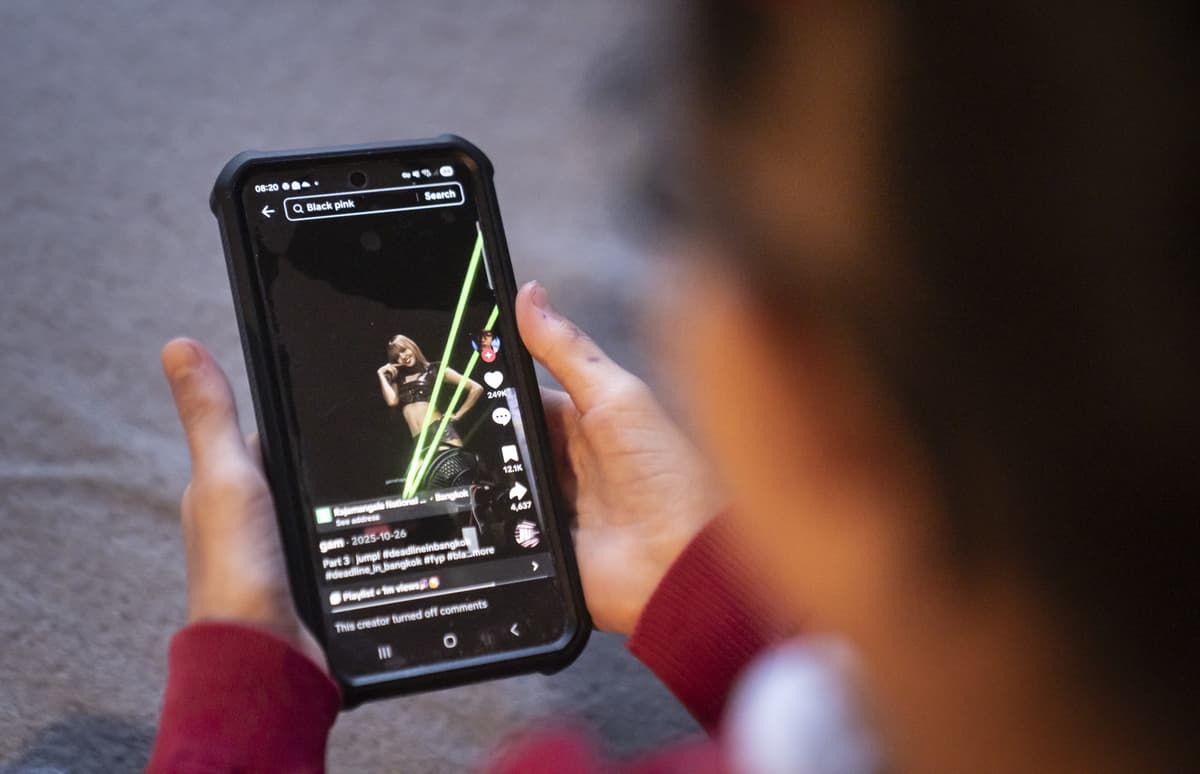
The Government has today released its first official screen-time guidance for parents of young children.
Children under five should be limited to no more than one hour of screen time per day, while those under two should not use screens alone, as per government advice.
“Children’s screen use in the early years is changing rapidly, not just in how much they watch, but in the type of content they engage with,” Professor Sam Wass, Director of the Institute for the Science of Early Years and Youth at UEL, said.
“Young brains process sights and sounds very differently from adults, and early experiences can have lasting effects on attention, learning and emotional wellbeing. Guidance like this helps families make informed choices about media use, supporting healthy development and stronger family connections.
File Image
PA Wire
“This is an area where our understanding is changing fast, and where small changes can make a big difference.”
Here, the Standard breaks down the guidance to help parents navigate the new recommendations.
What does the guidance recommend?
Children under the age of two should avoid screen time entirely, as per the guidance, unless it is for shared activities that encourage bonding and conversation, like video calling family.
For two to five-year-olds, parents are advised to aim for no more than one hour of screen time a day and to keep screens out of mealtimes and the hour before bed.
Parents are being advised to choose slower-paced content, programmes with simple stories and fewer scene changes and to stay away from fast-paced videos.
Videos with rapid cuts can overstimulate young brains, the advice states.
The guidance also advises against using AI tools or chatbots with young children due to the risk of emotional dependency and because they are particularly vulnerable to harmful content.
The government also advises healthy swaps, for example, swapping bedtime shows for reading books together or swapping background TV for active play.
The guidance is underpinned by the findings of an expert panel led by the Children’s Commissioner Dame Rachel de Souza and Professor Russell Viner, a paediatrician and expert in children’s health.
The panel reviewed the latest scientific evidence on screen use in under 5s, and found that long periods of time spent on screens alone can get in the way of activities critical for development like sleep, physical activity, creative play, and interaction with parents.
But not all screen use is equal, with evidence showing that watching screens with an engaged adult where parents talk and ask questions is linked to better cognitive development than solo use, that slow-paced content is far better for development than fast-paced social media-style videos, and that time limits shouldn’t apply in the same way for screen-based assistive technologies to support children with special educational needs and disabilities.
What has the Government said?
Referring to the new guidance, Prime Minister Keir Starmer, said: “Parenting in a digital world can feel relentless. Screens are everywhere, and the advice is often conflicting.
“My government will not leave parents to face this battle alone.
“Our new guidance cuts through the noise with clear, common‑sense tips to keep children safe and make sure healthy habits are baked in from the start.
“There will be some who will oppose us doing this. But whether it’s navigating technology, tackling the cost of living or balancing the demands of family life, I will always stand on the side of parents doing their best for their children.”
Education Secretary, Bridget Phillipson, added: “Every child deserves the chance to grow up safe, healthy and full of possibility – and this government is determined to ensure that happens. “I know how hard it is to navigate parenting in a world full of screens.
“They’re unavoidable, but it often feels impossible to tell whether you’re getting the balance right.
“That’s why we’re giving parents the clear, trusted support they’ve asked for – so families can make informed choices, and children can have the childhood they deserve.”
According to the latest data from University College London’s Children of the 2020s study, higher screen use among children is linked to poorer language development and higher rates of emotional and behavioural difficulties.
Data was analysed from more than 4,700 parents of two-year-old children in England.
Almost all of the two-year-olds (98 per cent) viewed screens on a typical day, and they did so for an average of 129 minutes a day.
Only 34 per cent met the WHO recommendation of one hour or less of screen time on a typical day, while a fifth of toddlers also regularly played computer games.
Researchers found that children who spent the most time on screens (an average of five hours a day) scored lower in vocabulary tests than those who spent the least time (an average of 44 minutes a day).