

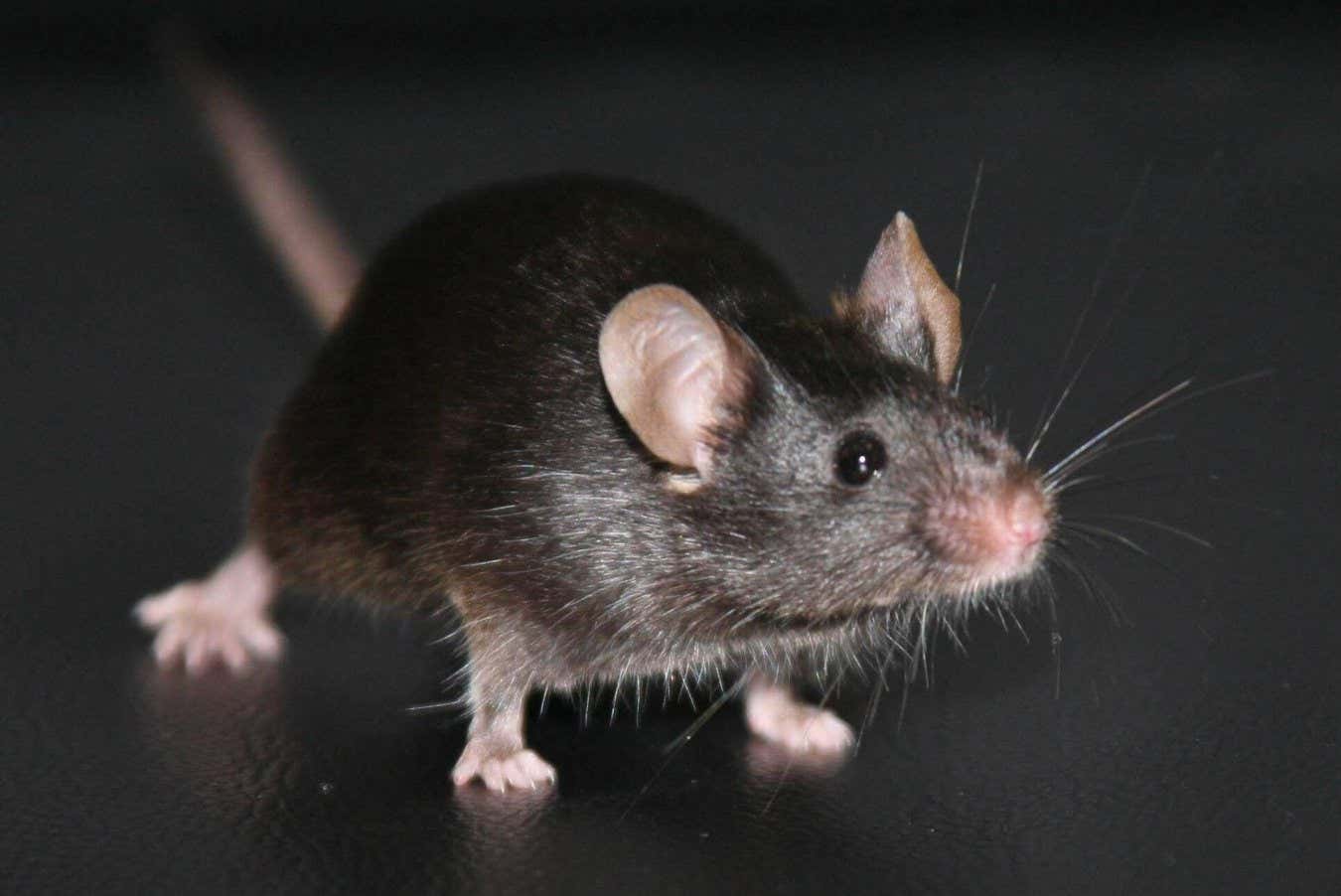
Mice can only be repeatedly cloned for so long
Xinhua/Zhou Qi/Imago/Alamy
A clone is meant to be a genetically identical copy, but an extraordinary 20-year study has shown that this isn’t, in fact, the case. It reveals that clones have lots of extra mutations and, if you keep cloning clones, these build up to fatal levels. The findings have implications for the use of cloning in farming and for saving endangered animals, including efforts to recreate extinct species, as well as for the potential use of cloning technology in people.
The big question is why there are so many more mutations in clones. It could just be that the adult body cells that are being cloned accumulate more mutations than egg or sperm cells do. But Teruhiko Wakayama at Yamanashi University in Japan thinks the cloning process itself could be causing at least some of them. “Unfortunately, however, while clones were once thought to be identical to the original, it has become clear that this is not the case, suggesting that there may be issues with their use,” he says. “Going forward, we need to demonstrate that mutations arising from cloning do not pose problems.”
Cloning mammals was once thought impossible because, as cells in the body develop and specialise, various chemical tags that control gene activity are added to, or removed from, parts of the genome. Skin cell DNA, say, is “programmed” to make skin cells. But the birth of Dolly the sheep in July 1996 showed that transferring the nucleus of an adult cell into an empty egg could reprogram its genome and allow the egg to develop. Soon afterwards, Wakayama created Cumulina, the first cloned mouse, born in October 1997.
To test how well his team’s mouse-cloning method was working, in 2005 Wakayama started cloning clones. “Just as copying a painting results in lower image quality, I wanted to verify how clones compare to the original,” he says.
In 2013, he and his colleagues announced that they had repeatedly cloned clones for 25 successive generations, generating more than 500 mice from the original donor. “The cloned mice produced in our experiments showed no physical abnormalities in any generation, lived just as long as normal mice and were healthy,” says Wakayama.
This success hasn’t been achieved with other species, though – there is still a high rate of health problems in cloned dogs and no one has yet cloned any primate from an adult cell. But in mice, Wakayama thought repeated cloning could continue indefinitely. Yet as his team continued doing the experiments, the success rate fell until finally, by the 58th generation, none of the clones survived.
To find out why, the team has now sequenced the genomes of 10 mice from various generations. This revealed that there were more than 70 mutations, on average, per clone generation – three times as many as seen in a control group of mice that reproduced naturally. In particular, large-scale mutations started to build up in the cloned mice after the 27th generation, with an entire X chromosome eventually being lost.
The explanation could simply be that animals have evolved ways to protect sperm and egg cells from mutations and to weed out harmful mutations during sexual reproduction, meaning that the adult body cells end up with far more mutations. For instance, a recent study found that mutations accumulated eight-times faster in blood cells compared with sperm. So if the adult cells that are cloned have more mutations to start with, the clones will too.
But Wakayama thinks the nuclear transfer process itself is causing some of the extra mutations. “It is not surprising that the nucleus – that is, the DNA – might be damaged by the physical shock,” he says. “I believe that if we could develop a gentler method of nuclear transfer, we might be able to reduce the mutation rate in cloned embryos. However, I don’t have any ideas on how to achieve this yet.”
Shoukhrat Mitalipov at Oregon Health & Science University is sceptical. “Any observed increase in mutation rates in clones is more likely to reflect the genomic state of the donor cells, rather than a uniform effect of the nuclear transfer process itself,” he says.
While human cloning is banned in many countries, researchers such as Mitalipov are exploring the use of nuclear transfer to generate matching tissues or organs for medical treatments, and for generating sperm and egg cells to treat infertility. Wakayama’s results show the importance of careful donor cell selection and screening if this is done, says Mitalipov. “Ideally, donor cell populations should be evaluated for deleterious variants. Where necessary, gene-editing approaches could be used to correct known harmful mutations.”
But if the cloning process itself is inducing mutations, this wouldn’t be enough. To be clear, these findings don’t mean that cloning techniques are too risky to use – the per-generation mutation rate is still relatively low and cells can be screened after cloning to check for dangerous mutations – but they do show there are even more potential issues than we thought. An already problematic technology just got even more so.