

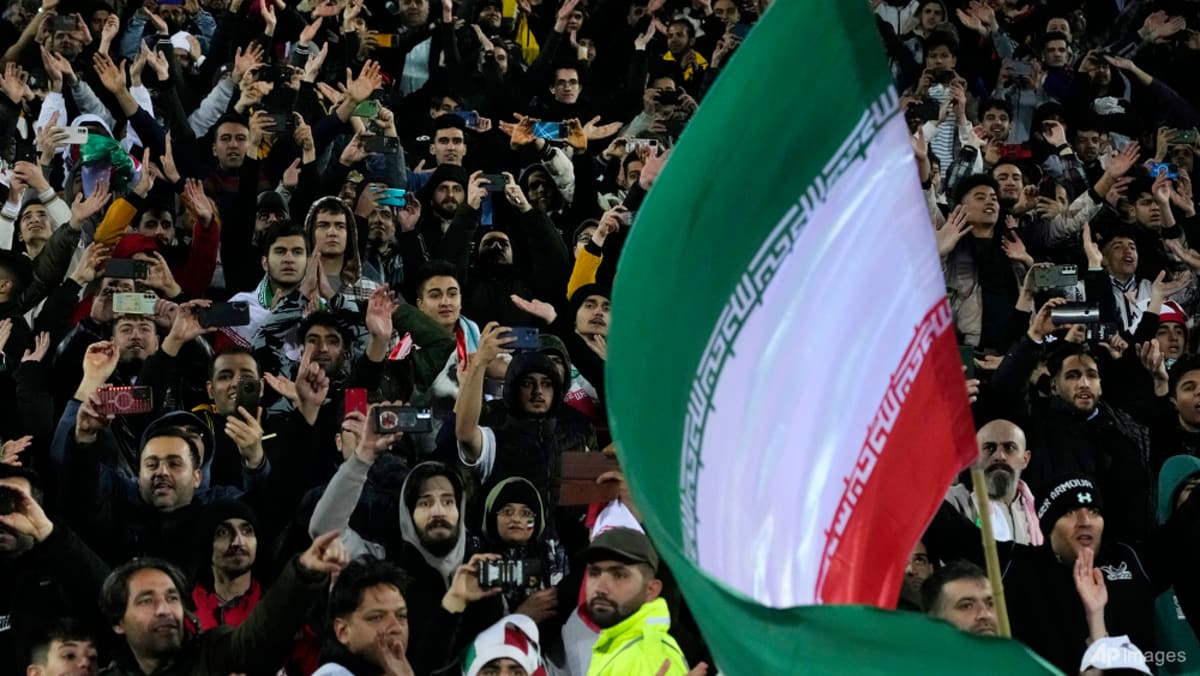
POLITICAL FOOTBALL
FIFA states it is a “politically neutral” body. But this has not stopped it excluding Russia from qualifying matches for the 2026 World Cup.
FIFA insists it did so for operational reasons: Many countries refused to play against Russia, and if games were scheduled there would be concerns about security.
Privately, Infantino might be relieved Israel did not qualify for the World Cup, as both of these considerations may have come to light in the wake of the Gaza war and more recent attacks against Lebanon and Iran.
The withdrawal (or banning) of a team from the World Cup or qualifying matches has happened on a few occasions.
In 1950, travel costs to South America were a problem for India, Turkey and France, who all withdrew from that tournament, while Scotland declined to participate after losing the British Home Championship to England.
In 1958, Indonesia withdrew from qualifying after refusing to play Israel.
In 1994, Yugoslavia was banned from qualifying matches after the United Nations instituted a sport boycott against Serbia and Montenegro in respect of the Balkan conflict.
In each of these cases there were no follow-up penalties by FIFA.
If Iran withdraws from the World Cup, will FIFA sanction the FFIRI and, by extension, the national men’s team? A yellow card is feasible – a financial penalty. A red card is also possible – such as exclusion from the 2030 World Cup.
However, FIFA has the discretion not to impose any penalty, especially as the circumstances go beyond sport and have no parallel in World Cup history.
Daryl Adair is Associate Professor of Sport Management at University of Technology Sydney. This commentary first appeared on The Conversation.