

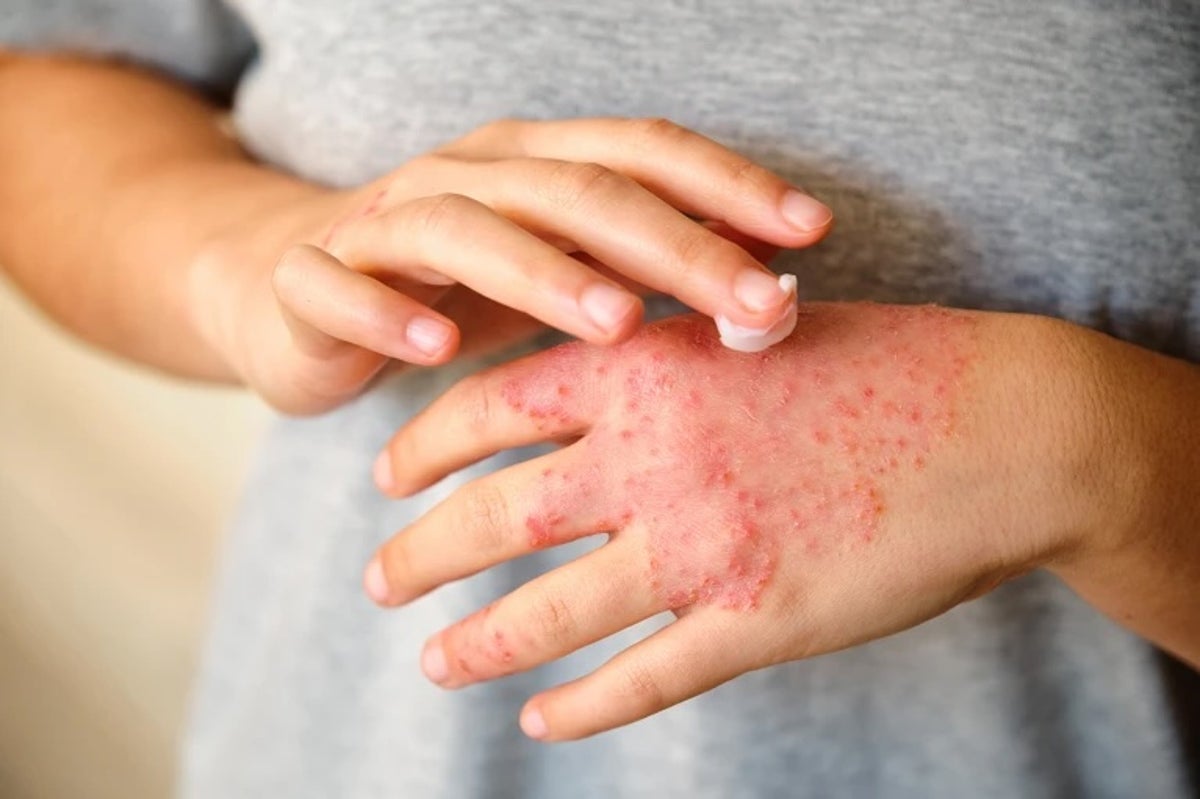
How stress causes an eczema flare up
Scientists have identified the neurons that worsen the condition during stress
Soothing the skin can help reduce eczema flare-ups.
Ladanifer/iStock via Getty
For people with eczema, stress can trigger flare-ups and worsen their itchy rashes. But the link between stress and skin inflammation has been unclear.
Now, researchers have identified a network of neurons that respond to stress by activating immune cells in the skin, fuelling eczema symptoms.
The findings, published in Science today, come from a mouse model of atopic dermatitis (AD) — a type of chronic eczema that affects more than 200 million people worldwide.
On supporting science journalism
If you’re enjoying this article, consider supporting our award-winning journalism by subscribing. By purchasing a subscription you are helping to ensure the future of impactful stories about the discoveries and ideas shaping our world today.
The study shows “how a feeling, such as psychological stress, can translate into a biological event, namely inflamed skin,” says co-author Shenbin Liu, a neurobiologist at Fudan University in Shanghai, China.
Allergic skin diseases, such as AD, are caused by overactive immune responses that attack the body’s own skin cells. Some people with the condition have a build-up of immune cells called eosinophils in the affected skin tissues, which exacerbates inflammation. But what drives these cells to the skin and activates them in AD hasn’t been clear.
Itchy cells
In an analysis of skin biopsies and blood samples from 51 people with AD, the researchers found that those who reported high stress levels had more severe skin inflammation and higher levels of eosinophils than did participants who reported low stress levels.
To understand what activates this inflammatory signal, the authors created a mouse model of AD that exhibited symptoms such as skin redness, itching and inflammatory responses. When these mice experienced psychological stress, their AD symptoms, such as itching, worsened. Biopsied skin from these stressed animals held four times as many eosinophils as did skin from non-stressed controls.
To trace the neural signals linking stress and inflammation, the authors analysed the nerve cells in the skin and identified a group of neurons that were activated by stress. These cells received signals from the central nervous system that are involved in stress responses, while producing inflammatory proteins that bring eosinophils to the skin.
Activating these neurons more than doubled the proportion of eosinophils in the skin of AD mice, whereas blocking them stopped stress from making symptoms worse. Liu says the findings point to highly targeted treatments, such as blocking stress‑responsive nerves or the inflammatory molecules that they produce.
The work linking stress and eczema “is an important piece to the puzzle”, says Wolfgang Weninger, a clinical dermatologist at the Medical University of Vienna. “But it needs to be translated into humans as the next step.”
This article is reproduced with permission and was first published on March 19, 2026.
It’s Time to Stand Up for Science
If you enjoyed this article, I’d like to ask for your support. Scientific American has served as an advocate for science and industry for 180 years, and right now may be the most critical moment in that two-century history.
I’ve been a Scientific American subscriber since I was 12 years old, and it helped shape the way I look at the world. SciAm always educates and delights me, and inspires a sense of awe for our vast, beautiful universe. I hope it does that for you, too.
If you subscribe to Scientific American, you help ensure that our coverage is centered on meaningful research and discovery; that we have the resources to report on the decisions that threaten labs across the U.S.; and that we support both budding and working scientists at a time when the value of science itself too often goes unrecognized.
In return, you get essential news, captivating podcasts, brilliant infographics, can’t-miss newsletters, must-watch videos, challenging games, and the science world’s best writing and reporting. You can even gift someone a subscription.
There has never been a more important time for us to stand up and show why science matters. I hope you’ll support us in that mission.