
Close Menu
    Trending
    • India denounces ‘hellhole’ remark shared by Trump | Donald Trump News
    • New photos of Mike Vrabel and Dianna Russini emerge
    • AI search demands a new audience playbook
    • How do earthquakes end? A seismic ‘stop sign’ could help predict earthquake risk
    • Trump Announces Cease-Fire Between Israel and Lebanon
    • Google Is Tracking Your Life – Photo Cloud Feeding AI System
    • Rachel Zoe Confronts Amanda Frances In ‘RHOBH’ Reunion Clip
    • China’s DeepSeek says it released long-awaited new AI model
    Benjamin Franklin Institute
    Friday, April 24
    • Home
    • Politics
    • Business
    • Science
    • Technology
    • Arts & Entertainment
    • International
    Benjamin Franklin Institute
    Home»Latest News»Where do the 35 million foreigners living in the GCC come from? | Infographic News
    Latest News

    Where do the 35 million foreigners living in the GCC come from? | Infographic News

    Team_Benjamin Franklin InstituteBy Team_Benjamin Franklin InstituteMarch 9, 2026No Comments4 Mins Read
    Share Facebook Twitter Pinterest Copy Link LinkedIn Tumblr Email VKontakte Telegram
    Share
    Facebook Twitter Pinterest Email Copy Link


    EXPLAINER

    More than half of the 62 million people in the six Gulf Cooperation Council (GCC) countries are foreign workers.

    Nearly 62 million people living in the six Gulf Cooperation Council (GCC) countries have been caught in the crossfire of the latest US-Israel war on Iran.

    Known for their economic opportunities, these countries, including Bahrain, Kuwait, Oman, Qatar, Saudi Arabia and the United Arab Emirates (UAE), collectively host nearly 35 million foreign workers from around the world, predominantly from South Asia.

    Recommended Stories

    list of 4 itemsend of list

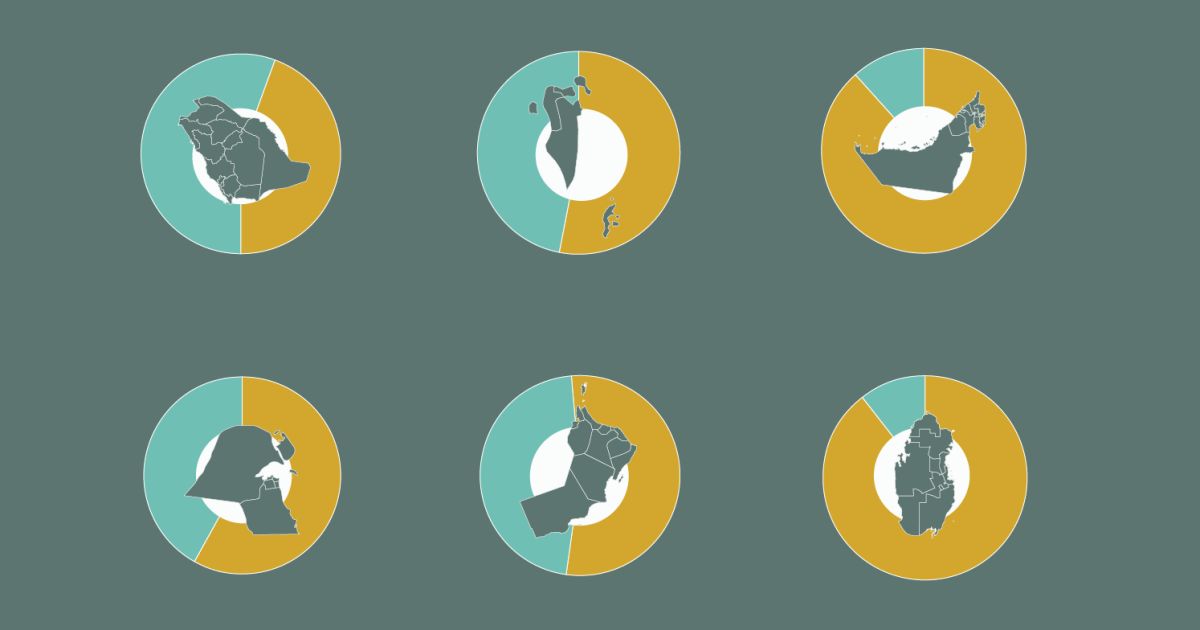
    With the exception of Saudi Arabia and Oman, foreign workers make up the bulk of the populations of people living in the remaining four GCC countries.

    The map below illustrates the national and non-national populations in each of the GCC countries.

    Where do GCC foreign workers come from?

    Generations of foreign workers in the GCC countries have significantly contributed to the workforce, including labourers, construction workers, household staff, security personnel, and cleaners, all vital to building the modern infrastructures that Gulf nations are known for.

    Millions consider the Gulf their home, despite holding nationalities from other countries.

    Additionally, highly skilled foreign workers have a long history in industries such as banking, finance, technology, engineering, aviation, medicine and the media.

    According to Global Media Insight, a digital marketing agency based out of the UAE,  the 10 largest groups of non-nationals living across the six GCC countries are from:

    • India: 9.1 million
    • Bangladesh: 5 million
    • Pakistan: 4.9 million
    • Egypt: 3.3 million
    • Philippines: 2.2 million
    • Yemen: 2.2 million
    • Sudan: 1.1 million
    • Nepal: 1.2 million
    • Syria: 694,000
    • Sri Lanka: 650,000

    Interactive_WhereDo_Expats_GCC_COUNTRY_NATIONALITY_MARCH9_2026

    Saudi Arabia

    Saudi Arabia is the largest of the six GCC countries, with a population of nearly 37 million.

    riyadh
    Aerial view of Riyadh city is seen from Mamlaka tower, a 99-story skyscraper, in Riyadh, Saudi Arabia [Amr Nabil/AP Photos]

    The oil-rich country has a local population of about 20.5 million and an additional 16.4 million foreign residents.

    The five largest groups of non-nationals living in Saudi Arabia are people from:

    • Bangladesh: 2,590,000
    • India: 2,310,000
    • Pakistan: 2,230,000
    • Yemen: 2,210,000
    • Egypt: 1,800,000
    • Sudan: 1,000,000

    The UAE

    The United Arab Emirates has the second-largest population in the GCC, totaling some 11.3 million people.

    Dubai skyline
    Dubai skyline is visible with the Burj Khalifa, the world’s tallest building, during the COP28 U.N. Climate Summit, in Dubai, United Arab Emirates, Thursday, November 30, 2023 [Kamran Jebreili/ AP Photo]

    It consists of seven emirates, including the capital Abu Dhabi, Dubai, Sharjah, Ajman, Umm Al Quwain, Ras Al Khaimah, and Fujairah.

    Emiratis make up nearly 12 percent of the population, with foreigners at almost 88 percent.

    The five largest groups of non-nationals living in the UAE are from:

    • India: 4,360,000
    • Pakistan: 1,900,000
    • Bangladesh: 840,000
    • Philippines: 780,000
    • Iran: 540,000
    • Egypt: 480,000

    Kuwait

    With a population of 4.8 million, Kuwait has the third-largest population in the GCC.

    Kuwait
    A drone view shows Kuwait City in Kuwait, February 28, 2026 [Stephanie McGehee/Reuters]

    Approximately 1.56 million are Kuwaiti citizens, and 2.16 million are foreign workers.

    The five largest groups of non-nationals living in Kuwait are from:

    • India: 1,000,000
    • Egypt: 700,000
    • Bangladesh: 350,000
    • Philippines: 250,000
    • Pakistan: 200,000
    • Nepal: 120,000

    Oman

    Oman’s population stands at approximately 4.7 million people. Oman’s 2.5 million citizens account for nearly 59 percent of the population, while the remaining 2.05 million (or 41 percent) are foreign workers.

    Oman
    General view of old Muscat the day after Oman’s Sultan Qaboos bin Said was laid to rest in Muscat, Oman, January 12, 2020 [Christopher Pike/Reuters]

    The five largest groups of non-nationals living in Oman are from:

    • India: 766,735
    • Bangladesh: 718,856
    • Pakistan: 268,868
    • Egypt: 46,970
    • Philippines: 45,213
    • Uganda: 20,886

    Qatar

    Qatar skyline
    The Doha skyline, seen here [Showkat Shafi/Al Jazeera]

    Qatar has a population of some 3.2 million people, with 2.87 million foreign workers accounting for about 88 percent of them. Qatari citizens number around 330,000, making up 12 percent.

    The five largest groups of non-nationals living in Qatar are from:

    • India: 700,000
    • Bangladesh: 400,000
    • Nepal: 400,000
    • Egypt: 300,000
    • Philippines: 236,000
    • Pakistan: 180,000

    Bahrain

    With a total population of 1.58 million, Bahrain has the smallest population in the GCC. Bahraini citizens make up just under half of the population.

    Manama
    A general view of residential buildings in the Juffair district of Manama, Bahrain, June 22, 2025 [Hamad I Mohammed/Reuters]

    The five largest groups of non-nationals living in Bahrain are from:

    • India: 350,000
    • Bangladesh: 150,000
    • Pakistan: 120,000
    • Philippines: 80,000
    • Egypt: 60,000
    • Nepal: 35,000


    Source link

    Share. Facebook Twitter Pinterest LinkedIn Tumblr Email Telegram Copy Link

    Related Posts

    Latest News

    India denounces ‘hellhole’ remark shared by Trump | Donald Trump News

    April 24, 2026
    Latest News

    China’s DeepSeek unveils latest models a year after upending global tech | Technology News

    April 24, 2026
    Latest News

    US professors sue university over arrest during pro-Palestine protest | Israel-Palestine conflict News

    April 24, 2026
    Latest News

    Meta lines up layoffs while Microsoft offers buyouts | Business and Economy News

    April 23, 2026
    Latest News

    US Senate passes ICE funding resolution after ‘vote-a-rama’: What’s next? | Donald Trump News

    April 23, 2026
    Latest News

    Turkiye MPs pass bill to restrict social media use for children under 15 | News

    April 23, 2026
    Editors Picks

    Americans Generally Support Unions — And Averting A Rail Strike

    September 22, 2025

    Malik Nabers’ reaction to Cowboys drafting Caleb Downs should thrill Dallas fans

    April 24, 2026

    Golden Knights make stunning coaching change, hire John Tortorella

    March 29, 2026

    Market Talk – April 20, 2026

    April 20, 2026

    Octopuses prompt rethink of why animals evolve big brains

    January 21, 2026
    About Us
    About Us

    Welcome to Benjamin Franklin Institute, your premier destination for insightful, engaging, and diverse Political News and Opinions.

    The Benjamin Franklin Institute supports free speech, the U.S. Constitution and political candidates and organizations that promote and protect both of these important features of the American Experiment.

    We are passionate about delivering high-quality, accurate, and engaging content that resonates with our readers. Sign up for our text alerts and email newsletter to stay informed.

    Latest Posts

    India denounces ‘hellhole’ remark shared by Trump | Donald Trump News

    April 24, 2026

    New photos of Mike Vrabel and Dianna Russini emerge

    April 24, 2026

    AI search demands a new audience playbook

    April 24, 2026

    Subscribe for Updates

    Stay informed by signing up for our free news alerts.

    Paid for by the Benjamin Franklin Institute. Not authorized by any candidate or candidate’s committee.
    • Privacy Policy
    • About us
    • Contact us

    Type above and press Enter to search. Press Esc to cancel.