
Close Menu
    Trending
    • Negotiations that enable Israel’s land-grabs | Israel-Palestine conflict
    • True-or-false for Round 1 of 2026 NFL Draft: Will Cowboys regret their trade?
    • Opinion | Stewart Brand, Silicon Valley’s Favorite Prophet, on Life’s Most Important Principle
    • Struggling to scale your company? Here are five things that could be holding you back
    • What happens if you’re hit by a primordial black hole?
    • When is London Marathon 2026? Start time and how to watch race for FREE
    • Pentagon Requests $54 Billion For AI War
    • Clavicular Hit With New YouTube Crackdown
    Benjamin Franklin Institute
    Friday, April 24
    • Home
    • Politics
    • Business
    • Science
    • Technology
    • Arts & Entertainment
    • International
    Benjamin Franklin Institute
    Home»World Economy»Iran’s Geography – Mountain Fortress And Deserts
    World Economy

    Iran’s Geography – Mountain Fortress And Deserts

    Team_Benjamin Franklin InstituteBy Team_Benjamin Franklin InstituteMarch 4, 2026No Comments3 Mins Read
    Share Facebook Twitter Pinterest Copy Link LinkedIn Tumblr Email VKontakte Telegram
    Share
    Facebook Twitter Pinterest Email Copy Link


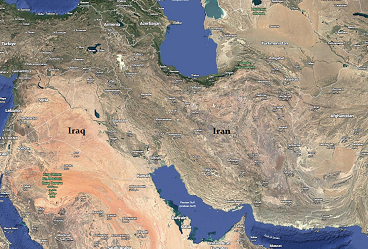
    When analysts talk about Iran, they too often reduce it to politics, nukes, or ideology. But any real understanding of the strategic challenge must begin with geography. Iran is not Iraq; it is not Afghanistan. It is a vast land mass defined by mountain ranges that have shaped its history, defense, and resistance to outside powers for millennia.

    Iran covers roughly 1.65 million square kilometers, making it more than three times the size of Iraq and significantly larger than Afghanistan. Its internal geography isn’t open plains, but a series of rugged, interconnected mountain systems with high interior basins and plateaus wedged between them. The two dominant ranges, the Zagros in the west and the Alborz in the north, surround the country’s heartland, rise above 3,000 meters, and in places top 4,000 meters, creating what military theorists have called a mountain fortress

    Afghanistan is frequently cited as the quintessential “graveyard of empires,” and its Hindu Kush mountains create an extraordinarily hostile combat environment. But even Afghanistan’s mountains are more accessible valleys and corridors. Iran’s mountains differ in scale and in their relationship to population centers. Iran’s population is concentrated in mountainous basins, not distant from the terrain that conceals them. Cities like Tehran, nestled under the Alborz, and countless towns embedded in the Zagros foothills, are naturally insulated. This gives defenders the ability to move, regroup, and conceal logistics under terrain that challenges air and ground surveillance.

    Contrast that with Iraq, where the terrain quickly transitions to flat plains like the Tigris-Euphrates basin, which historically have facilitated rapid warfare. Iraq’s internal highlands exist, but they are limited and do not envelop critical centers. That is why during the Gulf War and the 2003 invasion, coalition forces could maneuver long distances rapidly. In Iran, such maneuver corridors are constrained by elevation, narrow passes, and terrain that favors defensive preparations and ambush.

    Terrain matters because it dictates strategy. In Afghanistan, invaders struggled precisely because the rugged landscape broke lines of communication and allowed insurgents to melt into valleys and mountainsides. Iran’s mountains are broader and more extensive, giving defenders even more strategic options: natural choke points, deep interior lines of retreat, and countless niches for irregular or asymmetric resistance. Iran’s military planners understand this well, which is why defensive tunnel networks and surface-to-air missile sites have been deployed to exploit the topography.

    Historically, the mountains of Iran have served as a barrier to sovereignty. They helped defend against Arab, Mongol, Ottoman, and Russian incursions over centuries. They served as the backbone of resistance during the Iran–Iraq War, where Iranian forces leveraged rugged terrain to negate some of Iraq’s technical advantages.

    So when policymakers today speculate about quick strikes and a six-week regime decapitation, they are ignoring a fundamental constant: mountains favor the defender.


    Source link

    Share. Facebook Twitter Pinterest LinkedIn Tumblr Email Telegram Copy Link

    Related Posts

    World Economy

    Pentagon Requests $54 Billion For AI War

    April 24, 2026
    World Economy

    Google Is Tracking Your Life – Photo Cloud Feeding AI System

    April 24, 2026
    World Economy

    Market Talk – April 23, 2026

    April 23, 2026
    World Economy

    Understanding Iran | Armstrong Economics

    April 23, 2026
    World Economy

    The Dollar Lifeline In War – Currency Swaps

    April 23, 2026
    World Economy

    Data Harvesting In The Classroom

    April 23, 2026
    Editors Picks

    Opinion | He Trolls the Left. What Does He Actually Mean?

    March 20, 2026

    Glyphosate is driving a rift in MAHA. Here’s what the science says about its effects on health

    March 2, 2026

    ‘Hidden’ group of gut bacteria may be essential to good health

    February 10, 2026

    EV Charging and Other Top Transportation Stories

    December 26, 2025

    Oilers release bizarre statement on Connor McDavid suspension

    January 23, 2025
    About Us
    About Us

    Welcome to Benjamin Franklin Institute, your premier destination for insightful, engaging, and diverse Political News and Opinions.

    The Benjamin Franklin Institute supports free speech, the U.S. Constitution and political candidates and organizations that promote and protect both of these important features of the American Experiment.

    We are passionate about delivering high-quality, accurate, and engaging content that resonates with our readers. Sign up for our text alerts and email newsletter to stay informed.

    Latest Posts

    Negotiations that enable Israel’s land-grabs | Israel-Palestine conflict

    April 24, 2026

    True-or-false for Round 1 of 2026 NFL Draft: Will Cowboys regret their trade?

    April 24, 2026

    Opinion | Stewart Brand, Silicon Valley’s Favorite Prophet, on Life’s Most Important Principle

    April 24, 2026

    Subscribe for Updates

    Stay informed by signing up for our free news alerts.

    Paid for by the Benjamin Franklin Institute. Not authorized by any candidate or candidate’s committee.
    • Privacy Policy
    • About us
    • Contact us

    Type above and press Enter to search. Press Esc to cancel.