
Close Menu
    Trending
    • May 2026 Live Webinar Series
    • Damson Idris Says Messi Made Him Quit Soccer
    • Netanyahu says he was successfully treated for prostate cancer
    • Negotiations that enable Israel’s land-grabs | Israel-Palestine conflict
    • True-or-false for Round 1 of 2026 NFL Draft: Will Cowboys regret their trade?
    • Opinion | Stewart Brand, Silicon Valley’s Favorite Prophet, on Life’s Most Important Principle
    • Struggling to scale your company? Here are five things that could be holding you back
    • What happens if you’re hit by a primordial black hole?
    Benjamin Franklin Institute
    Friday, April 24
    • Home
    • Politics
    • Business
    • Science
    • Technology
    • Arts & Entertainment
    • International
    Benjamin Franklin Institute
    Home»Science»Ants capture carbon dioxide from the air and turn it into armour
    Science

    Ants capture carbon dioxide from the air and turn it into armour

    Team_Benjamin Franklin InstituteBy Team_Benjamin Franklin InstituteMarch 2, 2026No Comments3 Mins Read
    Share Facebook Twitter Pinterest Copy Link LinkedIn Tumblr Email VKontakte Telegram
    Share
    Facebook Twitter Pinterest Email Copy Link


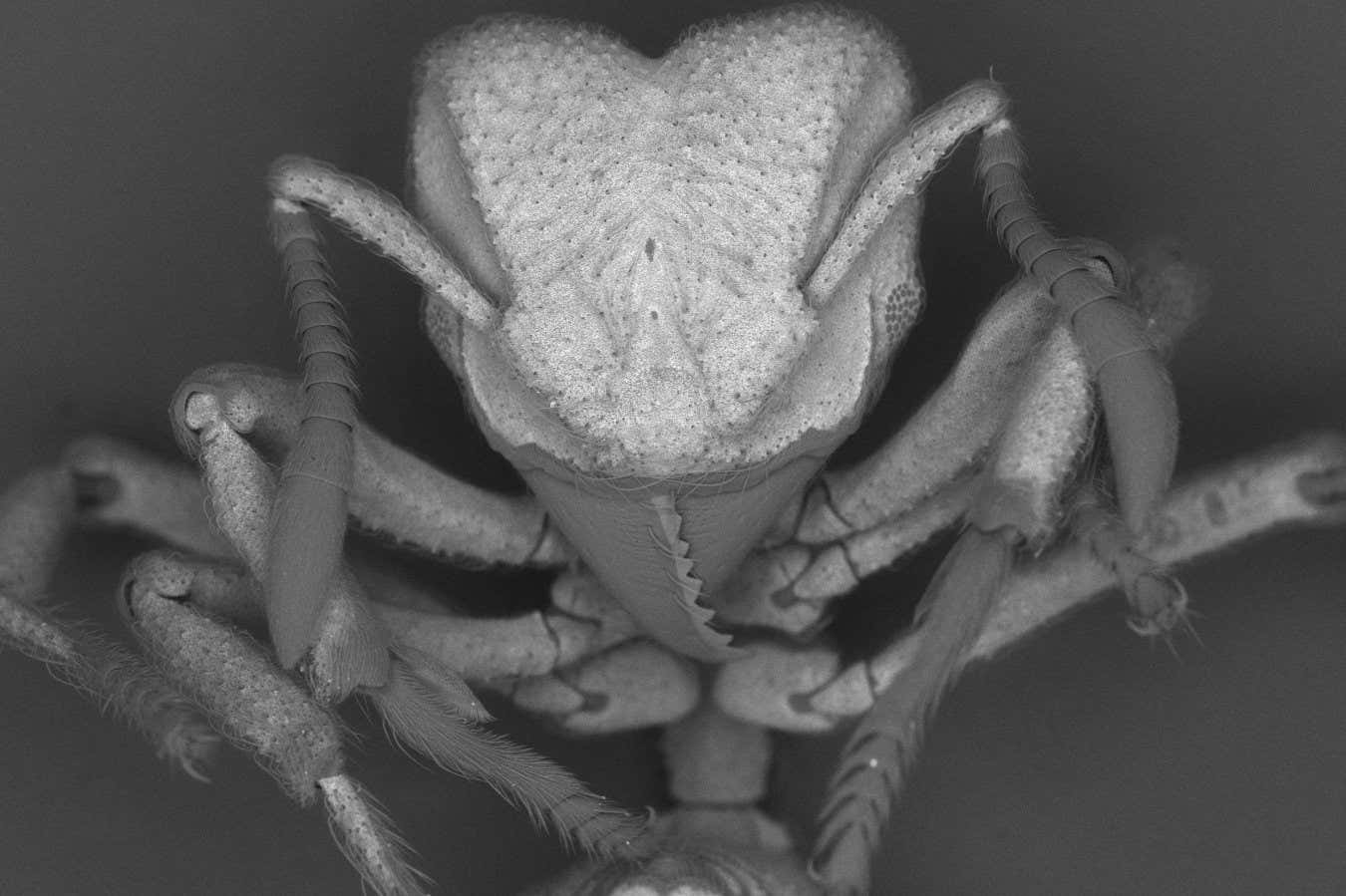
    Electron microscope image showing an ant with dolomite in its exoskeleton

    Hongjie Li

    An ant that can turn carbon dioxide in the air into dolomite stone in its exoskeleton may hold clues to how humans can sequester greenhouse gases to avert climate disaster.

    Fungus-farming ants forage for vegetation to feed cultivated fungi that are grown inside their colonies. In turn, the fungi serve as the primary food source for the ants. The high density of ants and fungi can result in high concentrations of CO2 inside the nests.

    In 2020, Cameron Currie at the University of Wisconsin-Madison and his colleagues found that the ants of the species Acromyrmex echinatior incorporate a carbonate biomineral into their armour. The ants do this through a symbiotic relationship with Pseudonocardia bacteria, which transform CO2 into rock using chemical processes that aren’t yet properly understood.

    Now the team has discovered that another fungus-farming ant, Sericomyrmex amabilis, which is found in Central and South America, can do the same thing without symbiotic bacteria, becoming the first known animal to have evolved this ability.

    Remarkably, the mineral they make is dolomite, which is extremely difficult for chemists to produce in the lab. Dolomite rocks, such as those found in Italy’s Dolomite mountains, require millions of years and complex geological processes for the calcium and magnesium atoms to align perfectly. Yet the ants do this quickly and effortlessly, without high temperatures, says team member Hongjie Li at Zhejiang University in China.

    Dolomite consists of calcium, magnesium and carbonate. Forming dolomite in the lab is difficult because magnesium holds tightly onto surrounding water molecules and doesn’t easily fit into the calcium carbonate structure, which slows down crystal formation, says Currie. To try to overcome this, he says, scientists use high temperatures and pressures. The next phase of the team’s research will attempt to understand how ants are able to accomplish this feat.

    For fungus-farming ants, turning CO2 into stone solves at least two problems: strengthening the ants’ exoskeletons and preventing the build-up of toxic CO2 inside the colony.

    “We have discovered a natural system that has evolved, over millions of years, to reduce the toxic accumulation of atmospheric CO2 in an ant colony,” Currie says.

    In an effort to counteract global warming, scientists are exploring techniques for converting atmospheric CO2 into carbonate minerals, essentially turning carbon into stone. “These ants are the first animal shown to be engaging in such a process, offering exciting potential as a model for human efforts,” says Currie.

    Cody Freas at the University of Toulouse, France, who wasn’t part of the study, describes the ants’ ability to turn CO2 into dolomite as a “remarkable adaptation”. “Individuals take on the role of living carbon scrubbers, converting atmospheric carbon dioxide into a protective mineral armour,” says Freas. “This dual solution both helps the ants regulate their nest atmosphere and create a bioengineered physical defence.”

    Topics:


    Source link

    Share. Facebook Twitter Pinterest LinkedIn Tumblr Email Telegram Copy Link

    Related Posts

    Science

    What happens if you’re hit by a primordial black hole?

    April 24, 2026
    Science

    How do earthquakes end? A seismic ‘stop sign’ could help predict earthquake risk

    April 24, 2026
    Science

    ‘Kraken’ fossils show enormous, intelligent octopuses were top predators in Cretaceous seas

    April 24, 2026
    Science

    Largest ever octopus was great white shark of invertebrate predators

    April 24, 2026
    Science

    Do you need to worry about Mythos, Anthropic’s computer-hacking AI?

    April 23, 2026
    Science

    How many dachshunds would it take to get to the moon?

    April 23, 2026
    Editors Picks

    Insiders Address Rumors Of Strain Between King Charles And William

    September 30, 2025

    Deshaun Watson could still have role with Browns

    February 11, 2026

    Beyond weight loss—how the GLP-1 story is evolving

    March 18, 2026

    Wendy Osefo Shares New Details On Her 2024 Robbery

    March 2, 2026

    Why Apple and Google want your ID

    December 25, 2025
    About Us
    About Us

    Welcome to Benjamin Franklin Institute, your premier destination for insightful, engaging, and diverse Political News and Opinions.

    The Benjamin Franklin Institute supports free speech, the U.S. Constitution and political candidates and organizations that promote and protect both of these important features of the American Experiment.

    We are passionate about delivering high-quality, accurate, and engaging content that resonates with our readers. Sign up for our text alerts and email newsletter to stay informed.

    Latest Posts

    May 2026 Live Webinar Series

    April 24, 2026

    Damson Idris Says Messi Made Him Quit Soccer

    April 24, 2026

    Netanyahu says he was successfully treated for prostate cancer

    April 24, 2026

    Subscribe for Updates

    Stay informed by signing up for our free news alerts.

    Paid for by the Benjamin Franklin Institute. Not authorized by any candidate or candidate’s committee.
    • Privacy Policy
    • About us
    • Contact us

    Type above and press Enter to search. Press Esc to cancel.