
Close Menu
    Trending
    • Beijing’s new supply chain rules deepen concerns for US firms in China
    • India denounces ‘hellhole’ remark shared by Trump | Donald Trump News
    • New photos of Mike Vrabel and Dianna Russini emerge
    • AI search demands a new audience playbook
    • How do earthquakes end? A seismic ‘stop sign’ could help predict earthquake risk
    • Trump Announces Cease-Fire Between Israel and Lebanon
    • Google Is Tracking Your Life – Photo Cloud Feeding AI System
    • Rachel Zoe Confronts Amanda Frances In ‘RHOBH’ Reunion Clip
    Benjamin Franklin Institute
    Friday, April 24
    • Home
    • Politics
    • Business
    • Science
    • Technology
    • Arts & Entertainment
    • International
    Benjamin Franklin Institute
    Home»Science»SpaceX’s 1 million satellites could avoid environmental checks
    Science

    SpaceX’s 1 million satellites could avoid environmental checks

    Team_Benjamin Franklin InstituteBy Team_Benjamin Franklin InstituteFebruary 26, 2026No Comments3 Mins Read
    Share Facebook Twitter Pinterest Copy Link LinkedIn Tumblr Email VKontakte Telegram
    Share
    Facebook Twitter Pinterest Email Copy Link


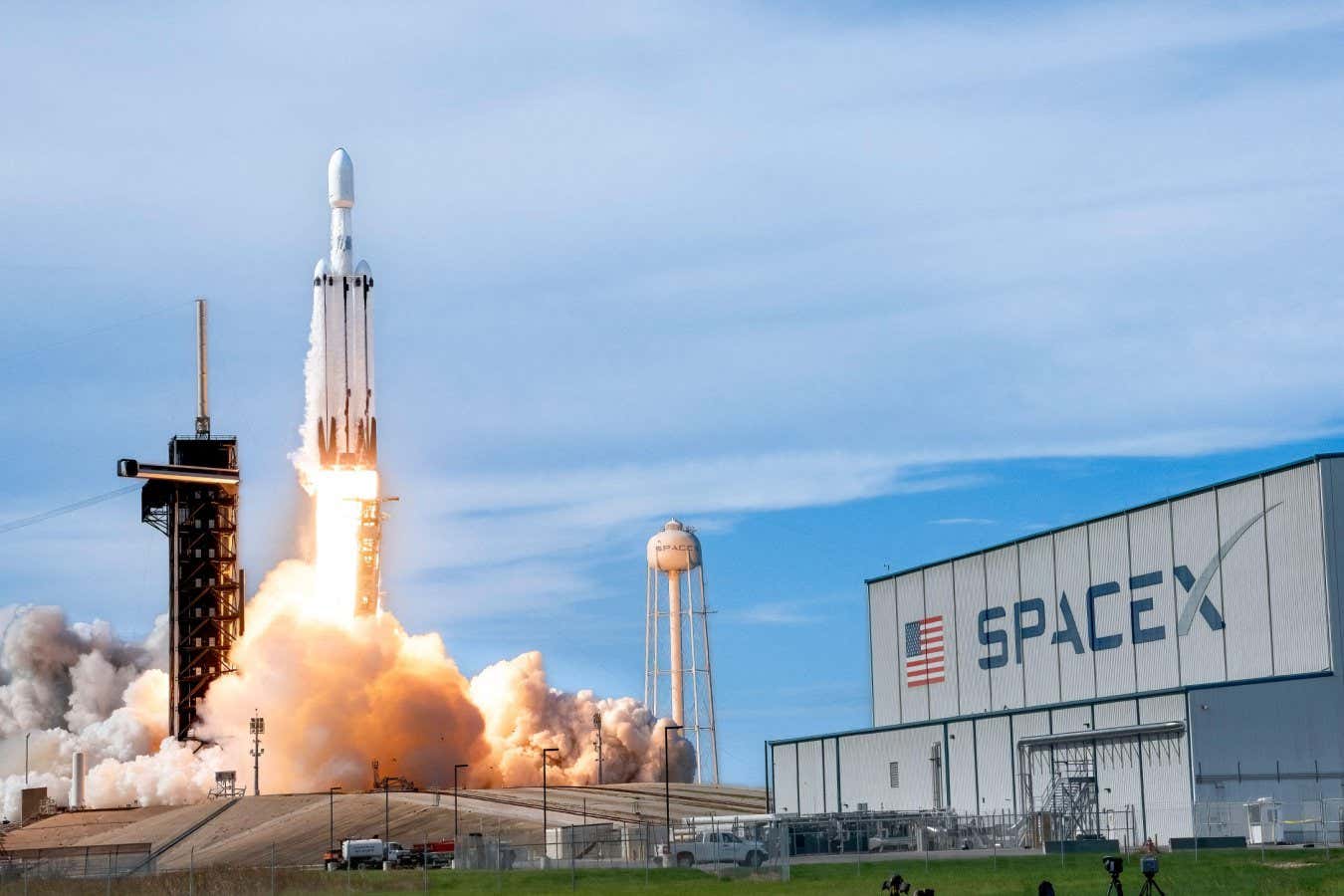
    SpaceX wants to launch many more satellites

    Charles Boyer / Alamy Stock Photo

    Astronomers are scrambling to work out the environmental impact of a SpaceX application to launch 1 million satellites, as the deadline for its approval fast approaches.

    On 30 January, SpaceX announced it had applied to send a vast mega-constellation of 1 million satellites into space with the Federal Communications Commission (FCC) in the US, which CEO Elon Musk said would act as orbital data centres for artificial intelligence.

    The satellites would vastly outnumber anything else in orbit, with only 14,500 active satellites in space today. Currently, the FCC has no requirement to assess the potential environmental impact of launching so many satellites, including the effects on Earth’s atmosphere or the changes to the night sky it would cause.

    “We’re deeply concerned,” says Ruskin Hartley, CEO of DarkSky International. “We’re not opposed to satellites, but we believe it needs to be done in a responsible manner.”

    Following satellite applications, the FCC allows members of the public to comment, which it did for SpaceX’s proposal less than a week after it was submitted – extremely fast compared with the typical months for other applications. The deadline for comments is 6 March, after which the FCC may spend months deciding whether to approve all, some or none of SpaceX’s satellites.

    So far, more than 350 comments have been submitted, with many astronomers raising concerns about the impacts on astronomy and Earth’s atmosphere. “A million satellites is completely terrifying,” says Samantha Lawler at the University of Regina in Canada.

    SpaceX hasn’t revealed many details of the planned satellites, including their size or altitude. That has left astronomers like Lawler unable to work out exactly what the impact of the constellation would be. “We are scrambling to gather up the information that we need to write to the FCC,” she says.

    In a worst-case scenario, tens of thousands of satellites would be visible to the naked eye all night long, she says, and many times more would obscure the views of telescopes on Earth and in space. The satellites would also need to be continuously replenished, potentially every five years like SpaceX’s Starlink satellites, meaning that, on average, one satellite would be launching and another would be re-entering the atmosphere every 3 minutes. Currently, only a handful of satellites re-enter Earth’s atmosphere every day.

    This could be hugely harmful to the planet’s atmosphere. When satellites and rockets burn up, they produce aluminium oxide, or alumina, a substance that destroys ozone. “We’re talking teragrams [1 trillion grams] of alumina,” says Lawler. “This would cause massive ozone depletion and possibly change the temperature of the stratosphere.”

    The reason why the FCC isn’t currently required to assess the environmental impact of any satellite application, even something of this scale, is because its space activities are exempt from the National Environmental Policy Act in the US. If a significant issue is raised in the comment process, that can trigger closer scrutiny of an application, but it isn’t clear if that will happen, says Kevin Bell at the Free Information Group in Washington DC.

    “In an ideal world, [the FCC] would study it,” says Bell, but “they don’t necessarily have the in-house scientific capacity to judge atmospheric impacts”.

    The FCC and SpaceX didn’t reply to requests for comment.

    Topics:


    Source link

    Share. Facebook Twitter Pinterest LinkedIn Tumblr Email Telegram Copy Link

    Related Posts

    Science

    How do earthquakes end? A seismic ‘stop sign’ could help predict earthquake risk

    April 24, 2026
    Science

    ‘Kraken’ fossils show enormous, intelligent octopuses were top predators in Cretaceous seas

    April 24, 2026
    Science

    Largest ever octopus was great white shark of invertebrate predators

    April 24, 2026
    Science

    Do you need to worry about Mythos, Anthropic’s computer-hacking AI?

    April 23, 2026
    Science

    How many dachshunds would it take to get to the moon?

    April 23, 2026
    Science

    The Age Code review: Can you slow ageing with your diet? A new book gives it a go

    April 23, 2026
    Editors Picks

    Online scam centers in Cambodia targeted with new legislation setting hefty fines and prison time

    March 13, 2026

    Backwards heat shows laws of thermodynamics may need a quantum update

    February 16, 2026

    AREA15’s Oddyssey Signals A New Era Of Vegas Nightlife

    March 8, 2026

    Remembering Devoted IEEE Volunteer Gus Gaynor

    April 9, 2026

    Want your team to come up with better ideas? Try this

    February 1, 2026
    About Us
    About Us

    Welcome to Benjamin Franklin Institute, your premier destination for insightful, engaging, and diverse Political News and Opinions.

    The Benjamin Franklin Institute supports free speech, the U.S. Constitution and political candidates and organizations that promote and protect both of these important features of the American Experiment.

    We are passionate about delivering high-quality, accurate, and engaging content that resonates with our readers. Sign up for our text alerts and email newsletter to stay informed.

    Latest Posts

    Beijing’s new supply chain rules deepen concerns for US firms in China

    April 24, 2026

    India denounces ‘hellhole’ remark shared by Trump | Donald Trump News

    April 24, 2026

    New photos of Mike Vrabel and Dianna Russini emerge

    April 24, 2026

    Subscribe for Updates

    Stay informed by signing up for our free news alerts.

    Paid for by the Benjamin Franklin Institute. Not authorized by any candidate or candidate’s committee.
    • Privacy Policy
    • About us
    • Contact us

    Type above and press Enter to search. Press Esc to cancel.