
Close Menu
    Trending
    • Morgan Wallen Fans Audibly Gasp After He Flipped A Piano
    • Two hundred hurt in post-game violence as Paris hails second Champions League triumph
    • Ethiopia’s election: Parties, coalitions and candidates explained | News
    • Denny Hamlin believes Corey Heim is NASCAR’s next generational talent
    • The case for saying no to new gadgets
    • Top U.S. science funder slows research grants to universities
    • Shadow Walker Was a DIY Biped Humanoid Robot
    • ‘Love Island’ Contestant Booted From Show Over Slur
    Benjamin Franklin Institute
    Sunday, May 31
    • Home
    • Politics
    • Business
    • Science
    • Technology
    • Arts & Entertainment
    • International
    Benjamin Franklin Institute
    Home»Science»Incredible image shows what 2026’s first solar eclipse looked like from space
    Science

    Incredible image shows what 2026’s first solar eclipse looked like from space

    Team_Benjamin Franklin InstituteBy Team_Benjamin Franklin InstituteFebruary 22, 2026No Comments3 Mins Read
    Share Facebook Twitter Pinterest Copy Link LinkedIn Tumblr Email VKontakte Telegram
    Share
    Facebook Twitter Pinterest Email Copy Link


    February 21, 2026

    2 min read

    Add Us On GoogleAdd SciAm

    Incredible image shows what 2026’s first solar eclipse looked like from space

    A satellite captured a recent “ring of fire” eclipse from a stunning new angle
    By Jackie Flynn Mogensen edited by Claire Cameron

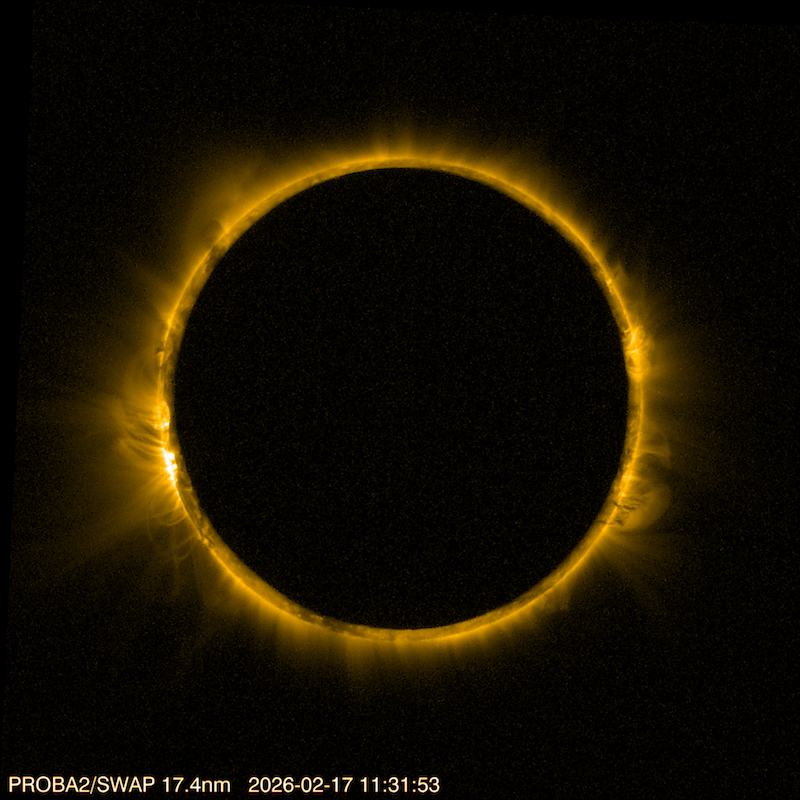
    The sun's ring, shown in high resolution, peeks from behind a dark circle

    The “ring of fire” solar eclipse on February 17

    ESA/Royal Observatory of Belgium

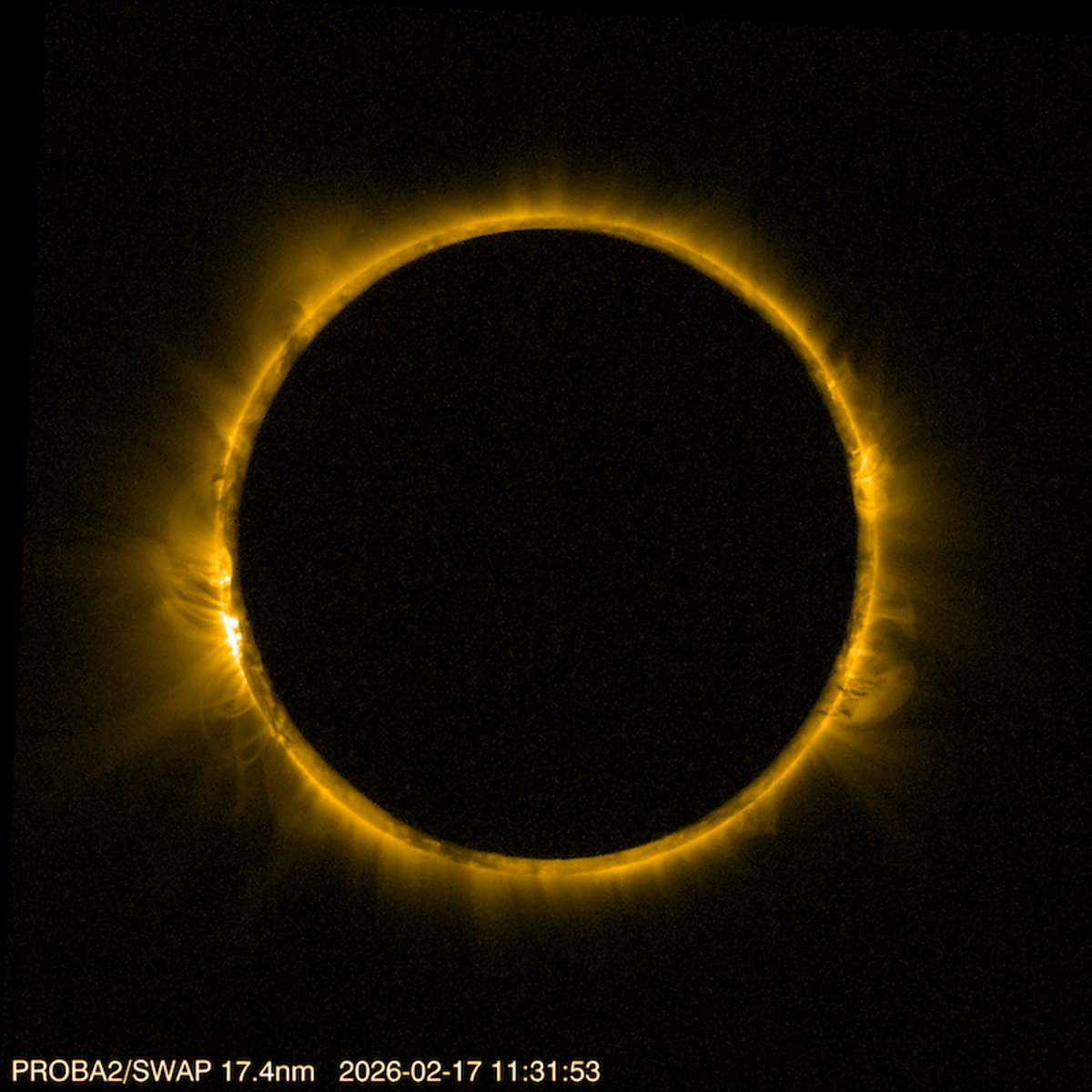
    Just days ago the moon traveled directly between Earth and the sun in what was the first solar eclipse of the year, producing a striking “ring of fire” effect in the sky. Unluckily for many sky-gazers, however, only those in Antarctica, or just off the coast of it, would have seen the full eclipse on February 17.

    But now new images from the European Space Agency (ESA) reveal the solar eclipse in all its plasmatic glory thanks to ESA’s PROBA-2 satellite. PROBA-2 is a small satellite that hosts two primary instruments designed to observe the sun and other instruments to study space weather. As the craft orbited our planet, the satellite imaged the eclipse at least four times and captured a “perfect” ring of fire, according to the agency.

    Also known as an annular eclipse, the ring of fire effect is created because the moon appears slightly smaller than the sun in the sky. Although the moon passes directly in between Earth and our star during this kind of eclipse, it isn’t close enough to totally block out the sun’s light, leaving a glowing halo.


    On supporting science journalism

    If you’re enjoying this article, consider supporting our award-winning journalism by subscribing. By purchasing a subscription you are helping to ensure the future of impactful stories about the discoveries and ideas shaping our world today.
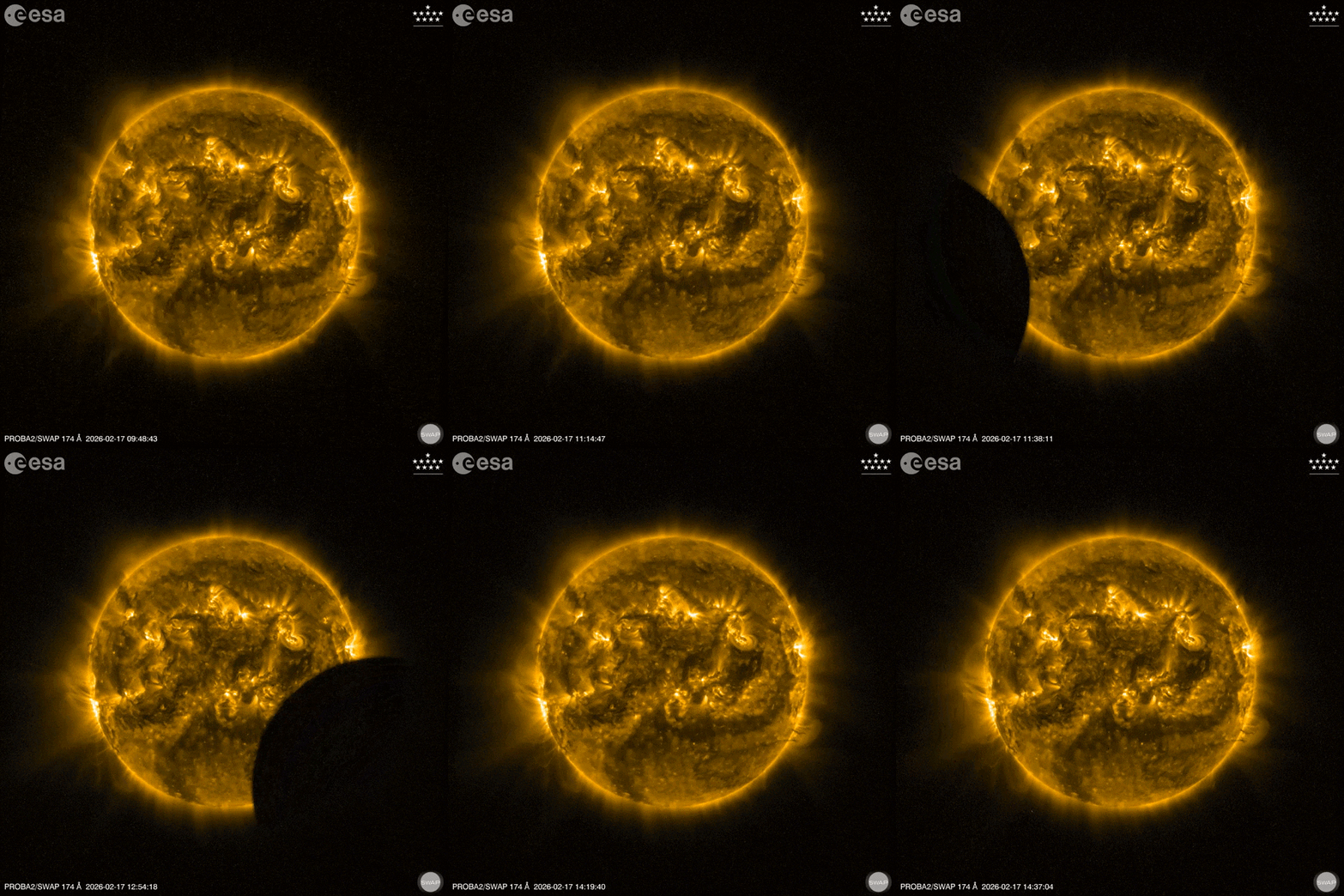

    A video of the moon (a dark circle) appearing to pass over the sun four times at varying coverages

    Images from four of PROBA-2’s passes over the eclipse zone

    ESA/Royal Observatory of Belgium

    From the prime viewing spot of Concordia Station in Antarctica, the ring was reportedly visible for about two minutes.

    The next eclipse of 2026 is a total lunar eclipse beginning on March 3 UTC. Then Earth will cast a shadow on the moon, imbuing it with a red hue. Known as a “blood moon,” the eclipse will be at least partially, if not totally, visible to viewers in Asia, Australia, the Pacific Islands and the Americas.

    It’s Time to Stand Up for Science

    If you enjoyed this article, I’d like to ask for your support. Scientific American has served as an advocate for science and industry for 180 years, and right now may be the most critical moment in that two-century history.

    I’ve been a Scientific American subscriber since I was 12 years old, and it helped shape the way I look at the world. SciAm always educates and delights me, and inspires a sense of awe for our vast, beautiful universe. I hope it does that for you, too.

    If you subscribe to Scientific American, you help ensure that our coverage is centered on meaningful research and discovery; that we have the resources to report on the decisions that threaten labs across the U.S.; and that we support both budding and working scientists at a time when the value of science itself too often goes unrecognized.

    In return, you get essential news, captivating podcasts, brilliant infographics, can’t-miss newsletters, must-watch videos, challenging games, and the science world’s best writing and reporting. You can even gift someone a subscription.

    There has never been a more important time for us to stand up and show why science matters. I hope you’ll support us in that mission.


    Source link

    Share. Facebook Twitter Pinterest LinkedIn Tumblr Email Telegram Copy Link

    Related Posts

    Science

    Top U.S. science funder slows research grants to universities

    May 31, 2026
    Science

    These exotic particles could break physics

    May 31, 2026
    Science

    How smartphones and AI are reshaping our bodies and minds

    May 31, 2026
    Science

    How big can a galaxy get?

    May 31, 2026
    Science

    Why high-bandwidth memory is a bottleneck for AI chips

    May 31, 2026
    Science

    NASA’s Hubble captures gorgeous new photo of a spiral galaxy as it wanders through the Virgo Cluster

    May 30, 2026
    Editors Picks

    ‘RHOBH’ Star Sutton Stracke Details Terrifying Home Invasion

    December 22, 2025

    How Mets could fill a void in bullpen

    January 16, 2025

    Jerry Seinfeld Claims ‘Friends’ Copied His Show

    May 9, 2026

    Birdwatching may reshape the brain and build its buffer against ageing

    February 23, 2026

    Taylor Swift Wedding Details Leak Despite NDAs

    April 10, 2026
    About Us
    About Us

    Welcome to Benjamin Franklin Institute, your premier destination for insightful, engaging, and diverse Political News and Opinions.

    The Benjamin Franklin Institute supports free speech, the U.S. Constitution and political candidates and organizations that promote and protect both of these important features of the American Experiment.

    We are passionate about delivering high-quality, accurate, and engaging content that resonates with our readers. Sign up for our text alerts and email newsletter to stay informed.

    Latest Posts

    Morgan Wallen Fans Audibly Gasp After He Flipped A Piano

    May 31, 2026

    Two hundred hurt in post-game violence as Paris hails second Champions League triumph

    May 31, 2026

    Ethiopia’s election: Parties, coalitions and candidates explained | News

    May 31, 2026

    Subscribe for Updates

    Stay informed by signing up for our free news alerts.

    Paid for by the Benjamin Franklin Institute. Not authorized by any candidate or candidate’s committee.
    • Privacy Policy
    • About us
    • Contact us

    Type above and press Enter to search. Press Esc to cancel.