
Close Menu
    Trending
    • Netanyahu says he was successfully treated for prostate cancer
    • Negotiations that enable Israel’s land-grabs | Israel-Palestine conflict
    • True-or-false for Round 1 of 2026 NFL Draft: Will Cowboys regret their trade?
    • Opinion | Stewart Brand, Silicon Valley’s Favorite Prophet, on Life’s Most Important Principle
    • Struggling to scale your company? Here are five things that could be holding you back
    • What happens if you’re hit by a primordial black hole?
    • When is London Marathon 2026? Start time and how to watch race for FREE
    • Pentagon Requests $54 Billion For AI War
    Benjamin Franklin Institute
    Friday, April 24
    • Home
    • Politics
    • Business
    • Science
    • Technology
    • Arts & Entertainment
    • International
    Benjamin Franklin Institute
    Home»Science»How baby microbiomes in the West differ from those everywhere else
    Science

    How baby microbiomes in the West differ from those everywhere else

    Team_Benjamin Franklin InstituteBy Team_Benjamin Franklin InstituteFebruary 21, 2026No Comments3 Mins Read
    Share Facebook Twitter Pinterest Copy Link LinkedIn Tumblr Email VKontakte Telegram
    Share
    Facebook Twitter Pinterest Email Copy Link


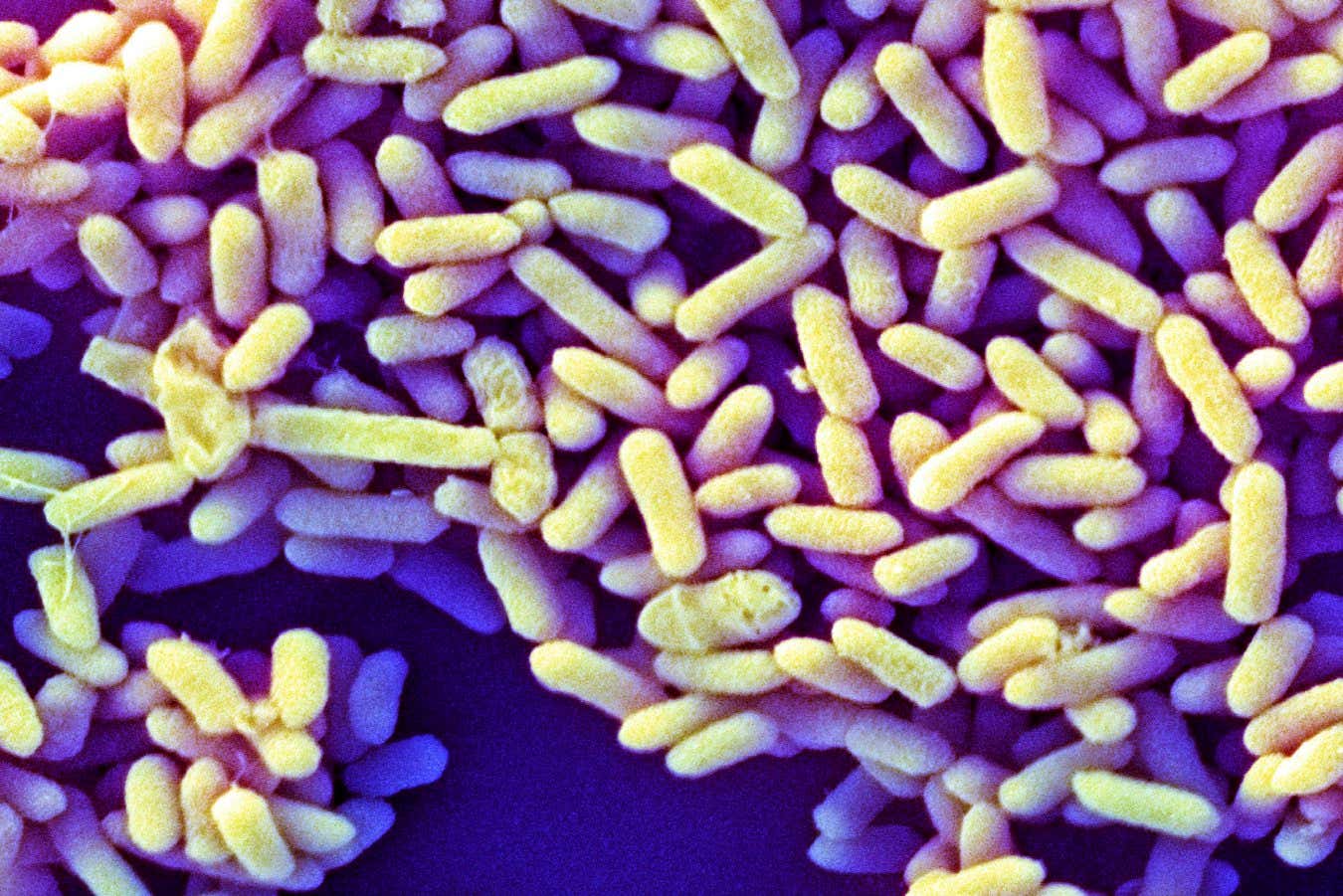
    A scanning electron micrograph of Bifidobacteria bacteria – the main genus found in the large intestine of infants

    DR GARY GAUGLER/SCIENCE PHOTO LIBRARY

    An unprecedented look at how the gut microbiome varies among babies in different parts of the world reveals that infants in the West lack a microbe that is common elsewhere. This could aid the development of probiotics, which are sometimes given to premature babies, that are tailored according to where the infant lives, to maximise the chance of these bacteria becoming established.

    The first 1000 days of a child’s life are very important for seeding their microbiome, which influences everything from their immune function and mental health to their future disease risk. Our understanding of this was almost exclusively limited to infants in the West, but now, a global atlas of baby microbiomes is finally providing a broader picture.

    Yan Shao at the Wellcome Sanger Institute in South Cambridgeshire, UK, and his colleagues sequenced more than 1900 genomes of a bacterium called Bifidobacteria longum, which has been linked to the development of a stable gut microbiome.

    These were taken from stool samples collected across the UK, Sweden, the US, and seven countries in South Asia and sub-Saharan Africa: Bangladesh, Pakistan, Kenya, Malawi, Burkina Faso, Uganda and Zimbabwe.

    They zeroed in on two subspecies of B. longum: B. longum longum and B. longum infantis, which have been the focus of most previous infant gut microbiome studies. By combining their data with genomes sequenced in prior studies, the researchers found that around 70 per cent of infants from the African and South Asian countries had B. longum infantis in their guts by 2 months old, compared with fewer than 2 per cent of babies from the UK, US and Sweden. “Infantis is basically missing in Western settings,” says Shao.

    In contrast, B. longum longum had established in the guts of about a third of infants from these Western countries by 2 months, compared with fewer than 10 per cent of those across the African and South Asian countries.

    This suggests that B. longum longum and B. longum infantis – which both help to develop the immune system and prevent gut and blood infections – are primarily found in distinct regions, says Shao.

    This is probably because they thrive on different diets, he says. “Bifidobacteria help to digest nutrients from breast milk, and the composition of this varies with the mother’s diet, so it could be that longum [longum] is better adapted to a Western diet while infantis thrives on diets in other regions,” he says. The babies without either B. longum longum or B. longum infantis probably had other, similar bacteria established in their gut microbiome, like Bifidobacterium breve, says Shao.

    This study increased the number of B. longum genomes from South Asia that scientists have ever analysed by about 17 times, and those from Africa by around 11 times. “This is a huge step forward for underrepresented populations,” says Lindsay Hall at the University of Birmingham, UK.

    Probiotics are not generally recommended for full-term babies, but are sometimes given to premature ones. Off the back of this study, probiotics could be tailored to the region that the premature infant is from, says Hall. For instance, B. longum infantis probiotics may benefit those in parts of Africa and Asia, but it may not persist as well in the guts of Western infants. “Only by understanding how bacteria differ in various places can we understand which probiotics are going to be the best for kids in particular parts of the world,” she says.

    Topics:


    Source link

    Share. Facebook Twitter Pinterest LinkedIn Tumblr Email Telegram Copy Link

    Related Posts

    Science

    What happens if you’re hit by a primordial black hole?

    April 24, 2026
    Science

    How do earthquakes end? A seismic ‘stop sign’ could help predict earthquake risk

    April 24, 2026
    Science

    ‘Kraken’ fossils show enormous, intelligent octopuses were top predators in Cretaceous seas

    April 24, 2026
    Science

    Largest ever octopus was great white shark of invertebrate predators

    April 24, 2026
    Science

    Do you need to worry about Mythos, Anthropic’s computer-hacking AI?

    April 23, 2026
    Science

    How many dachshunds would it take to get to the moon?

    April 23, 2026
    Editors Picks

    Brutal Iron Age massacre may have targeted women and children

    February 24, 2026

    Canadian PM Carney unveils multibillion-dollar push to lower food costs | Inflation News

    January 26, 2026

    Opinion | Trump’s New Deputy F.B.I. Director Has It Out for the ‘Scumbag Commie Libs’

    February 25, 2025

    US plans to order foreign tourists to disclose social media histories

    December 10, 2025

    Market Talk – April 10, 2026

    April 11, 2026
    About Us
    About Us

    Welcome to Benjamin Franklin Institute, your premier destination for insightful, engaging, and diverse Political News and Opinions.

    The Benjamin Franklin Institute supports free speech, the U.S. Constitution and political candidates and organizations that promote and protect both of these important features of the American Experiment.

    We are passionate about delivering high-quality, accurate, and engaging content that resonates with our readers. Sign up for our text alerts and email newsletter to stay informed.

    Latest Posts

    Netanyahu says he was successfully treated for prostate cancer

    April 24, 2026

    Negotiations that enable Israel’s land-grabs | Israel-Palestine conflict

    April 24, 2026

    True-or-false for Round 1 of 2026 NFL Draft: Will Cowboys regret their trade?

    April 24, 2026

    Subscribe for Updates

    Stay informed by signing up for our free news alerts.

    Paid for by the Benjamin Franklin Institute. Not authorized by any candidate or candidate’s committee.
    • Privacy Policy
    • About us
    • Contact us

    Type above and press Enter to search. Press Esc to cancel.