

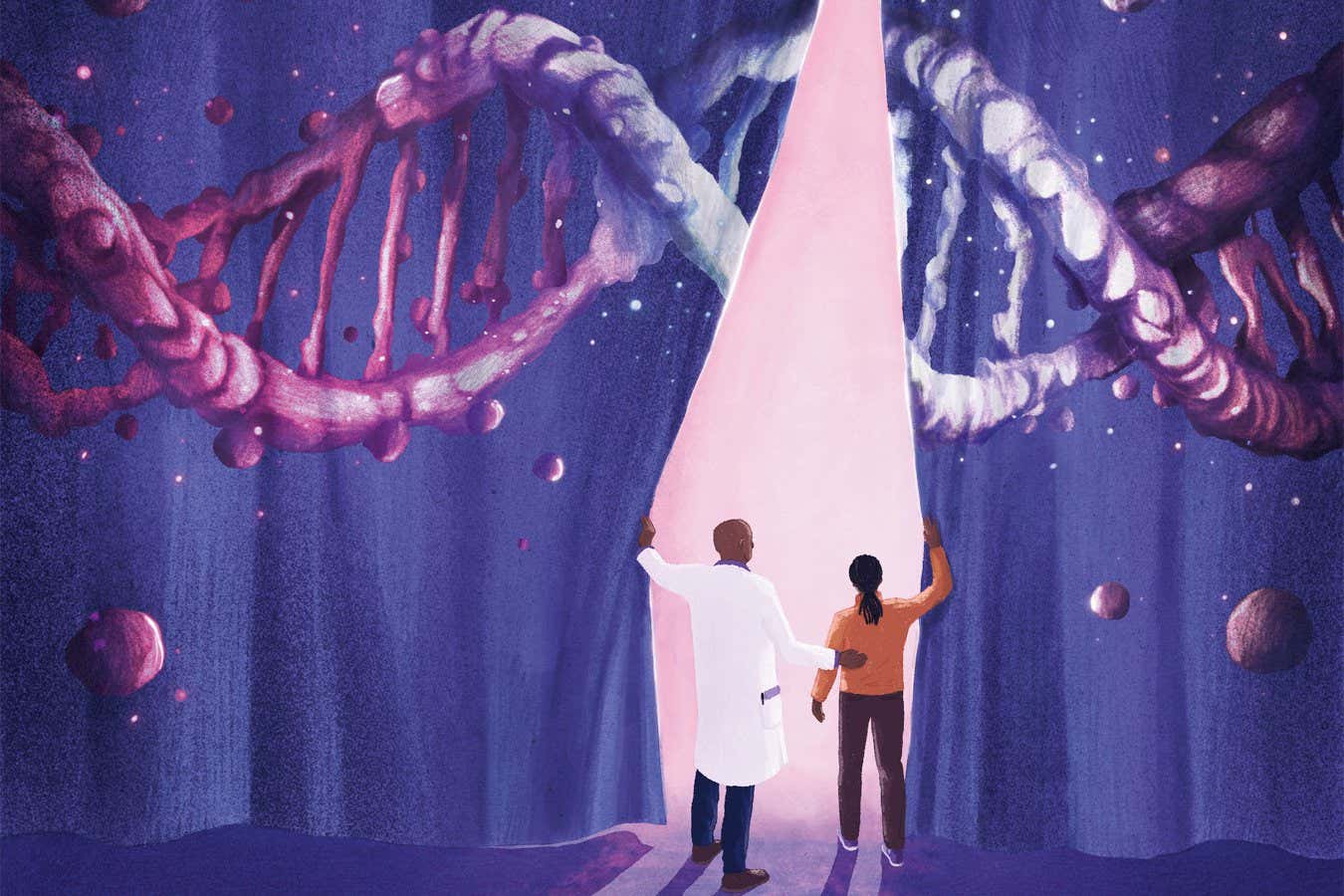
How can I trust that my information will be safe? That’s the question I hear as a young Black doctor working in clinical research when I speak to Black African and Caribbean communities about joining genetic studies. You don’t have to search far to find mistrust – or the reasons for it.
Take the infamous Tuskegee syphilis study, where Black men were left untreated so doctors could watch the disease progress, even after a cure existed. Or the case of Henrietta Lacks, whose cells were taken without consent, then used in research worldwide, making millions for companies while her family couldn’t afford healthcare. Black people have long been treated as experimental objects.
Working in research, I understand that good healthcare relies on good data. Black people – and many other groups including people of non-European ancestry, older adults and those with complex health needs – are underrepresented in clinical research. To truly understand disease, we must study all the groups it affects, so we can build tests and treatments that work for all of us.
In the coming years, healthcare systems plan to put genetics at the centre of patient care. This is precision medicine, using genetic information to tailor prevention and treatment to each individual, rather than giving us all the same standard approach. Doctors could predict your personal risk for a disease and choose treatments more likely to work for you.
But work by institutions such as the University of Exeter, UK, and Queen Mary University of London shows a big gap remains in our understanding of genetics in non-European individuals and how this relates to disease. This research shows that some Black individuals have a genetic deficiency which can affect the accuracy of standard tests used to diagnose and monitor type 2 diabetes, leading to a delay in diagnosis. We need more Black people in research, but first we need to rebuild trust.
Current research often accidentally excludes people in its design. If your study recruitment materials only come in English, you have already lost people. If you only recruit during weekday office hours, you have excluded shift workers. If you only work through hospitals and universities, you have neglected where communities actually gather – churches, barber shops, community centres. Social context matters, and traditional research sometimes misses this.
Academic institutions are increasingly realising that different communities need different approaches. It takes a balance of cultural sensitivity and scientific care. It is about giving the community power, about how the science behind the research translates to actionable change in the community whether through policy change or improved access to care. I have also noticed that representation in research matters. When people see themselves in the researchers, like me, it builds trust. Both sides understand, on a personal level, why the research is important.
How do we fix this? Researchers need to talk to communities from the start, not just show up asking questions. The organisations funding research need to factor community involvement and training in the research budget, as we know that involving patients and communities in research is increasingly recognised as an effective way to boost participation of underrepresented groups and thus improve population health. Most importantly, researchers need to give something back through health programmes, jobs or facilities, to show they are not just taking data and disappearing.
And for everyone who wants to take part in research, please do. There are many ways: joining a clinical trial or simply filling out a questionnaire. Every piece of information counts.
Dr Drews Adade is a clinical research fellow in London
Topics: