

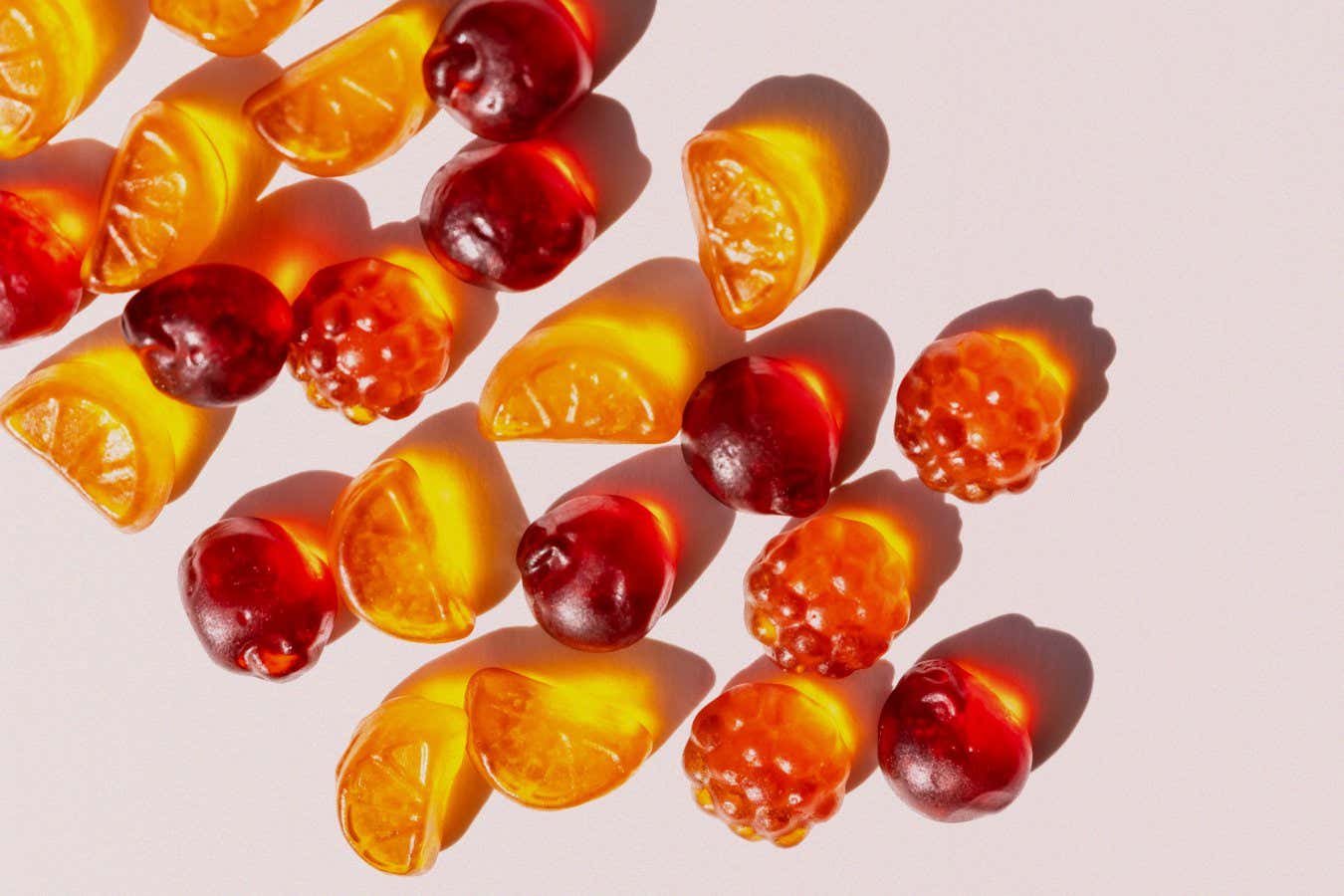
The use of melatonin gummies to help kids sleep is on the rise
Shutterstock/neko_de_mar
Arriving at a friend’s house party recently, I was impressed to find that her three children were already sound asleep. It was only 7pm. The music blared and the guest chatter became increasingly lively, but still they snoozed on. “They’re great sleepers,” I remarked to my friend as I left. She grinned at me conspiratorially. “Melatonin gummies. You’ve got to get some.”
My friend is one of a growing number of parents who are giving melatonin gummies to their children as sleep aids. Other parent friends have told me magical stories of once-fraught bedtimes transformed to a quick kiss and lights off, and pure, undisturbed nights of sleep. As someone who spends at least an hour a night pleading with three rowdy children to go to sleep, I can see the appeal. But is there a catch?
In Australia, where I live, melatonin is meant to be a prescription-only medicine reserved for children with major sleep disturbances caused by conditions like autism. Melatonin is a hormone produced by the pineal gland in the brain at nighttime and helps to regulate sleep-wake cycles. Some children with autism have reduced levels of this hormone and have to take melatonin tablets to help them sleep.
The UK has similar restrictions on prescribing melatonin to children. However, parents of non-eligible children in both countries can buy unregulated melatonin products online. Some have been inspired to try melatonin gummies after hearing stories of them radically improving children’s sleep in the US, where they can be purchased from supermarkets and pharmacies without requiring a prescription.
A recent survey by the American Academy of Sleep Medicine found that 45 per cent of US parents have given melatonin to their children at some point to help them sleep. Many US children are now taking melatonin gummies every day, particularly those under the age of 5, and have been doing so for at least a year. Some teenagers, whose body clocks naturally shift later, are also taking melatonin to help them go to sleep earlier and wake up in time for early school starts.
One factor that has increased melatonin’s popularity is its repackaging in the form of sweet-tasting, cheerily coloured gummies. The accompanying labels, often featuring pictures of fruit and claims of being “natural” or “drug-free”, have confused many people into thinking that melatonin is a vitamin or dietary supplement rather than a hormone. Few parents would feel comfortable regularly giving their children sleeping pills, but gummies look more benign.
The main problem with these gummies is that their contents often don’t match their labels, since they are not regulated like prescription melatonin tablets. Scientists at the US Food and Drug Administration recently tested 110 over-the-counter melatonin products marketed towards children in the US, including gummies, jellybeans, chewy tablets and drink mixes, and found that many contained very high doses of melatonin, up to 667 per cent of the listed dose.
Studies have found that high doses of melatonin make people fall asleep faster and sleep longer than standard prescription doses, which may explain why some manufacturers are sneaking in extra amounts. A melatonin gummy that puts children to sleep within minutes is likely to be perceived as more effective than others with less dramatic effects, encouraging ongoing use.
The trouble is, no one knows what the risks are, if any, of children regularly taking large doses of melatonin. One small study found that long-term melatonin use in children was associated with delayed puberty, but others have not found this association. Other potential health effects are unclear due to a lack of rigorous studies. A review published in The Lancet concluded that “this major gap of knowledge on safety calls for caution against complacent use of melatonin in children and adolescents”.
Some friends have told me that they only planned to give melatonin gummies to their children for a short time as a reset, but then their children started having trouble getting to sleep without them. Now, they feel stuck, because they don’t want to go back to their old bedtime wranglings. Several paediatricians have raised concerns about this kind of dependency, pointing out that children who don’t learn how to get to sleep on their own, or who forget that skill, may become accustomed to the idea that falling asleep requires medication.
Another issue with melatonin gummies is that their sweet taste has sometimes led to children eating them by the fistful. By 2020, more calls were being made to poison control centres in the US about children overdosing on melatonin than any other substance. In 2024, poisons hotlines in Australia received a record number of calls – almost 1500 – related to melatonin ingestions in children. Common symptoms of melatonin overdoses include excessive sleepiness, dizziness, headache and confusion. A small number of children in the US have died following melatonin overdoses, although its role in their deaths was unclear.
At the same time, occasional reports have surfaced of daycare workers slipping melatonin gummies into children’s mouths or sprinkling melatonin on their lunches, without parental consent, to encourage them to sleep. In the latest alleged incident, at a daycare centre in Wisconsin, parents told the media they had found their children to be unusually lethargic.
Australia’s national medicines regulator, the Therapeutic Goods Administration, has recently tried to crack down on the unregulated use of melatonin gummies in children by asking border force officials to seize and destroy the products. However, parents are now sharing tips on online forums on how to circumvent border control and secretly import them.
This desperation points to just how bone tired and frustrated many parents are. The lure of a quick fix for getting children to go to sleep and stay asleep is extremely strong. However, until more is known about the long-term health effects of giving melatonin gummies to children, I’ve decided to put this temptation to bed.
Topics: