

As a kid in the 1970s, I watched the Apollo moon missions on TV, drawn like a curious moth to the cathode-ray tube’s glow. The English band Pink Floyd blared through the speakers of my mom’s Oldsmobile Cutlass Supreme, beckoning us to the dark side of the moon.
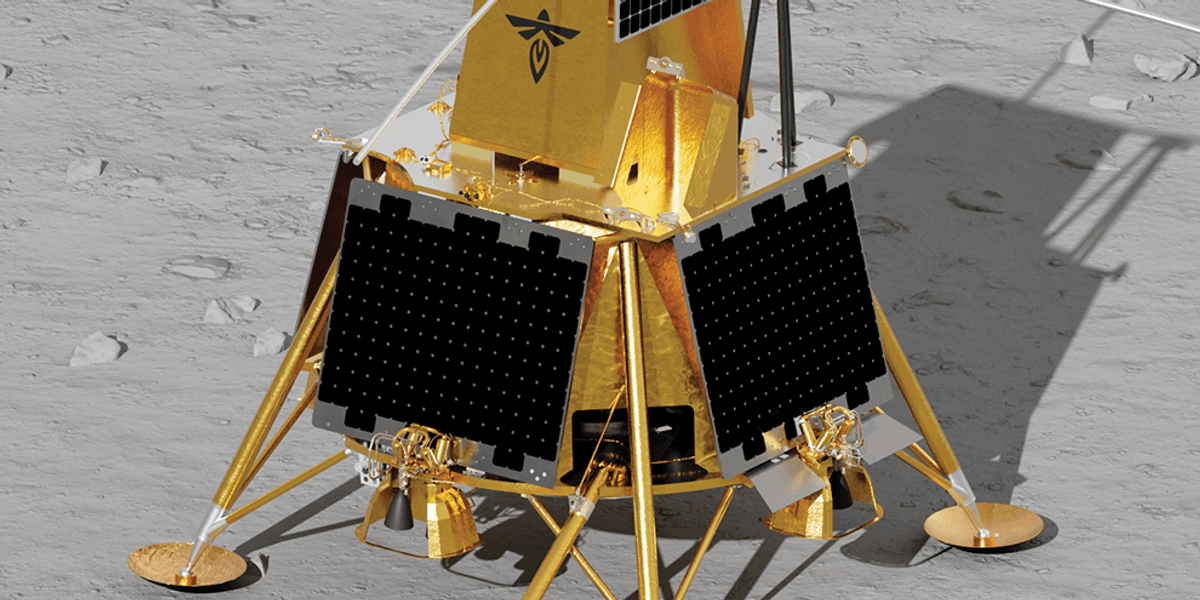
The far side of the moon, the term most scientists prefer, is indeed dark (half the time), cold, and inhospitable. There’s regolith and a couple of Chinese landers—Chang’e 4 in January 2019 and Chang’e 6 in June 2024—and not much else. That could change in about a year, as Contributing Editor Ned Potter reports in “The Quest to Build a Telescope That Can Hear the Cosmic Dark Ages.” Firefly Aerospace’s Blue Ghost Mission 2 with the LuSEE-Night radio telescope aboard will attempt to become the third successful mission to land there.
The moon’s far side is the perfect place for such a telescope. The same RF waves that carried images of Neil Armstrong setting foot on the lunar surface, Roger Waters’s voice, and hundreds of Ned Potter’s space and science segments for the U.S. broadcast networks CBS and ABC interfere with terrestrial radio telescopes. If your goal is to detect the extremely faint and heavily redshifted signals of neutral hydrogen from the cosmic Dark Ages, you just can’t do it from Earth. This epoch is so-called because we Earthlings have yet to sense anything from this time period, which started about 380,000 years after the big bang and lasted 200 million to 400 million years. The far side of the moon may be a terrible place to live, but it’s shielded from all the noise of Earth, making it the ideal spot to place a radio telescope.
As Potter emphasized to me recently, LuSEE-Night won’t listen for a signal from Dark Ages hydrogen directly. “Will the hydrogen from the Dark Ages send a signal? No,” says Potter. “But all that hydrogen out there may absorb a little bit of energy from the cosmic microwave background, interfering with that even more distant remnant of the big bang.”
The far side may not stay quiet for much longer. Several countries, including China, India, Japan, Russia, South Korea, the United Arab Emirates, and the United States, are making slow but steady progress toward establishing a lunar presence. As they do so, they’ll place more relay satellites into orbit around the moon to support exploratory activities as well as moon bases planned for the next decade and beyond. That means the window on a noise-free far side is closing. LuSEE-Night, a project 40 years in the making, might just get there in the nick of time.
Potter is tracking emerging protocols that could preserve the far side’s electromagnetic silence even as such efforts advance. Radio astronomers he’s talked to have shared ideas about how to prevent this emerging problem from turning into a crisis. “There are no bad guys in this story, at least not yet,” says Potter. “But there are a lot of well-meaning people who could complicate the picture a great deal if they don’t know that there’s a picture to complicate.”
It’s a busy time for moon missions. In addition to Blue Ghost Mission 2, the Chinese are sending Chang’e 7 to the moon’s south pole, while NASA’s Artemis II is scheduled to enter the first of three launch windows this month. Artemis II will be the first mission to put humans into lunar orbit since the last Apollo mission in 1972. And IEEE Spectrum readers will enjoy a front row seat, thanks to the enterprising reporting of a true legend in the business, our own Ned Potter.
This article appears in the February 2026 print issue as “See You on the Far Side of the Moon.”
From Your Site Articles
Related Articles Around the Web